Get Full Government Meeting Transcripts, Videos, & Alerts Forever!
Get email alerts on the Employee Benefits topic
No spam. Unsubscribe anytime.
Employee benefits committee presents proposals on sick‑leave pool, retiree coverage, retirement draw and match increase
Summary
The Hardin County employee benefits committee presented multiple recommended changes — including a sick‑leave pool, full retiree health coverage for 30+‑year employees, a partial lump‑sum retirement draw and a proposed retirement‑match increase — and the court took the report as information on July 30.
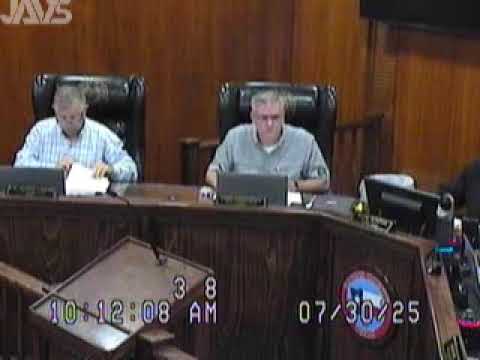
Commissioner Cook, speaking for the employee benefits committee, presented a package of benefit proposals to the Hardin County Commissioners Court on July 30 and asked the court to consider them in coming meetings. No formal action was taken at the special session.
Cook said the committee’s ideas came largely from county employees and reviewed several measures the group recommended. The committee recommended increasing the county contribution to dependent health coverage by $125 per month per dependent (already included in the filed FY2026 proposed budget). Cook said, “So I just wanna make it known that your voices are heard as employees,” to describe committee outreach.
The committee proposed raising the county’s retiree health contribution to 100% for employees with 30 or more years of continuous service; the committee said two current retirees qualify and estimated the annual additional cost at about $3,600 per retiree (roughly $7,200 total for the two retirees identified). The proposal would raise the county share for those retirees from 75% to 100% if adopted.
The group proposed a sick‑leave pool for full‑time employees. Under the draft policy described to the court, employees must have completed one year of service and have at least 80 hours of sick leave to enroll; eligible employees would donate between 8 and 40 hours per year (with some references in the policy package to a longer cap once donated time is recorded). The pool would be governed by an administrative board (Human Resources as administrator, two elected officials and two courthouse employees serving one‑year terms). The pool would be reserved for catastrophic illness or non‑workers’‑compensable injury for the employee or immediate family member; the committee proposed that the pool not be drawn below one‑third of its balance and that the maximum draw be one‑third of the pool balance or a cap of 720 hours (90 days). The policy as presented specifies supervisors must sign approval to route a request to the committee and provides a five‑day committee review window plus an appeal to the county judge.
The committee also presented a partial lump‑sum option at retirement that would allow an employee to withdraw up to 100% of the employee’s own contributions to their TCDRS account (excluding employer match and interest). The committee estimated the change would have a minimal effect on the county’s unfunded liability (about a 0.4% increase as presented). The committee said the option is available under the retirement system but noted it will reduce a retiree’s ongoing monthly benefit depending on the amount taken.
Regarding matching contributions, the committee recommended increasing the current 2:1 employer match to 2.10:1, applied retroactively to an employee’s hire date for anyone who retires after the change (the committee also asked staff to prepare comparative numbers for a 2.25:1 option). Presentations to the court included projected funding ratios: the plan’s funded ratio was reported at about 93% under current settings; moving to 2.10:1 was shown to reduce the funded ratio to about 91% in the committee’s projection, while a 2.25:1 option would have a larger impact. Committee members said the change would take effect Jan. 1 following the county’s decision and stressed staff would return with detailed actuarial numbers and options before any vote. Commissioner Young suggested a workshop and additional comparative materials before the court decides.
Several operational items were raised: the sick‑leave pool’s enrollment would be open Oct. 1–31 each year (with the first year open for the full year), use of pool leave would run concurrent with FMLA, and the committee recommended policy language preventing recipients from working other compensated assignments while drawing pool leave. Committee members stressed the pool would be time already accrued by employees, not a new paid‑time benefit.
Commissioner Cook and committee members asked staff to return the packet with the 2.25:1 retirement match comparison and actuarial details for the court to consider at a future meeting; the court took no formal action at the July 30 special session.