Get Full Government Meeting Transcripts, Videos, & Alerts Forever!
Get email alerts on the Stormwater Management topic
No spam. Unsubscribe anytime.
Baltimore County staff explain stormwater ponds, inspections and who must maintain them
Summary
County stormwater managers and inspectors toured Chapel Hill ponds to demonstrate how wet and dry stormwater facilities manage runoff, what inspectors look for and who is responsible for maintenance; officials said about 5,000 public and private facilities are inspected under the same standards.
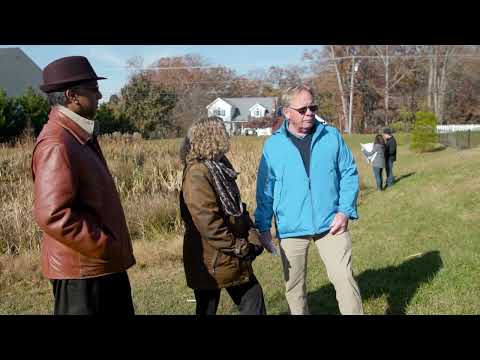
Baltimore County stormwater managers and inspectors gave a site tour at the Reserve at Chapel Hill to explain how wet and dry stormwater ponds reduce runoff and water pollution, what inspectors look for and who is responsible for maintenance.
Critty Ouden, manager of stormwater management for the Baltimore County Department of Environmental Protection and Sustainability, said the ponds are designed to “mimic pre‑developed conditions” by providing water‑quality treatment and controlling the volume and timing of runoff after storms. She said developed areas produce more runoff and concentrate pollutants from vehicles, the atmosphere and adjacent lands, which can be “rapidly delivered to downstream waters” without stormwater controls.
The explanation matters because, Ouden said, unchecked runoff from impervious surfaces can increase erosion and flood risk and harm streams and rivers. The county demonstrated both a wet pond — which retains a permanent pool and uses plantings for pollutant uptake — and a dry pond, which holds water temporarily and releases it after sediment and pollutants settle.
Mike Doyle, inspection section supervisor for the department, walked through what inspectors check during site visits. “The most important aspect of the inspections is the principal spillway, which consists of a dewatering device, a control release structure that retains the stormwater and releases it at a predetermined rate, and the embankment, of course, through which the outfall pipe runs,” Doyle said.
Doyle said common issues include corrosion that can lead to pipe failure; when inspectors document a failing condition they evaluate options to extend pipe life. He also said inspectors look for vegetation and trees that threaten structural components and for overgrowth that restricts access. Doyle said trees must be removed from the embankment, from over the outfall barrel and from within 25 feet of the control release structure, while other vegetation can provide pollutant reduction.
On maintenance responsibility, Doyle said the county inspects nearly 5,000 public and private stormwater facilities using the same inspection method. He said private facility owners receive correction letters and are obligated to repair and maintain those systems, while county crews handle repairs for public facilities.
Ouden described the function of a dry pond during the tour: water is held briefly — she said “probably about 72 hours” — before being released through the control structure, allowing settling and filtration. County crews on site were shown mowing, trimming and removing trees and limbs to preserve embankment and release structure integrity.
This visit was presented as outreach by the county’s Clean Green program; staff encouraged residents to follow county Clean Green outreach for additional information on local stormwater practices and how homeowners can help reduce pollution into neighborhood ponds.