
Private contractor pitches 24/7 compactors to overhaul rural trash collection
Get AI-powered insights, summaries, and transcripts
Subscribe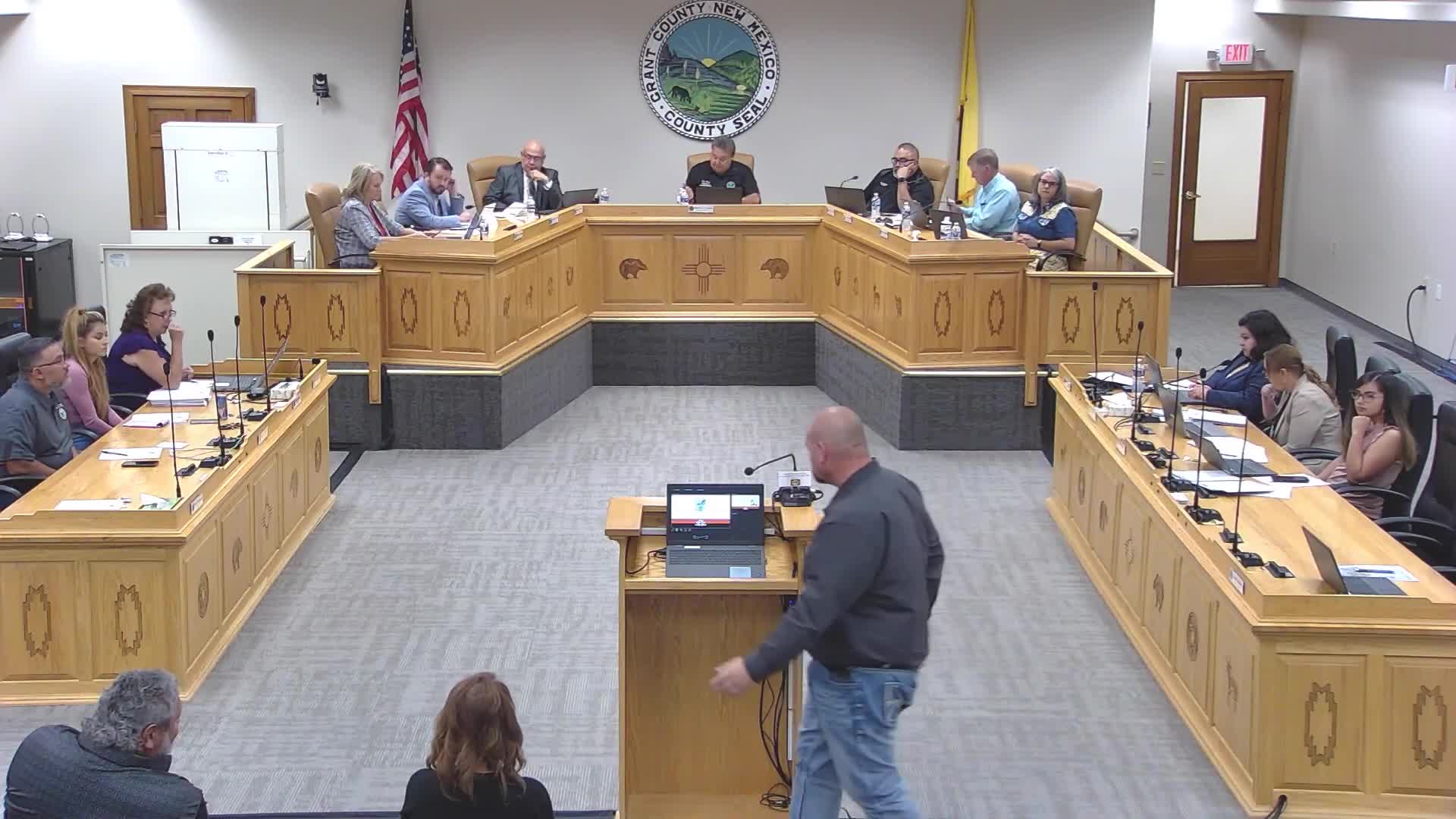
Summary
Universal Waste Systems presented a plan to replace most rural roll‑off transfer stations with 30‑yard compactors, add smart fill sensors and expand service hours; commissioners asked about cost impacts and next steps including site work, permitting and possible billing changes.
Universal Waste Systems told the Grant County Board of Commissioners on July 24 that it can replace much of the county’s rural roll‑off transfer station model with locked, 24/7 compactors monitored by sensors and managed as a contracted service. Reagan Bond, governmental affairs and compliance director for Universal Waste’s New Mexico operations, said the company’s approach would be “a cleaner, it’s safer, it provides greater accessibility for your rural residents” and would reduce litter, scavenging and some labor costs.
Bond and Ernie Byers, Universal Waste business development specialist, described a 30‑yard compactor that yields about a 4:1 compaction ratio versus open roll‑offs and that includes safety interlocks to stop the blade when the door is open. The company proposed roughly 10 compactors distributed across the county with one unit kept spare for exchanges; units would sit on concrete pads and be fitted with telemetry that emails operators when a unit reaches a chosen fill threshold (Bond said operators typically set that at about 80 percent). The plan would retain roll‑offs at some sites to accept bulky items such as mattresses and furniture.
County staff and commissioners asked detailed implementation questions. Bond said site development, concrete pads, signage and permitting would be required, and Universal Waste could handle collections, billing and customer service if the county chose to transfer those functions. Bond described how the firm works with county assessors in other jurisdictions to synchronize customer data and said billing is typically quarterly with a customer newsletter included in invoices.
Commissioner Flores and others pressed on household cost impacts. Universal Waste said comparable county programs elsewhere typically charge households roughly $25–$30 per month depending on service level and participation, but Bond told the board he could not quote a firm price for Grant County without more detailed analysis; he said current county subsidy estimates suggest residents are effectively paying about $17 per household now when county subsidy and customer payments are combined. Bond said a program “could be” designed to expand access (more sites) or to prioritize lower rates, but the final household fee would depend on participation, scope and whether the county transfers billing to the contractor.
Bond also described two recent grant awards Universal Waste obtained relevant to county operations: a $20,000 recycling grant (to add roughly 25 cardboard bins) and a $64,000 illegal‑dumping/tire abatement award to bring in a heavy‑duty tire shredder; the shredded tire material would be used as alternate daily cover at the landfill. County commissioners expressed interest but said more work was needed to scope costs, site locations and contractual terms.
No formal action was taken. Staff and the company said they will continue joint site assessments and cost modeling; commissioners indicated further public outreach and analysis would be required before any change to the county’s current service or fee structure.
Ending: The board asked Universal Waste and county staff to continue discussions; commissioners signaled interest in more detailed cost estimates, site plans and public outreach before any decision about shifting to contractor‑run compactors or changing household fees.