Get Full Government Meeting Transcripts, Videos, & Alerts Forever!
Get email alerts on the Road Relinquishment State Road 39 topic
No spam. Unsubscribe anytime.
Lebanon discusses taking control of State Road 39 to address safety and pedestrian access
Summary
City consultants and residents discussed a possible transfer of State Road 39 (Lebanon Street) from the Indiana Department of Transportation to the city, focusing on pedestrian safety, roundabouts, medians and a multiyear funding plan; no formal decision was made and negotiations with INDOT are ongoing.
City of Lebanon officials, residents and consultants discussed the possibility of the city taking control of State Road 39 (Lebanon Street) during a recent podcast interview and public open house, focusing on pedestrian safety, potential intersection changes and how to pay for multiyear improvements.
The discussion matters because control of the road would allow Lebanon to redesign intersections, sidewalks and crossings to respond directly to local safety concerns — but any transfer depends on an agreement with the Indiana Department of Transportation and on securing funding, consultants said.
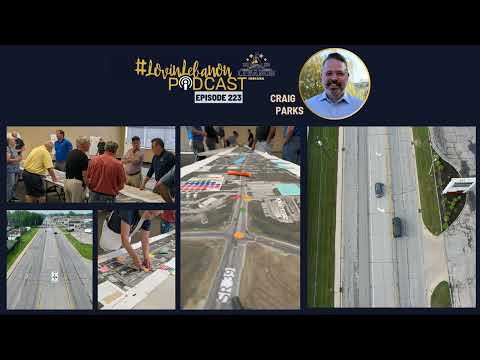
On the city’s podcast, Joe LePage, communications and community development director for the City of Lebanon, and Craig Parks, vice president of engineering for Avenue and a Lebanon resident, described an open house at the Herman B. Wells Center at Lebanon High School where residents placed colored dots on large maps to mark problems such as pedestrian gaps, congestion and safety hot spots. “I was pleasantly surprised at the turnout,” Parks said, describing “7 or 8” tables laid out for public input. The survey that informed the open house was created before Avenue became involved; Avenue is now collecting additional feedback.
Parks said the state is at the table negotiating a possible “relinquishment” — the transfer of a state-controlled road to local control — but stressed it is not guaranteed. “It’s not a foregone conclusion that the relinquishment will happen,” he said. He described the goal as producing concept plans that translate resident input into a level of service and associated costs so the city can make an informed decision and pursue funding. He said those plans would likely lead to a series of projects over multiple years rather than a single, large construction package.
Residents who commented at the open house and in the podcast emphasized crossing difficulties on the four-lane section near retail areas and the absence of sidewalks in places. Parks recounted personal observations: “That portion right out in front of Walmart and Kroger — your head’s always on a swivel,” and described seeing people, including a friend who uses a wheelchair, make crossings that felt dangerous.
Potential design tools Parks discussed included medians to shorten crossing distances and roundabouts at selected intersections. He described roundabouts as a safety tool that “reduces the number of points where two vehicles can crash” and said they can lower crash severity; he also acknowledged community resistance to change and said roundabouts are not appropriate everywhere. Parks added that roundabouts often include splitter islands and truck aprons to accommodate larger vehicles while providing pedestrian refuges.
Avenue’s role, Parks said, is not as a design firm or contractor but as a facilitator to help the city and INDOT communicate and assemble feasible concepts. He noted Avenue’s leadership includes former INDOT officials and said the team has pulled four years of crash data to identify high-injury locations and crash types before proposing engineering solutions.
On funding and timing, Parks said officials would develop cost estimates and then pursue a financial plan that could include federal funds tied to any relinquishment agreement. “There’s going to be federal dollars that are exchanged,” he said; he also emphasized that improvements would come as multiple projects over time, with public input at each stage. No vote or formal city action was reported during the podcast.
Parks said Avenue plans follow-up outreach, including online concept surveys, and asked residents to watch the city’s Facebook pages for opportunities to review proposed concepts. LePage said the podcast episode will include a survey link for residents who could not attend the open house.
The conversation reflected both local concern about pedestrian and bicycle access and the practical limits of state versus city road management. For now, the matter remains in the planning and negotiation phase: ideas are being gathered, concepts will be developed for public review, and any actual transfer of the road will depend on an agreement with INDOT and on funding decisions.
To comment or follow the process, residents can watch the City of Lebanon’s announcements on its Facebook channels and the podcast post for the survey link.