Get Full Government Meeting Transcripts, Videos, & Alerts Forever!
Get email alerts on the City Budget Reserves topic
No spam. Unsubscribe anytime.
Port Richey officials say reserves remain healthy as staff refines CIP priorities
Summary
City staff presented updated reserve schedules and a draft capital improvement plan; councilors heard options to prioritize water, sewer and public-safety projects while noting a tighter spending outlook if projected revenues fall.
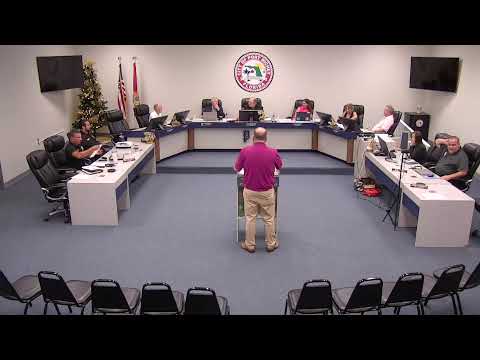
City officials told the Port Richey City Council at a budget workshop that the city enters the coming budget year with what staff described as a solid reserves position but that council will need to prioritize capital projects as one-time and recurring costs materialize. City Manager Andrew Butterfield opened the discussion, saying the meeting would focus on the capital improvement plan and follow-up questions from last week’s budget workshop. Finance Director Adam Thompson presented a reserve schedule showing year-end balances and highlighted that some anticipated spending had been withheld this fiscal year, which temporarily boosted reserves. Thompson said the reserve figures are tied to the FY2025 balances and will change as the council finalizes the FY2026 budget. He urged the council to align the capital plan with actual needs rather than spending simply because funds are available. He also described the intention to keep a target reserve level “somewhere around 30%.” Councilors and staff discussed how to apply impact fees and other restricted funds. Thompson said impact-fee balances for water and sewer are available and likely should be used first for utility projects; he cautioned that transportation impact fees are still under review for a specific roadway project (Grand Boulevard). On spending priorities, councilors and staff listed water and sewer rehabilitation, lift-station equipment, vehicle lifecycle replacements and a pending fire-truck debt-service schedule as the main items to watch. Thompson said that while some line items could be shifted, other expenses — notably insurance increases and a probable PBA wage adjustment — will pressure operating budgets. The council asked for more granular capital ledgers tied to general ledger object codes so each CIP line can be reconciled to actual spending. Thompson said the accounting system limits how many sub-object codes the city can use now, and he committed to producing an external spreadsheet tying capital projects to ledger activity. The workshop concluded with staff proposing a separate, more detailed CIP review workshop and two public budget hearings scheduled for Sept. 4 and Sept. 18 at 5:30 p.m.