
Board of Health hears link between foodborne illness prevention and enforcing restaurant worker labor standards
Get AI-powered insights, summaries, and transcripts
Subscribe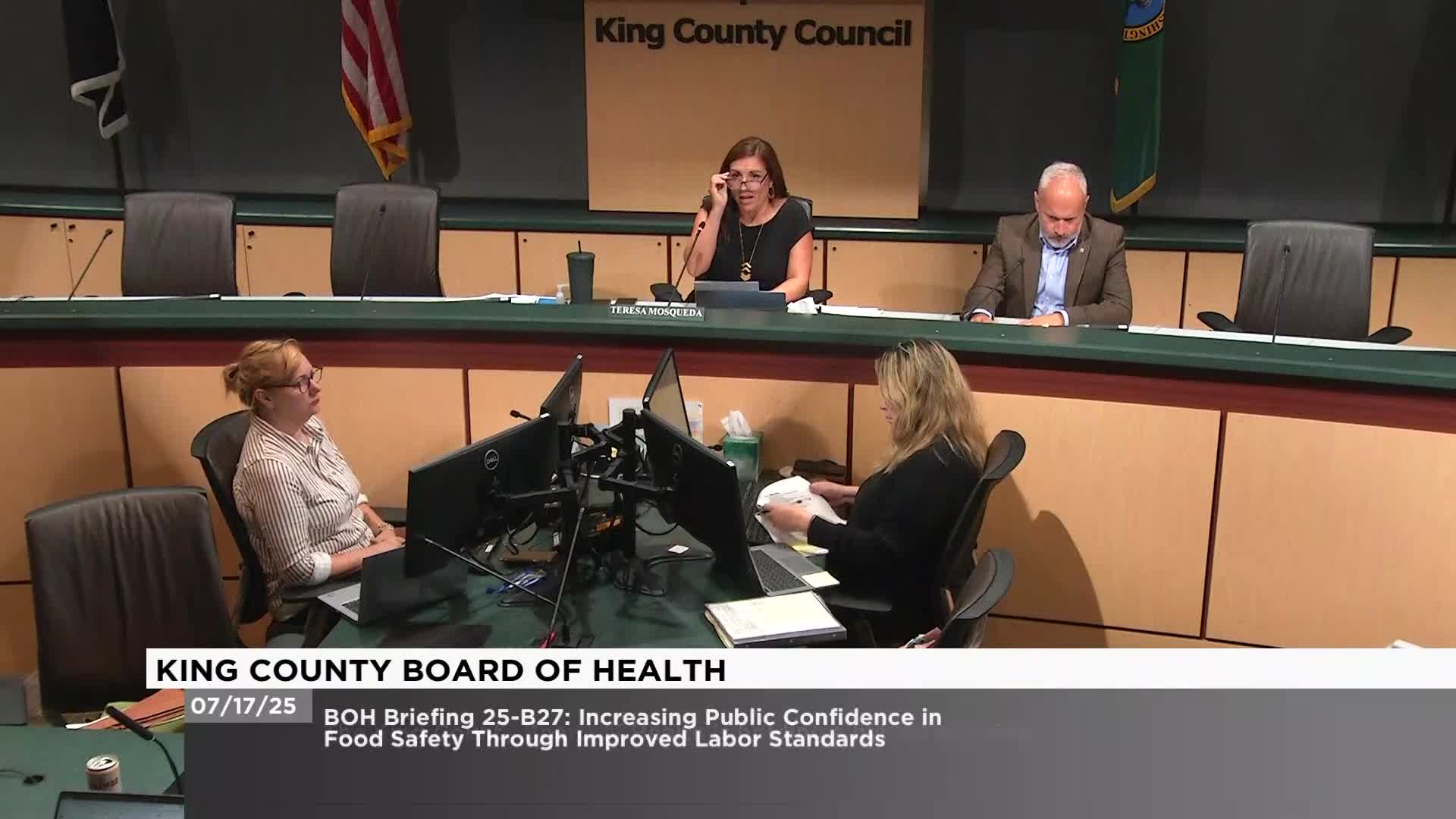
Summary
Presenters and workers told the King County Board of Health that labor-law compliance—paid sick leave, meal and rest breaks, and wage enforcement—affects food-safety outcomes; Board members discussed potential partnerships with labor enforcement agencies and precedents in California counties to tie wage-judgment compliance to permit status.
Current and former restaurant workers, labor advocates, legal scholars and county staff told the King County Board of Health on July 17 that strengthening enforcement of basic workplace standards could reduce foodborne illness risk by removing incentives for workers to come to work sick and by reducing error-prone overwork.
Why it matters: Workers who lack paid sick leave, face punitive point or attendance policies, or work double shifts are more likely to handle food while ill or make errors that affect food safety, panelists said. "This point system ... created a work culture that encourage[s] workers to show up to work sick," said Matthew Clay, a former restaurant worker who testified about a points policy his employer used.
Evidence and expert testimony: Jeremiah Miller, legal director at Fair Work Center, described cases where workers were denied paid sick and safe time and where chronic underpayment and tip dependence created pressure to work while ill. Professor Elizabeth Ford of Seattle University School of Law summarized academic research showing enforcement of minimum-standards laws can deter wage theft and cited a 2022 study finding higher minimum wages were associated with fewer restaurant food-safety violations. Chris Lampkin, deputy chief of staff to Chair Mosqueda, summarized programs in San Diego and Santa Clara counties that condition food-permit enforcement on employers' compliance with final wage-judgment obligations; San Diego reported recovering roughly $100,000 for workers under a similar program.
Board discussion and possible county role: Presenters and board members discussed coordination with Office of Labor Standards in Seattle and the Washington Department of Labor & Industries, focusing on education first and potential last-resort measures tied to public-health inspections or permit status for establishments that fail to remedy wage-judgment debts. No change to county permitting was adopted at this meeting; board staff said they will continue research and seek the California counties as guests for a future meeting.
Limitations: Board members and presenters emphasized enforcement capacity limits at state and city agencies and the need to avoid undermining small businesses that are making good-faith efforts. Any use of permit suspension would follow repeated outreach and attempts to secure compliance, presenters said.
Next steps: Staff will continue research and may arrange follow-up briefings with San Diego and Santa Clara County staff. Board members volunteered to work on potential policy options that emphasize education, payment plans and targeted enforcement as a last resort.