
King County briefed on high cost of sewer connections as thousands of aging septic systems sit in urban areas
Get AI-powered insights, summaries, and transcripts
Subscribe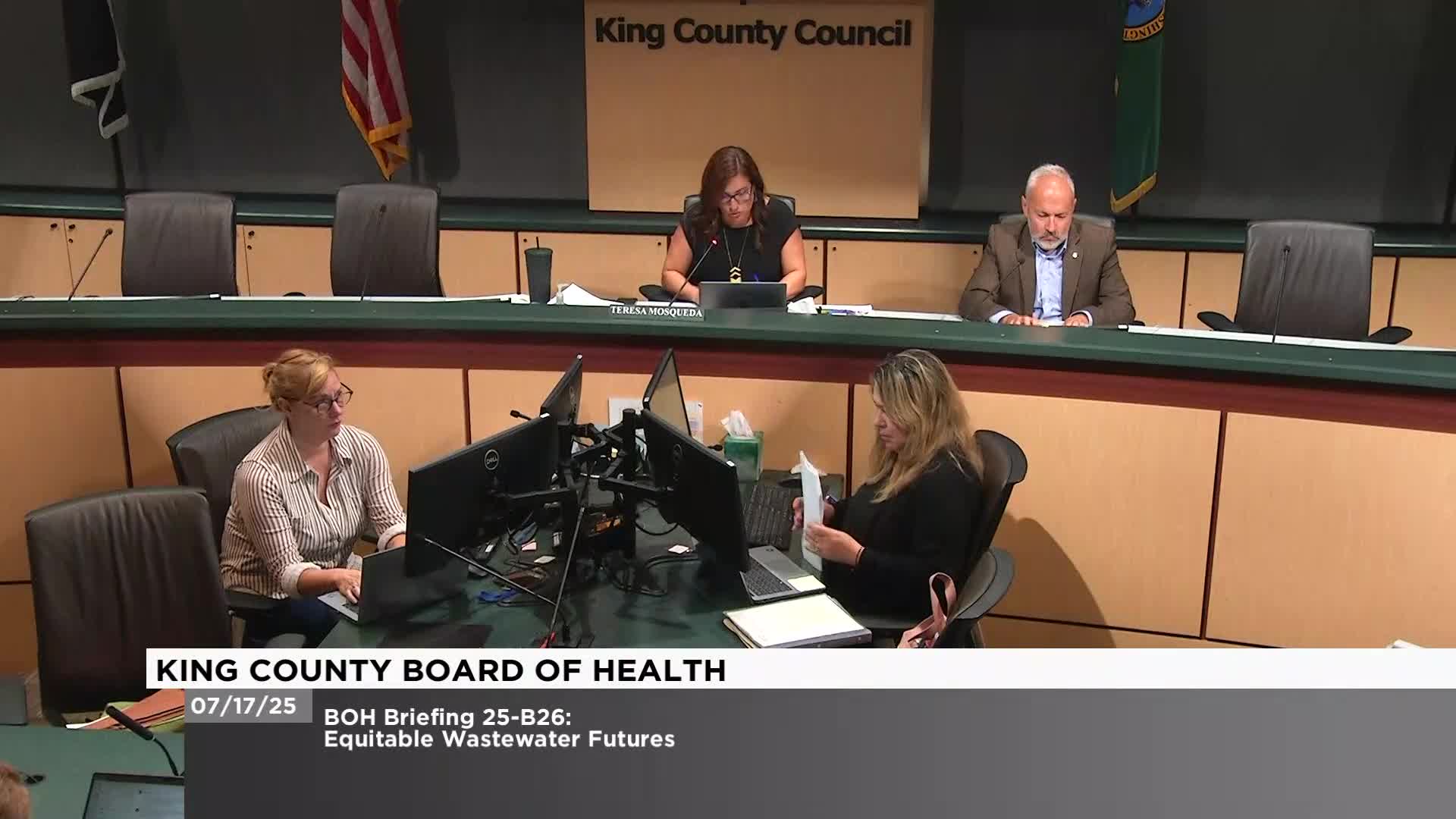
Summary
Public Health — Seattle & King County staff and representatives from Valley View Sewer District briefed the King County Board of Health on July 17 about the scale and cost of converting aging septic systems to public sewer, particularly inside the county's urban growth area.
Public Health — Seattle & King County staff and representatives from Valley View Sewer District briefed the King County Board of Health on July 17 about the scale and cost of converting aging septic systems to public sewer, particularly inside the county's urban growth area. "Almost half of our on-site sewage systems in King County are within the urban growth area," Megan Jackson, who leads the on-site sewage program, told the board.
Why it matters: County staff said many urban on-site sewage systems (OSS) are older than their design life and about 40% are in areas with high social vulnerability. Without action, an estimated 30,000 urban OSS could fail over the next 20 years, causing sewage backups and public-health risks, especially during floods.
Details from the briefing: Public Health described pilot projects funded by King County Council with $2 million from the climate equity capital pool to subsidize sewer expansion in unincorporated parts of the county. Valley View Sewer District said connection costs vary widely and frequently exceed $85,000–$100,000 per property; in one example a $1.2 million mainline extension yielded a per-property financial benefit the presenters calculated at about $60,000 after grants but connection charges remained substantial. "Affordability is a big concern," said Andrew LaRue of Valley View. He estimated about 1,500 unsewered homes in his district.
What the county is proposing and studying: The Equitable Wastewater Futures workgroup has convened multi-jurisdictional conversations to map barriers and design collaborative responses. Staff cited three near-term priorities: (1) formalize a cross-sector working group; (2) improve property owner information and planning tools (workbooks, FAQs); and (3) develop funding strategies including bonds and loans. The Robert Wood Johnson Foundation awarded a grant to develop a model program for bonds and loans to finance connections.
Constraints and tradeoffs: Presenters warned that loans reduce upfront county subsidy needs but do not lower the ultimate connection cost borne by property owners; grants are more effective but limited. Sewer districts also warned that extending sewer mains can require replacing aging district infrastructure and that rate increases may be needed to finance long-term replacement costs.
Board response and follow-up: Board members raised options including pooled funds, ordinances requiring connections in some jurisdictions, and coordinated large-scale projects to reduce per-connection costs. Staff said the issue will return to the board during 2026 after further analysis and community outreach. No regulatory changes or votes were taken July 17.
Bottom line: Converting aging urban septic systems to sewer in King County is technically feasible but extremely costly; county staff and sewer districts urged a coordinated, equity-focused multi-jurisdictional strategy to prioritize investments and protect vulnerable residents.