Get Full Government Meeting Transcripts, Videos, & Alerts Forever!
Get email alerts on the Public Engagement Town Halls topic
No spam. Unsubscribe anytime.
Clallam County town-hall subcommittee appoints chair, debates draft charter language and logistics
Summary
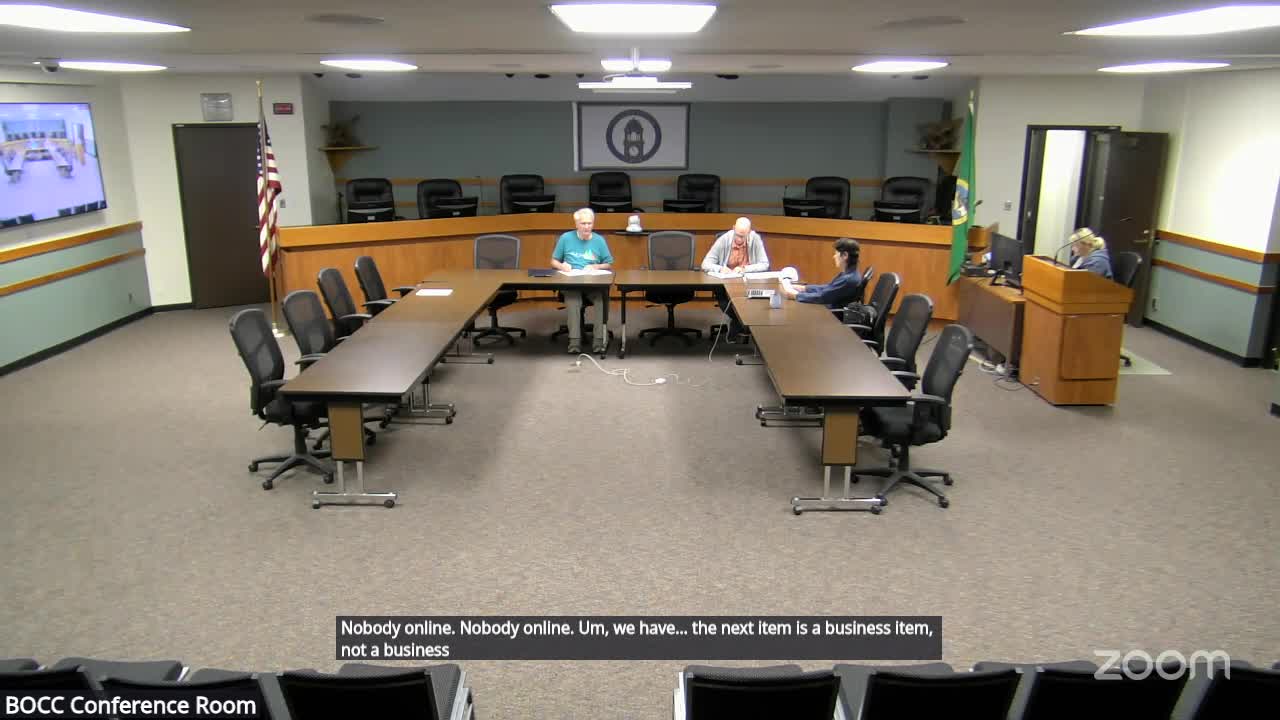
Members of a newly formed Clallam County Board of Commissioners town-hall committee appointed a chair and spent the meeting debating a draft charter amendment that would formalize town-hall events, including frequency, commissioner attendance, reporting, venue accessibility and compliance with open-meetings rules.
Members of the Clallam County Board of Commissioners (BOCC) town-hall committee appointed Nina Sarmiento as chair and discussed a draft charter amendment intended to standardize county town-hall meetings, including how often they would be held, who should attend, how they should be recorded and what resources the county would provide.
The committee — which includes commissioners representing Districts 1, 2 and 3 and staff — approved Sarmiento’s appointment by voice vote. Committee members spent most of the meeting debating the amendment’s details, such as whether town halls should be held by each individual commissioner or with all three commissioners present, how the events should be timed relative to the county budget process and what limits or procedures should govern public comment.
The draft amendment under discussion would create a standing schedule and a reporting mechanism after each town hall. Committee members disagreed about how prescriptive the charter should be. Some members urged specific timing tied to the budget cycle so residents could comment before key decisions; others recommended broader language to preserve flexibility over venues and format.
Jeff Tozer, representing District 1, cited turnout and public interest as reasons to pursue the amendment, saying the county’s first town-hall event at KSQM in Sequim drew 77 people and that prompt notices and advance reminders boosted participation. Committee members referenced Concord, Massachusetts, as a model for sustained, robust local engagement where voters take up detailed matters at multi-day town meetings.
Several members raised logistical and legal concerns. Committee members discussed the Open Meetings Act and how having multiple commissioners at the same event could trigger open-meetings rules, requiring formal notice, recording and staff support. One committee member warned that if all three commissioners attend, the event can become a county meeting subject to the Open Meetings Act; others said holding a single commissioner event could increase the number of meetings but might make participation easier for residents in a particular district.
Resource implications were a recurring theme. Members asked whether the county would be expected to provide staff, overtime, recording equipment and facility rentals, and whether those costs should be limited. One member said renting a venue or providing recording equipment is a reasonable investment to boost public participation; another suggested keeping town halls in municipal or public venues where possible to reduce expense.
The committee discussed format details including length of open comment and question-and-answer periods. Suggestions ranged from preserving the standard three-minute public-comment limit to allowing longer back-and-forth exchanges for substantive issues; one member suggested allotting up to five minutes or providing structured back-and-forth to enable meaningful dialogue.
Members also debated venue choice and accessibility. Some favored municipal or government facilities to ensure access and neutrality; others said community spaces such as The Grange or local radio station rooms could feel more welcoming and encourage attendance. Committee members agreed the amendment should emphasize accessibility and appropriate capacity without overprescribing a single type of site.
Before adjourning the meeting, the committee set a tentative next meeting time in August (noted in the meeting record as “Tentative the 20 seventh, 9 to 11:30”) and assigned a volunteer to take and distribute notes to county staff. Committee members said they will refine the draft amendment, investigate examples from other jurisdictions and return with specific language on frequency, reporting and resource needs at the next meeting.
No additional formal actions or votes on the charter language were taken at the session; the meeting primarily served to identify issues the committee must resolve and to assign follow-up work.