
Local weed board flags scotch broom, knotweed and roadside concerns; urges partnership with state crews
Get AI-powered insights, summaries, and transcripts
Subscribe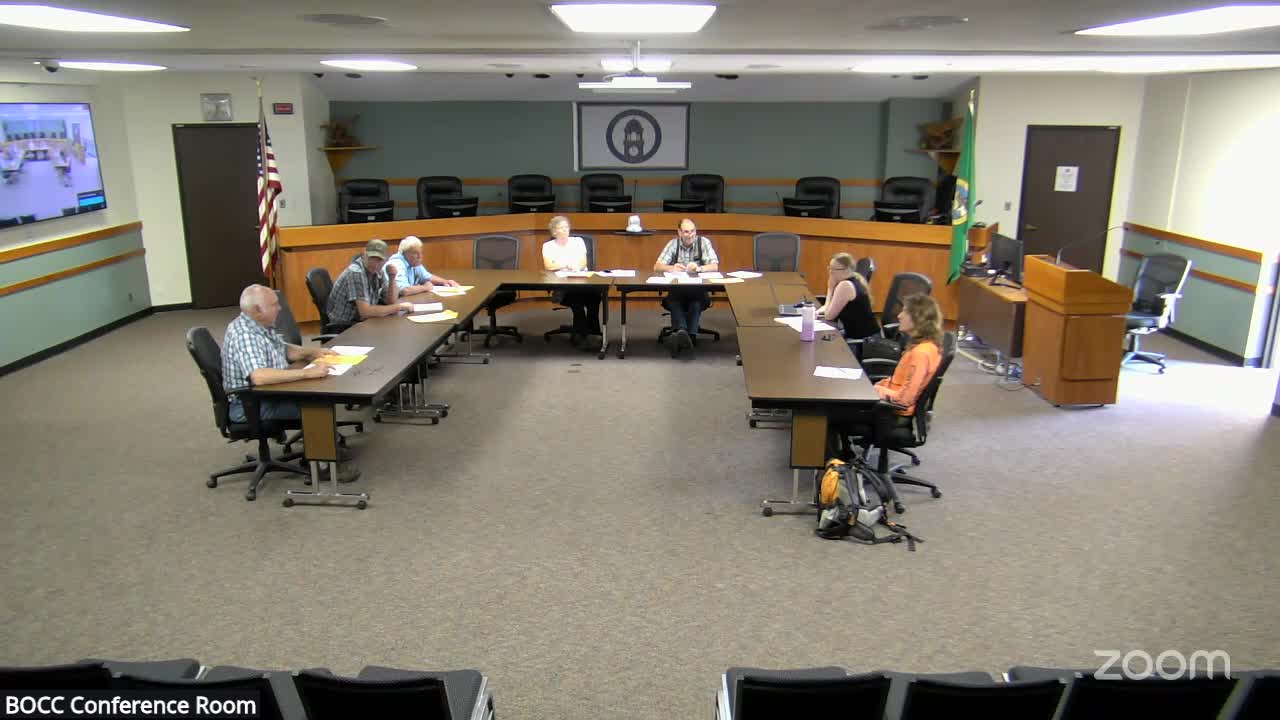
Summary
Board members and staff discussed scotch broom encroachment along East Beach Road and county roads, knotweed permissions on Big River parcels, and coordination needs with state agencies and private pit owners.
At a recent Noxious Weed Control Board meeting, staff and board members described scotch broom growth along East Beach Road and Barnes Point and raised concerns about roadside mowing, material handling at private pits and coordination with state crews.
Board members said the county’s roadside mowing did not occur this year before peak tourist season and that scotch broom and other vegetation had grown into narrow roadsides, complicating traffic and emergency detours. Staff said they have been in touch with the National Park Service’s vegetation staff and WSDOT crews to seek coordinated spraying and traffic‑control plans for sections adjacent to Lake Crescent and East Beach Road.
"Do you wanna partner with us next spring to take care of the Scotch Broom off East Beach Road?" read staff quoting an email from the National Park Service’s vegetation branch. Staff said the park’s program and local WSDOT crews have the capability to do traffic control and spraying where required, but safety limits access in some locations.
Members noted unresolved issues at some private pits, including one by Blue Mountain Road where scotch broom piles were reportedly being buried or stored rather than removed. Staff said the regulatory requirement for control depends on whether a pit is actively used for gravel storage; if it is not being used as a storage pit, scotch broom may not be a required control in that location but other regulated species (poison hemlock, common tansy, spotted knapweed) were present and under follow up.
Knotweed control in the Big River watershed was another topic. Staff reported they have obtained permissions from most landowners in the watershed and that one parcel above the Big River Bridge has not cooperated. Because knotweed is on the state list as "required for control," staff said they will re-contact the nonresponsive owner and may proceed with stronger enforcement steps if cooperation is not forthcoming.
The board also discussed constraints at state and regional levels: local crews expressed interest in treating regulated weeds but staff said higher levels of WSDOT have budget and staffing limits that can prevent sustained roadside programs. Board members suggested coordinating with other county noxious‑weed boards and timber managers to press for more consistent roadside vegetation management across jurisdictions.
Staff said they plan to follow up with WSDOT crews, coordinated park staff and private pit owners, and recommended broader regional advocacy if state-level vegetation programs remain underfunded.