
County supports CHIP grant application to fund infrastructure for 45-unit Habitat housing project
Get AI-powered insights, summaries, and transcripts
Subscribe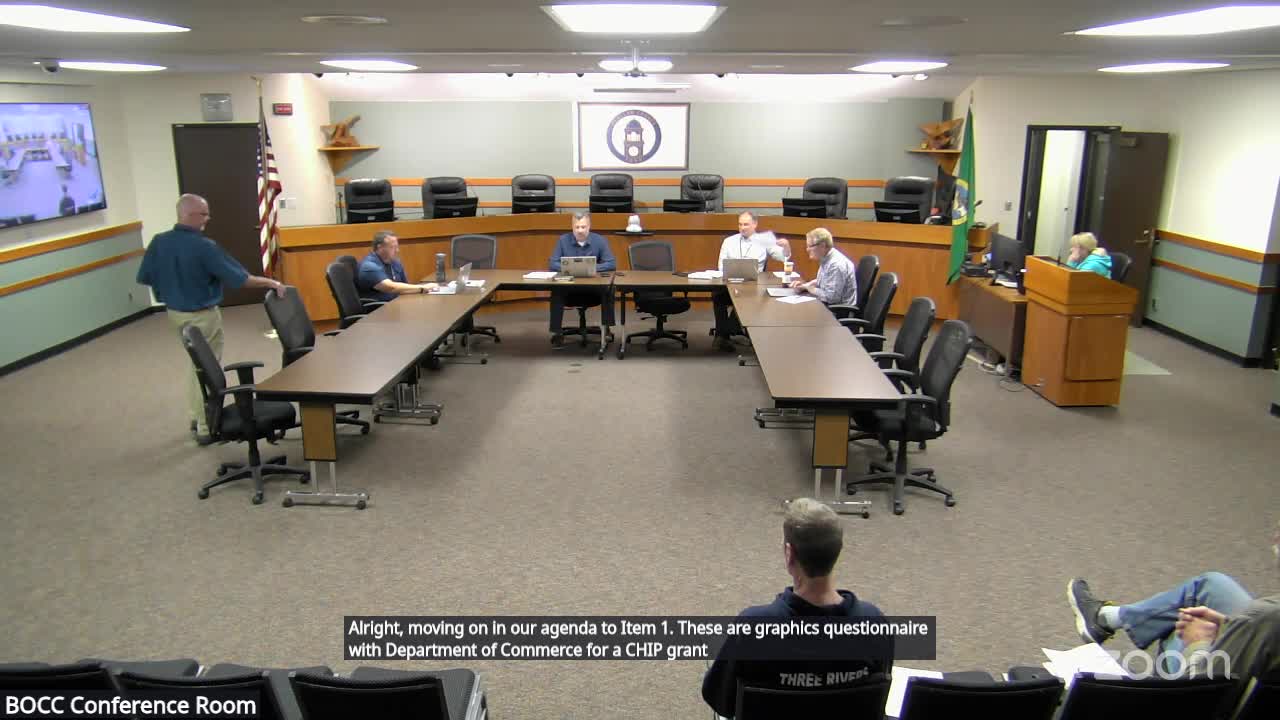
Summary
Clallam County commissioners on July 21 signaled support for applying to the Washington State Commerce Department’s CHIP infrastructure grant to pay water, sewer and storm connections for a proposed 45-unit Habitat for Humanity housing development.
Clallam County commissioners on July 21 signaled support for applying to the Washington State Commerce Department’s CHIP infrastructure program to fund site infrastructure for a proposed 45-unit housing development led by Habitat for Humanity.
County staff said Commerce reduced the award cap for this cycle but still offers up to $1 million per project and allows mixed-income proposals so long as at least 25% of units remain affordable. The Habitat project being discussed would include primarily homeownership units with a 25% affordability requirement recorded for 25 years if the grant is awarded.
Staff and Habitat representatives detailed projected infrastructure costs including water, sewer and stormwater hookups and system-development and GFC (general facility charge) fees; the estimated hookup fees for sewer and water alone were described as significant and could represent hundreds of thousands in connection charges for a larger development. Habitat and county staff discussed deed restrictions and shared-appreciation schedules as mechanisms to preserve affordability; Habitat representatives said they can record deed restrictions to require resale to households at or below 80% area median income and that workforce units between 80% and 120% AMI would be treated differently.
County staff said the CHIP grant is reimbursement-based and that nonprofit partners such as Habitat will need working-capital capacity to cover upfront costs; Habitat and county finance staff said the nonprofit believes it can manage a typical 60-day reimbursement cycle and that the county’s administrative lift would be light for grant pass-through and project oversight.
Timelines discussed included a requirement to have a shovel in the ground within two years of award and two years to complete construction, and staff said infrastructure work could take 12–15 months once funded. Commerce’s application deadline had been set for late September, and awards are expected in January; county staff brought the project forward early to ensure a competitive, complete application.
Commissioners expressed support and asked about other potential applicants; staff said the county is aware of other housing providers preparing applications and that multiple projects from the same jurisdiction are allowed if each project meets program criteria. Commissioners also discussed possible fee-waiver/resolution language to reduce developer hook-up costs for affordable units, similar to previous actions on other properties.
The board agreed to move forward with the application process and to return with required documents and any fee-waiver or resolution language at a subsequent meeting.