
County ratifies emergency declaration after tanker crash contaminates Indian Creek, impacts Port Angeles water
Get AI-powered insights, summaries, and transcripts
Subscribe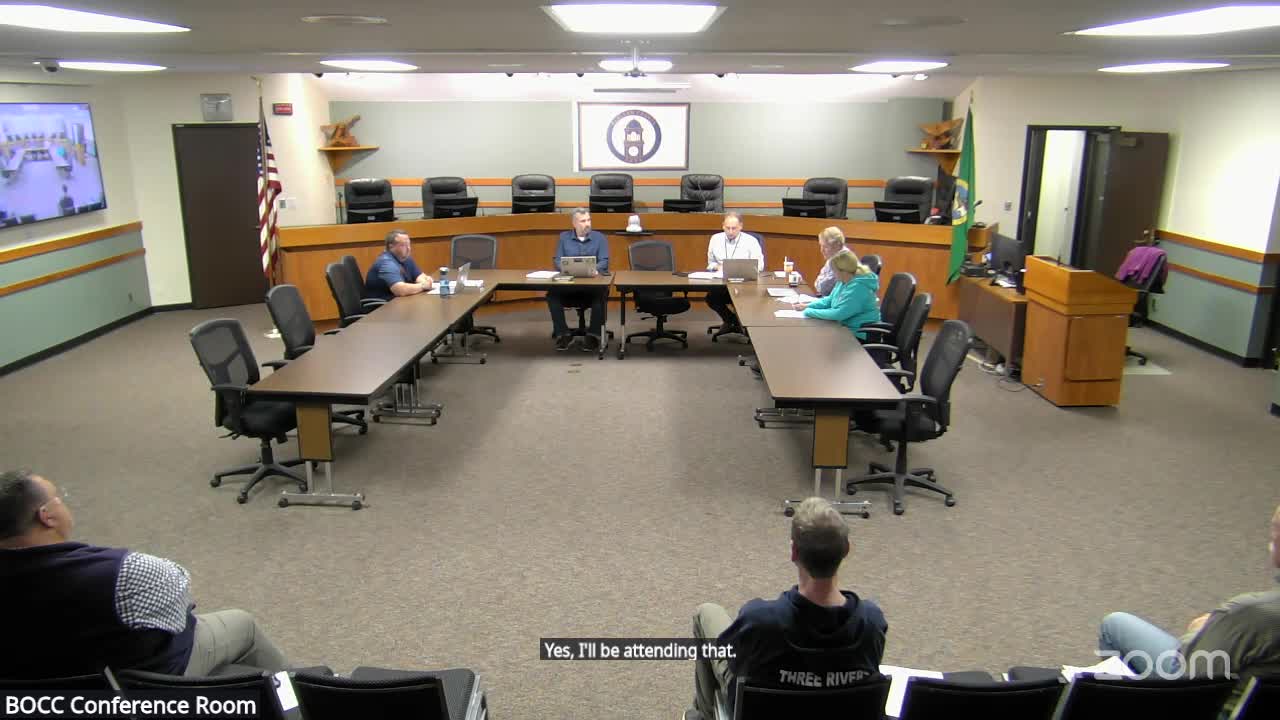
Summary
County commissioners ratified a declaration of emergency on July 21 after a dual-tanker truck rolled off Highway 101 and released fossil fuels into Indian Creek, a tributary of the Elwha River and a primary drinking-water source for the city of Port Angeles.
County commissioners ratified a declaration of emergency on July 21 after a dual-tanker truck rolled off Highway 101 and released fossil fuels into Indian Creek, a tributary of the Elwha River and a primary drinking-water source for the city of Port Angeles.
County staff said the tanker rolled, landed upside down in Indian Creek and began leaking fuel; initial field observations included dead fish in the waterway. The county emergency declaration cited those conditions and the immediate need to contain contamination and contract environmental consultants and labs.
County staff told commissioners that placards on the tankers did not match the shipping manifest, complicating early identification of the cargo. "In the end, it appears that it was a combination of unleaded fuel, number 2 diesel fuel, off-road diesel and standard diesel fuel," the county staff member said. The sheriff contacted county leadership and requested the emergency declaration, the staff member said.
Officials said they immediately stood up an emergency operations center and shut down intake to two fish hatcheries and the city's water system. Port Angeles ran on reserves until lab results and quality-control checks were compared; the city imposed a temporary drinking-water ban on Sunday while waiting laboratory confirmation. County staff said water distributed at community sites sold out within about 30 minutes of opening.
County staff described coordination with the city and other partners to secure additional water supplies from vendors in this and adjacent counties, and noted the costs of purchase, transportation and distribution. PetroCar, the company linked to the tankers, had representatives on site and in the EOC and offered assistance, county staff said. Staff said final cost reconciliation among the company, insurers and public agencies remains to be determined.
Officials described a two-track testing process: a portable on-site lab and a state laboratory in Olympia. County staff emphasized differences between environmental cleanup testing methods and drinking-water certification and that the county sought to ensure the state would accept the methods used. Preliminary results from samples taken Saturday and processed Sunday showed readings moving in a positive direction but required quality assurance and control before officials lifted the ban, staff said.
County staff praised local responders and volunteers. "Our sheriff was the point person... he put in 48 hours nonstop," the staff member said. City staff and park rangers also opened sites where residents could fill jugs, and civilian volunteers provided support at the EOC, staff said.
The county cited County Policy 560.42 as authority for the executive-level emergency declaration and presented a resolution to the board for ratification at the next regular meeting, as the policy requires. Commissioners moved to approve the resolution, seconded and adopted the declaration by voice vote.
Commissioners were told that continued monitoring and testing of the watershed and water system would follow normal water-system monitoring procedures. Officials said some local water systems may not have been directly impacted because of alternate intakes or reservoir capacity; county staff said specifics for those systems were "not specified" at the briefing.
Next steps identified by county staff include continued environmental sampling, ongoing public communications about drinking water safety, procurement and distribution of replacement water as needed and later reconciliation of response costs. The county will provide updates as further lab results and assessments are completed.