Get Full Government Meeting Transcripts, Videos, & Alerts Forever!
Get email alerts on the Historic Preservation topic
No spam. Unsubscribe anytime.
Kalispell council opens talks on transferring Central School building to Northwest Montana History Museum
Summary
City council discussed a request from the Northwest Montana History Museum to transfer ownership of the 130‑year‑old Central School building, explored legal limits and reversion clauses under state law, and asked staff to return with a legal opinion and follow‑up work session to sort parking, lending and deed‑restriction options.
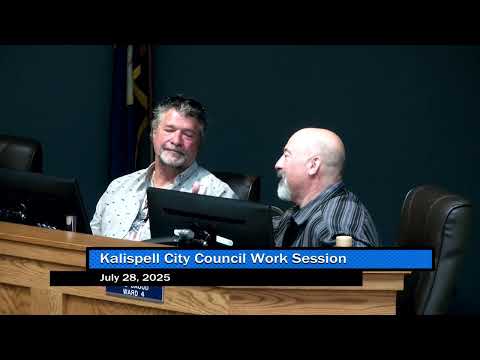
Kalispell councilors opened a work‑session discussion July 28 on a request from the Northwest Montana History Museum to transfer ownership of the Central School building at 124 Second Avenue East to the museum. The museum board told the council the 130‑year‑old structure needs “repairs, improvements, and continuing maintenance,” and argued ownership would allow the nonprofit to pursue grants and loans the board says are difficult to secure while the city holds title. City staff briefed the council on Montana law governing disposal of municipal property, noting that a statute the staff cited allows transfer while also authorizing a deed provision requiring preservation and reversion if the new owner fails to comply. The staff told the council it can draft transfers that include deed restrictions, reversionary clauses or rights of first refusal. The council’s discussion focused on three practical questions: whether the museum could access grants and low‑rate programs more easily as owner than as a lessee; how to structure deed language and loan approvals to protect the building’s historic status; and whether parking and adjacent green space should be included in any transfer. AJ King, introduced as a museum board member and a lender at 3 Rivers Bank, told the council that many grant programs and low‑rate financing opportunities are easier when the applicant owns the property and that sizable energy‑efficiency and equipment projects would be more feasible if the museum held title. “When you’re the owner, you can take advantage of these programs at a very low rate,” King said. Margaret Davis, the museum’s executive director, told the council the museum exceeded 10,000 visitors in 2024 and provided attendance and programming statistics: “We surpassed 10,000 visitors last year. 10,336; 1,700 of those are kids, and about a thousand are just in our third graders’ McLaren immersion school program,” she said, and described an active schedule of more than 140 events a year and a collection the museum says includes more than 50,000 items. Councilors repeatedly raised the risk that, if the museum later defaulted on a loan secured against the property, a bank foreclosure could place the building in private hands. “That’s the outcome I don’t want,” said Councilor Hunter, arguing for deed language and other protections to keep the building a museum if the nonprofit later were unable to continue operating it. Board members and several councilors discussed practical contract options. Staff advised the council that Montana law allows transfers to nonprofits for historically significant buildings that include a preservation requirement and a reversion provision. Staff said such restrictions can reduce the sale price or limit future transfers and are often paired with requirements that the council approve loans or other encumbrances. No formal vote occurred. Council members signaled interest in pursuing the request while asking staff to obtain a written legal opinion and to prepare more detail on the parking parcels and the financial tradeoffs of extending a long lease versus deeding the property. Staff closed the session saying it would work with the museum board and return with a follow‑up work session within about one to two months. Background and next steps: Councilors and museum representatives discussed options including a long lease extension (the museum’s current lease expires in about 10 years), deed restrictions requiring museum use, rights of repurchase or right of first refusal in the event of noncompliance, and possible subdivision of the assessor parcel to leave public parking or green space in public ownership. Staff told the council it will prepare a legal opinion, provide data about permit parking revenue and maintenance costs for the green space, and return with a draft transfer framework for further council direction.