Get Full Government Meeting Transcripts, Videos, & Alerts Forever!
Get email alerts on the Housing Health topic
No spam. Unsubscribe anytime.
Yonkers committee keeps housing code proposal on mold and moisture in committee; inspectors can cite moisture but not label mold
Summary
The Yonkers Legislation and Codes Committee kept a proposed amendment to Chapter 58 on indoor asthma and allergen hazards in committee after hearing that building inspectors can cite moisture and related defects but are not trained to identify or certify mold.
The Legislation and Codes Committee discussed a proposed local law amending Chapter 58 (Housing and Building Maintenance Code) to address indoor asthma and allergen hazards in multiple dwellings and agreed to keep the item in committee while staff clarifies enforcement capacity and training needs.
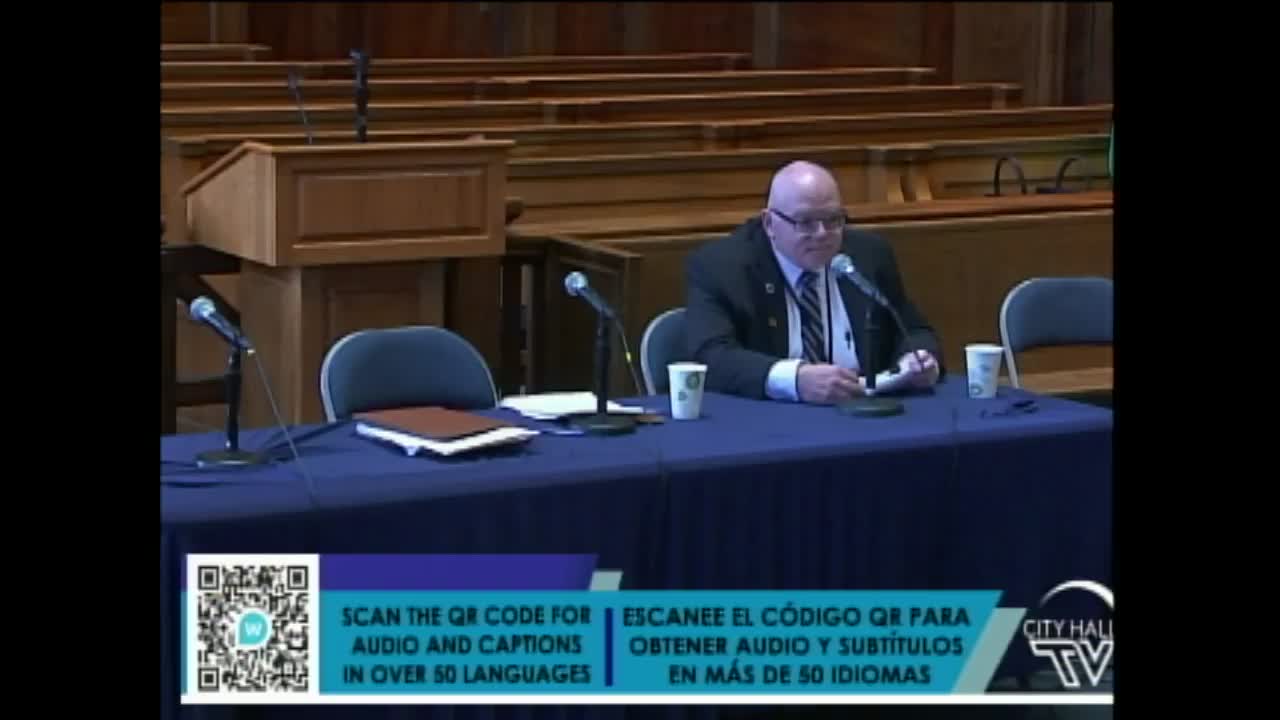
Building Commissioner Jim Gibbons told the committee the department can enforce conditions that lead to mold — for example, water leaks, wet or discolored walls and loose paint — under existing property maintenance code provisions, but said department inspectors are not qualified to identify or certify mold. "We could say that there is moisture on the wall and the wall is discolored. But for us to indicate that it it's mold, that wouldn't be appropriate with our level of training," Gibbons said.
Gibbons explained a likely enforcement path: staff could issue a violation describing the moisture/water damage and require remediation, typically allowing 30 days to correct. If a landlord does not remedy the condition, the department could then issue a summons and refer the case to court, which could impose fines or other penalties. He added that training and use of outside consultants or subject-matter experts would be needed to perform sampling and provide laboratory reports if the city wished to require mold testing.
Councilwoman Corazon Pineda Isaac asked whether the department would use current manpower to address hazards; Gibbons said his team would pursue targeted continuing education so inspectors could identify root causes and issue violations without claiming mold as a lab-verified diagnosis. Councilmembers stressed the public-health importance of protecting tenants; Minority Leader Mike Breen and others said the change is a step forward but that a dedicated specialist position or certified expert may be necessary in the future. Commissioner Gibbons noted such a position and associated training would carry a significant expense and would require budget authority.
The proposed local law also excludes properties owned by the municipal housing authority from the amendment as drafted; committee members questioned that exemption and discussed language to ensure municipal authority inspections comply with applicable maintenance codes. The item remains in committee for further drafting and consideration of training and budget implications.