Get Full Government Meeting Transcripts, Videos, & Alerts Forever!
Get email alerts on the Residential Facility Zoning topic
No spam. Unsubscribe anytime.
Board postpones decision on residential care facility at 6 Healthcare Drive to allow operational details
Summary
The Rochester Zoning Board of Adjustment postponed action on a special-exception request from Dismuss Homes of New Hampshire for a residential facility at 6 Healthcare Drive to its July 9 meeting, asking the applicant for clearer admission criteria, bed count and buffering plans after abutter concerns.
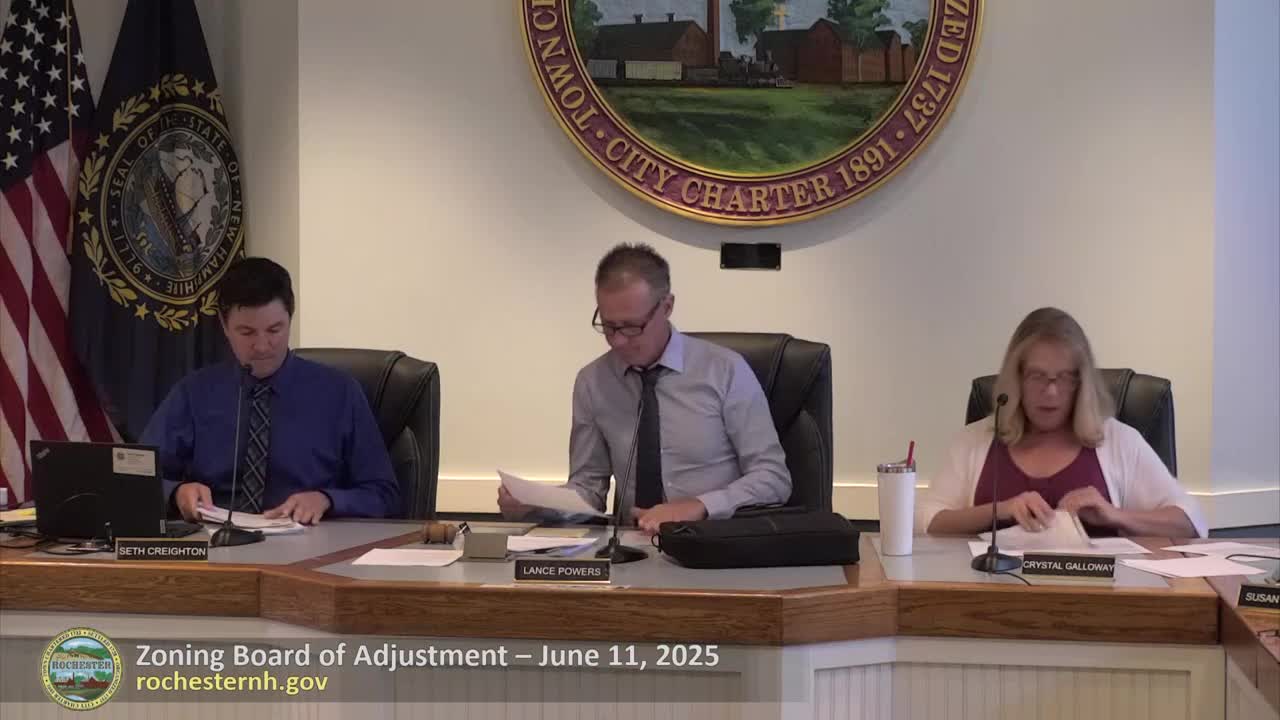
Rochester, N.H. — The Rochester Zoning Board of Adjustment voted on June 11 to postpone consideration of a special exception for a residential care facility at 6 Healthcare Drive until the board’s July 9 meeting so the applicant can provide additional operational details.
Josh Linzetta, an attorney representing Dismuss Homes of New Hampshire, described the property and the organization’s planned residential program. He told the board the site is about 11,000 square feet and is adjacent to conservation land and other residential-care uses. “It’s a good spot for this particular use,” Linzetta said.
An abutter, Desiree Hafford (speaking with Guy Hafford), said the pair operate an assisted-care facility for the elderly at 18 Healthcare Drive and expressed concern that a residential program for women leaving incarceration or treatment would have a negative effect on their business and clients. “We feel that this would have a negative impact on our business,” Desiree Hafford said, citing fears about panhandling and differing client needs.
A city planning staff member reviewed the site and noted the area contains several residential uses and conservation land. The staff member said the city believes the five special-exception criteria can be met, but also reminded the board that the zoning ordinance permits approval with conditions, such as buffering or fencing, and suggested the board could require performance standards or a fence along the rear property line to help separate the uses.
Board members asked operational questions that the applicant’s outside counsel could not fully answer at the hearing. One board member asked what criteria the facility uses to admit residents and where residents would be coming from; the applicant’s counsel said those operational and screening questions would be answered by the facility’s CEO and that the applicant would supply the details at a later date.
When asked about capacity, a city staff member stated, on the record, “The application is requesting a 20‑bed facility.” The board asked the applicant to confirm the bed count and to provide details on the program’s admission criteria, staffing and any proposed on-site buffering or fencing to address abutter concerns.
After discussion about previous hearings on related applications at nearby properties and whether legal limits on repeat applications (the so-called Fisher doctrine) applied, a board member moved to postpone the case to July 9 so the applicant could return with the requested operational and buffering information. The motion passed on a roll call of the five board members present.
The postponement is procedural: it allows the board to receive clarifying materials about who the facility will serve, the proposed number of beds and proposed buffering measures before making a decision on the special exception. The city planning staff said it would work with the applicant on specific conditions if the board chooses to approve at the next hearing.