
Commissioners discuss EMS staffing, approve transport position study direction and move to secure ambulance remounts
Get AI-powered insights, summaries, and transcripts
Subscribe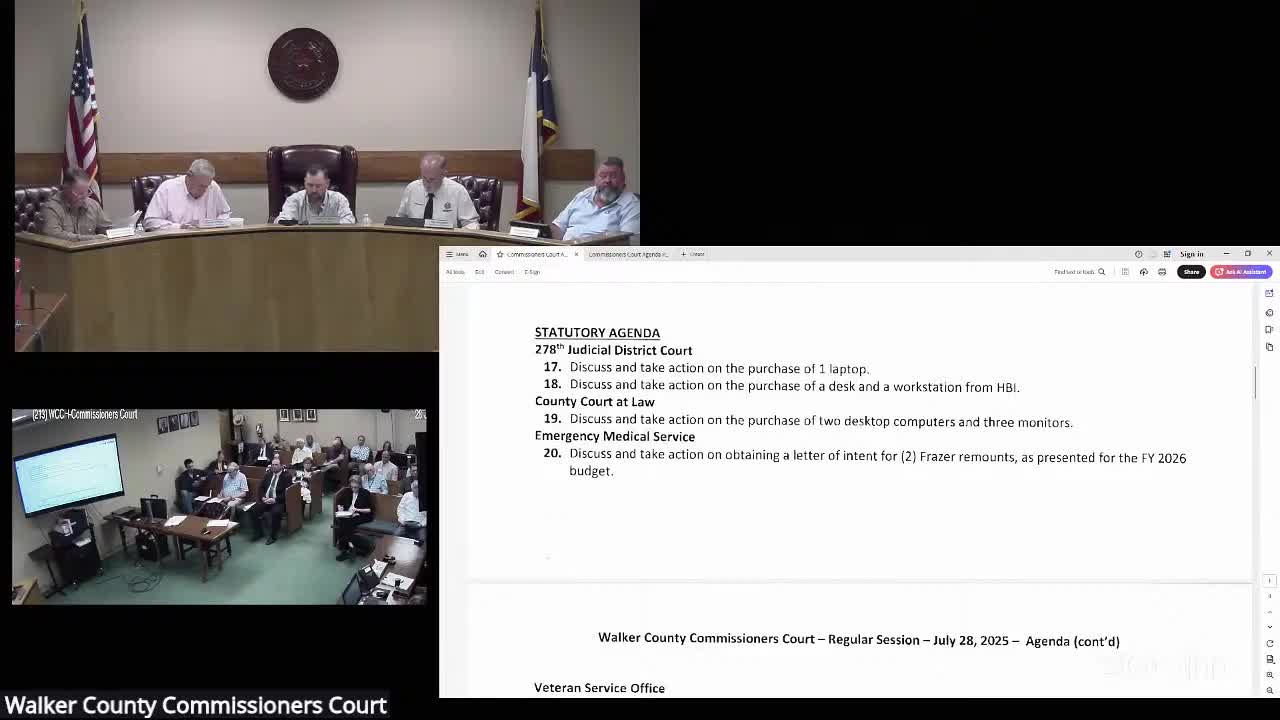
Summary
At a July 28 budget workshop, commissioners heard that Walker County Emergency Medical Services is short roughly 25% of authorized paramedic posts, debated funding for a transport deputy position, and directed staff to pursue vehicle remounts and chassis procurement to land state ambulance grant allocations.
Walker County Commissioners Court used its July 28 budget workshop to focus on Emergency Medical Services staffing shortages and on near‑term procurement steps for ambulances.
County EMS leadership told the court the service is short about a quarter of its paramedic positions and is operating extra shifts and overtime to keep units staffed. EMS director Rachel (identified in the meeting transcript as county EMS staff) described challenges recruiting and retaining paramedics in a market where nearby agencies pay higher wages and run larger ambulance systems. The sheriff and other officials told the court transport duties, juvenile transports and out‑of‑state transfers are consuming deputies’ time and driving overtime.
Funding and staffing discussion: County finance staff presented a draft budget that included adding a transport deputy position; staff said, based on current revenue estimates and projections, the county would need roughly $24,249 in net new revenue to make the transport deputy position budget‑neutral as presented. Commissioners did not adopt a final budget at the workshop but signaled interest in pursuing the transport position pending final revenue certification.
Ambulance procurement direction: The court also discussed Frasier remounts (ambulance body remounts) that county staff had budgeted for FY 2025‑26. Staff told the court the state’s recently passed House Bill 3000 (a rural ambulance grant bill) will create grant funding tiers, and that early commitment to vehicle orders could help the county secure chassis and production slots ahead of large demand. County staff and commissioners agreed to proceed with a Letter of Intent to Frasier and to obtain purchase orders for chassis so the county does not lose placement in the production pipeline; funding was discussed as coming from project contingency or the upcoming budget year’s one‑time funds. The court directed staff to return with the full purchase paperwork at the next meeting (the court planned a Monday meeting) after staff confirms delivery timelines with the vendor.
Why it matters: EMS staffing shortfalls could reduce advanced life‑support coverage and increase overtime and response times. Timely ordering of ambulance remounts and chassis matters because state grant programs and manufacturing backlogs can leave counties without priority if they delay orders.
Court takeaways and next steps: Commissioners asked staff to continue finalizing the FY 2025‑26 budget, to confirm revenue estimates once appraisal values are certified, and to bring a formal agenda item Monday with precise purchase orders and funding sources for the remounts and chassis. The court emphasized the need to balance budgets and to confirm whether grant match requirements and project contingency funds cover near‑term purchases.
Speakers in this article were identified in the July 28 meeting record and are listed below.