
Council debates civilian review board after state attorney general finds errors in investigations
Get AI-powered insights, summaries, and transcripts
Subscribe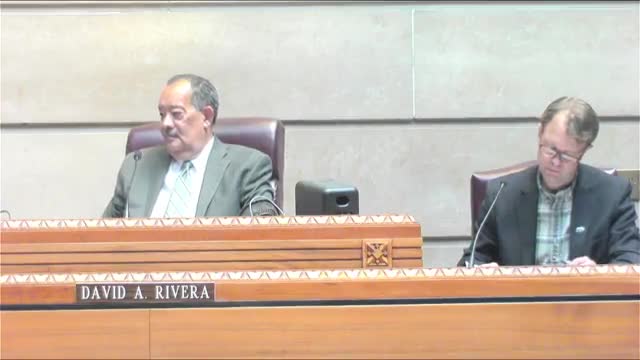
Summary
Council members pressed police leadership about repeated exonerations of officers after internal affairs investigations and cited a recent attorney general review of multiple complaints against an officer; members renewed calls for a civilian review board while the commissioner outlined limits set by collective bargaining and state law
Council members used a committee hearing to press the police commissioner for clearer accountability after a recent review by the state attorney general’s office flagged errors in the handling of multiple complaints against a Buffalo police officer.
The council cited a news report summarizing the attorney general’s review, which the meeting record summarizes as examining 14 complaints against Officer Justin Ayala between October 2021 and August (year not specified), with the AG basing findings on five incidents. The report said the AG found problems in the department’s investigations and in at least one case concluded supervisors failed to review body camera footage before exonerating the officer. The meeting record also notes the AG described excessive-force incidents and that Ayala earned about $113,000 last year, roughly $50,000 of it in overtime.
Council members repeatedly said a high exoneration rate — they cited figures of 85 to 90 percent in some discussions — contributes to public distrust and large taxpayer settlements. Several members urged the creation of a civilian review board like those in Rochester, Syracuse and New York City. One council member said the proposed body would not be adversarial but intended to bring independent fact-finding to allegations.
The police commissioner described the internal affairs (IA) process at length and stressed that the IA division are fact-finders who gather video, witness statements and other evidence and then present a file review to the commissioner, who he said is the sole arbiter of findings and discipline. He told the committee, "Only 1 person in this department is responsible for that and that's the commissioner of police." He also said the department has changed procedures to route use-of-force reviews directly to IA rather than through the chain of command.
The commissioner noted the department complies with the state oversight mechanism under New York State Executive Law 75, which requires referral to the attorney general when an officer receives five complaints in a rolling 24-month period. He added that while the city would comply with any oversight body the council creates, the ability to impose discipline is governed by the current collective bargaining agreement and state law, meaning disciplinary authority currently rests with the commissioner and would require negotiation to change.
Council members requested the department and the chief of staff provide the committee with IA files or summaries tied to the AG report so members can compare the department’s findings with the AG’s conclusions. The committee opened discussion on a proposed civilian review board item and then tabled it for further study; no governing change was adopted at the session.