
Buffalo finance committee reviews revised discretionary-fund policy; council members seek charter protections
Get AI-powered insights, summaries, and transcripts
Subscribe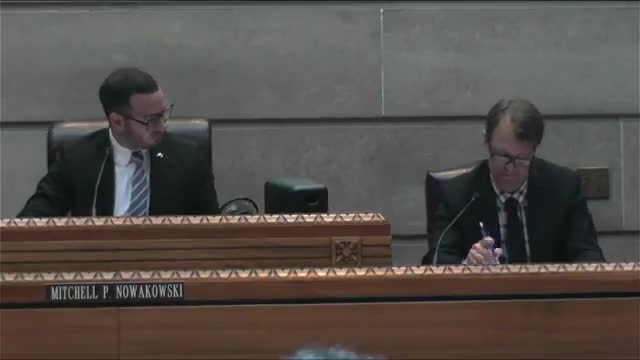
Summary
The Finance Committee discussed a revised City of Buffalo discretionary-fund policy that sets limits on uses, requires documentation and bars capital purchases after July 1, 2025. Council members raised concerns the policy could infringe on council appropriation authority and asked for further consultation with corporation counsel.
The City of Buffalo Committee on Finance opened discussion July 29 on a revised discretionary-fund policy that budgets $1.8 million for neighborhood initiatives in fiscal 2026 and adds new documentation and spending restrictions.
Deputy Comptroller Dwayne O'Dell explained the policy’s major provisions, saying the city budgeted $1,800,000 in neighborhood-initiative funds, allocating $200,000 per council district and capping any single recipient at $50,000. He said recipients must submit a budget and expenditure report, invoices and proof of payment and other backup after completing a contracted activity, and that unencumbered discretionary funds will not roll over and instead return to the general fund.
The policy also specifies that grants must go to nonprofit organizations located within the City of Buffalo, that recipients should have additional funding sources where possible, and that the use of funds for capital purchases is prohibited effective July 1, 2025. Deputy Comptroller O'Dell urged council offices to consult the comptroller’s office in advance if there is any question about whether a proposed expense is allowable.
Why it matters: Council discretionary funds are the primary way individual council members support neighborhood events and small nonprofits. The revised policy adds audit and allowable-cost rules that the comptroller says are necessary to ensure public funds are used for public benefit, while several council members said the changes could unduly limit their ability to appropriate funds for district needs.
Council members repeatedly pressed for legal clarity and interoffice consultation. Council Member Rivera said the policy seems to grow more restrictive ‘‘almost quarterly’’ and argued that some allowable uses — including contributions that keep small nonprofit doors open or modest operations and programming costs — deliver public benefit. Rivera warned that requiring historical receipts that no longer exist could disqualify deserving organizations.
Majority Leader Alton Pope and other council members asked that the comptroller work with corporation counsel and return for a fuller conversation before the council accepts the policy. Pope said the council should not be told by policy what its charter-authorized discretion permits and recommended tabling the item for further discussion.
Action and next steps: Committee members moved and seconded to open the item for discussion and later moved to table the item pending further consultation with corporation counsel and the comptroller’s office. The committee tabled the item.
Discussion versus decision: The meeting record shows discussion and a formal motion to table; no substantive change to the policy or final adoption occurred at this session.
Ending note: Committee members said they will convene with the comptroller and counsel during the committee recess to attempt to reconcile audit controls with the council’s chartered appropriation authority.