
LPC told to cut DRI requests by roughly half; public workshops and sponsor Q&A planned
Get AI-powered insights, summaries, and transcripts
Subscribe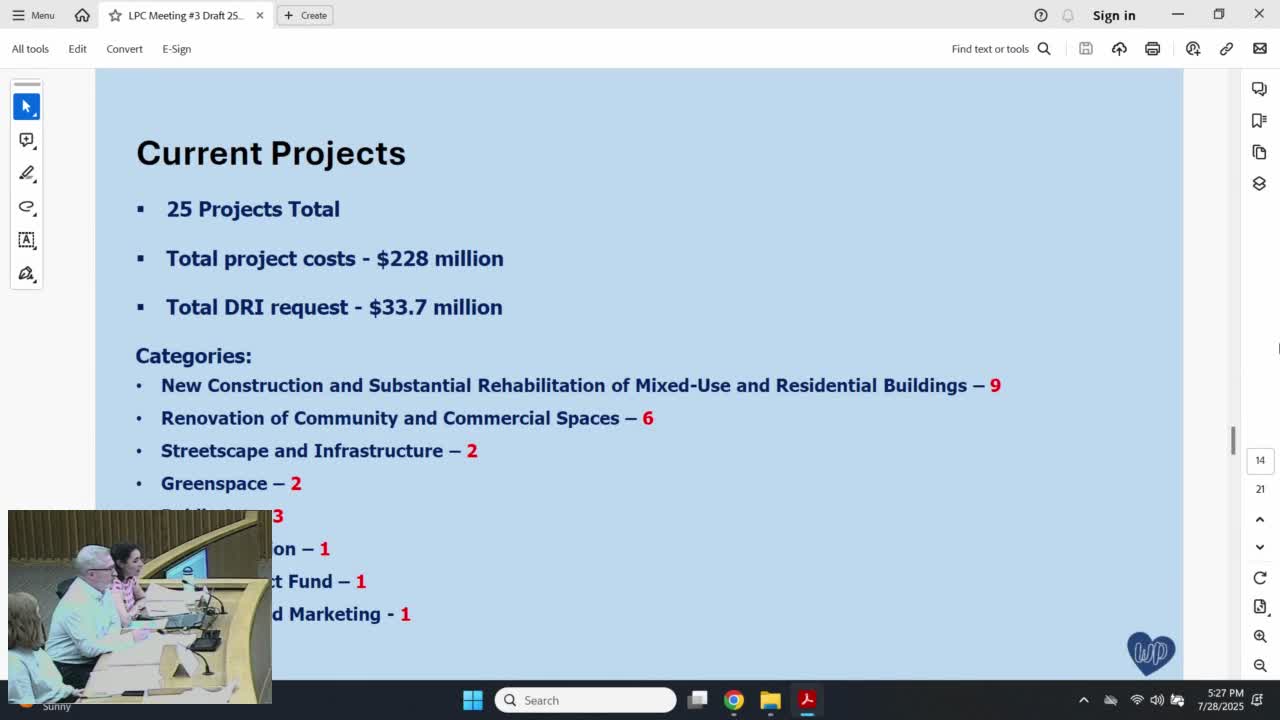
Summary
Staff told the Poughkeepsie LPC it received $33.7 million in DRI funding requests across 25 applications and will ask the committee to reduce that to a recommended slate totaling $12–$16 million; project sponsors will be asked to present and answer questions at the next meeting.
Local planning staff told the Poughkeepsie Local Planning Committee that 25 applications requesting a total of $33,700,000 in Downtown Revitalization Initiative (DRI) funds were received and that the committee must find a slate of projects requesting between $12 million and $16 million to submit to the state.
City and consultant staff said the first meeting's role was to introduce projects, flag applications with obvious eligibility or readiness issues, and explain the multi‑step review process. Staff outlined a sequence: preliminary screening, sponsor Q&A at the next LPC meeting, a public workshop and survey, and two additional committee meetings to refine recommended projects.
Staff described the next steps: project sponsors will be invited to brief the committee and answer questions; staff will ask sponsors for missing documentation (for example, budget backup or proof of site control); and the public workshop and a second public survey will gather community input. Staff said that between the committee’s technical review and public feedback, sponsors might be asked to reduce funding requests or provide additional match documentation.
The staff presentation categorized the 25 applications by type: nine new construction or substantial rehabilitation mixed‑use/residential projects; six commercial or community renovations; two streetscape/infrastructure projects; two downtown green‑space projects; three public art proposals; one transportation proposal (a rubber‑tired trolley); the city’s small project fund; and a city branding and wayfinding project. Staff noted total project costs for the 25 proposals of roughly $228,000,000 across all funding sources.
Staff also summarized a set of state eligibility and readiness criteria LPC members should use when evaluating projects, including whether a project requests DRI funds for ineligible activities (planning, operations, property acquisition), whether other funding sources are identified and secured, whether the proposed site is within the DRI boundary, whether the sponsor’s match is reasonable, whether the scope is well defined, and whether the sponsor has site control or clear plans to acquire it.
Committee members asked for written copies of sponsor materials and for a chance to submit focused questions in advance so sponsors can prepare. Staff agreed to post the applications for committee review, solicit committee questions, and give sponsors time to respond before the next meeting. Staff said they will also check for duplicative or overlapping proposals and notify sponsors where consolidation might be possible but that such consolidation would require voluntary agreement between sponsors.