
Board initiates code amendments to streamline enforcement, add civil penalties and clarify street‑naming duties
Get AI-powered insights, summaries, and transcripts
Subscribe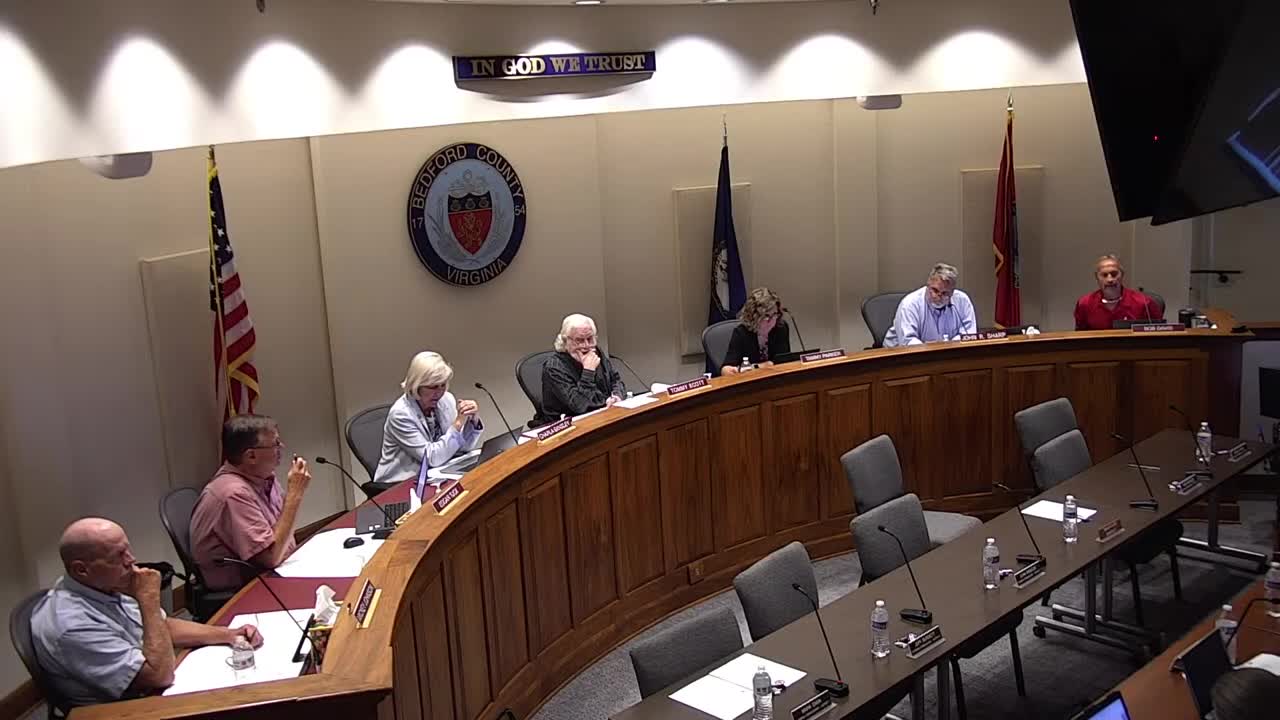
Summary
The Board voted to initiate public hearings on multiple code changes: amendments to Chapter 5 (street naming and derelict/blighted structures), Chapter 7 (civil penalties for natural‑resource regulations) and zoning civil penalties to allow prepayment and other enforcement options.
The Bedford County Board of Supervisors voted to initiate public hearings on several code amendments intended to streamline administrative responsibilities and add civil penalties for repeat or chronic violations.
The Department of Community Development asked the board to begin the public‑hearing process for amendments to Chapter 5 of the county code to clarify that the Department of Information Technology administers street‑naming and signage provisions and that the Division of Planning orders new and replacement street signs. The proposed Chapter 5 changes also add a route to address derelict and blighted structures that references a recent Code of Virginia enforcement remedy (section 15.2‑958.0.1).
Separately, the board initiated proposed amendments to Chapter 7 to introduce civil penalties and strengthen enforcement procedures for natural‑resource and related regulations. The Division of Planning also requested initiation of changes to zoning enforcement that would introduce civil penalties and allow an option for violators to prepay a civil penalty before court.
All three initiation motions passed on roll call; the board scheduled public hearings consistent with the county’s ordinance‑amendment process. The changes are procedural: they do not yet adopt specific penalty amounts or enforcement forms but open the public‑hearing and drafting phase, after which staff will present final language for board consideration.