Bedford County adopts broad zoning text amendments increasing minimum lot sizes and changing multiple land‑use rules
Loading...
Summary
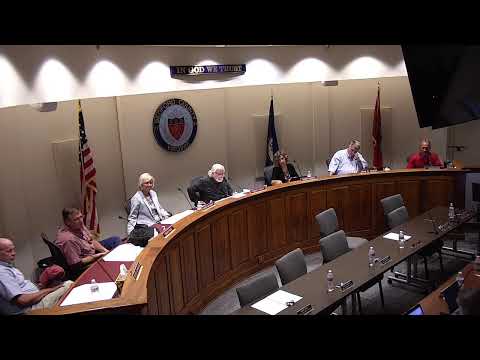
The Board of Supervisors adopted text amendment TA25‑0001 after a joint public hearing with the Planning Commission. Changes increase some minimum lot sizes, clarify setback rules, revise home‑occupation and food‑truck rules, add or redefine several uses and add licensing or parking requirements for others.
The Bedford County Board of Supervisors on an up‑or‑down vote adopted a broad set of zoning text amendments that raise minimum lot sizes in several residential districts and revise a range of land‑use rules, from home‑occupation noise standards to rules for food trucks and “hotshot” trucking.
The Planning Commission recommended approval after a public hearing, and the board voted to adopt ordinance 0072825‑04. The changes, presented by Jordan Mitchell, director of Community Development, include new minimum lot sizes for the Agricultural Village Center district and the R‑1 district, clarified side‑yard setback language and a series of definition and permitted‑use updates across multiple zoning districts.
Why it matters: the amendments alter long‑standing local rules on lot size, accessory apartments, commercial uses and licensing for mobile vendors, and will affect future subdivision and development applications countywide.
Most important changes include increasing the Agricultural Village Center minimum lot size from 20,000 square feet to about 21,780 square feet; removing the option for 15,000‑square‑foot lots in R‑1 where both public water and sewer are available and instead requiring a half‑acre minimum in R‑1; clarifying that side‑yard setbacks shall be 3 feet where a structure sits behind the rear building line; and adjusting the R‑1 purpose statement to reflect a lower average density. The amendments also add or revise definitions and permitted‑use status for multiple uses, including “hotshot” trucking, shopping centers, multifamily dwelling units above commercial uses, tiny homes, private kennels, and urban beekeeping.
Jordan Mitchell said the proposal moves the county away from older standards (for example, an outdated commercial wireless telecommunications plan) and aims to reduce confusion in the ordinance text. Among other specific changes, food trucks and trailers will no longer appear in the permitted‑use table but instead will be regulated by an annual license under the county’s license program; shopping centers will have a parking standard added at one space per 250 square feet; accessory apartments will be limited to two bedrooms and no more than four occupants and may not be used as short‑term rentals; and the home‑occupation standard will reference compliance with the Bedford County noise ordinance rather than a rigid 60‑decibel threshold.
Several residents spoke during the public hearing. Trevor Robinson of Forest said he moved to Bedford because of its low‑density character and opposed reductions in lot size; Jeff Scott of New London urged larger lots and cited crime statistics he said correlate higher‑density areas with higher crime rates; Megan Johnson, a District 7 resident, told the commission she thought some proposed restrictions (including on beekeeping) were overly restrictive. Kristen Cox, who identified herself as the person who prompted revisions to the home‑occupation wording, described a long dispute with a neighbor and supported clarification of the display and noise rules. Keith Johnson noted bees may travel and cautioned regulators about unforeseen impacts.
The Planning Commission moved to recommend the amendment application TA25‑0001; the commission’s motion passed on roll call. The Board of Supervisors then adopted the ordinance on a separate motion and roll call vote.
What to expect next: changes take effect as provided in the ordinance; homeowners and developers seeking variances, special permits or permits for uses added or changed in the amendments should consult the county’s planning office for the updated tables and procedural guidance.