
Board approves updated retiree reemployment limits; one trustee voices opposition
Get AI-powered insights, summaries, and transcripts
Subscribe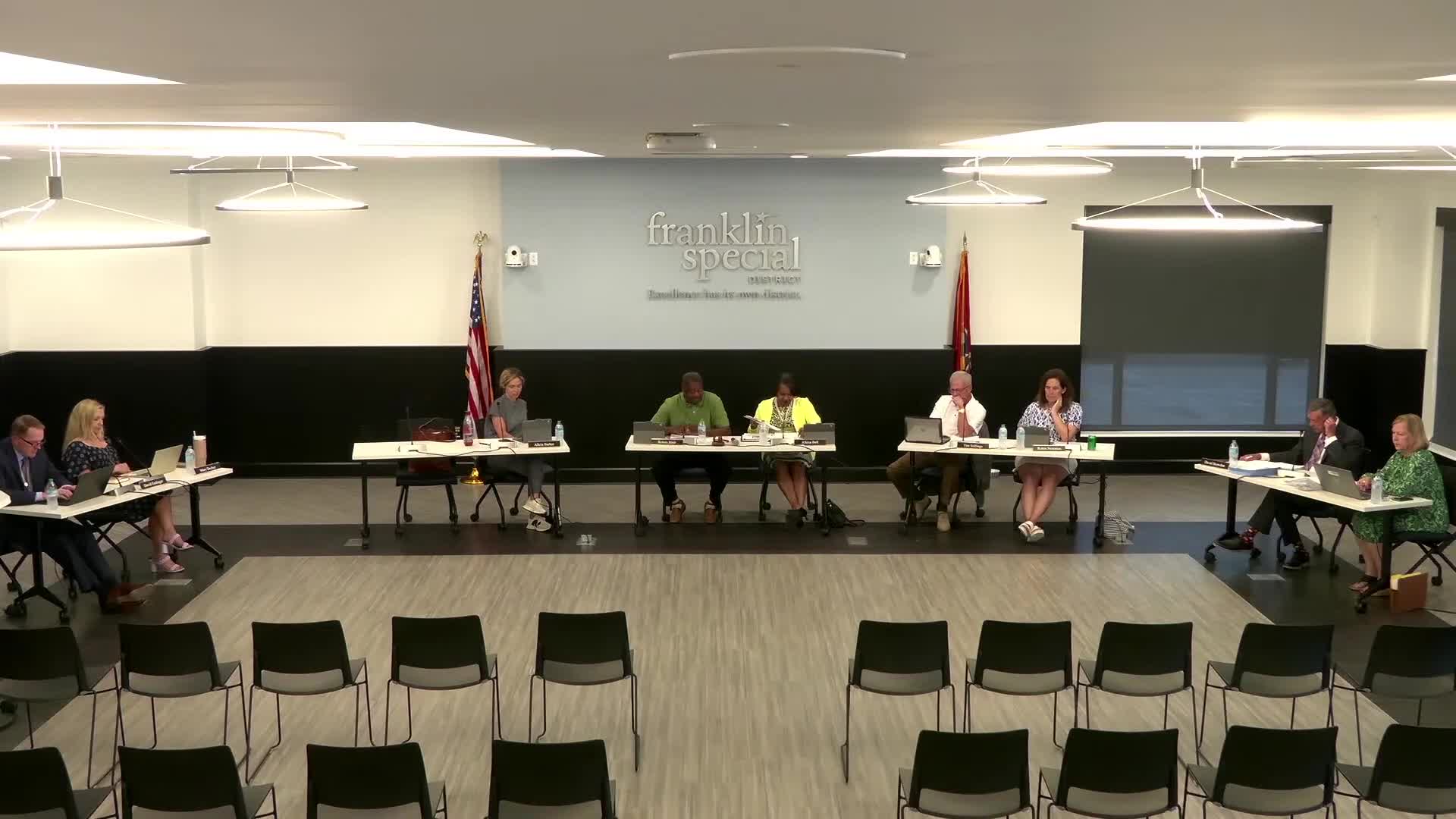
Summary
The board approved revisions to the district's retiree reemployment policy aligning with state law changes that require a bona fide separation of service and limit compensation for reemployed retirees; at least one trustee registered a 'no' vote on principle.
The Franklin Special District School Board approved a policy revision on employing retired personnel that reflects recent state-law changes, including a required bona fide separation of service and pay limits for reemployed retirees.
Administration said Public Chapter 159 requires a 60-day separation of service before a retiree may be rehired and includes compensation limits; the model policy language from TSBA was incorporated. Doctor Snowden summarized the changes and said they were incorporated into the recommended policy revision.
Trustees discussed the policy at length. One trustee said the reduction in allowable pay for reemployed retirees—from prior levels to a lower percentage in the new law—was troubling and not necessarily aligned with local hiring goals. That trustee said they would vote no “just out of principle,” while acknowledging the motion would likely pass. The record shows the board moved, seconded and approved the policy revision; the administration and several trustees framed the change as a state-driven requirement rather than local preference.
Why it matters: The policy establishes conditions and pay for retired educators who return to work in the district, affecting staffing flexibility and the district’s ability to fill short-term vacancies with experienced personnel.
Clarifications and remaining questions: Trustees asked whether the 120-day limit referenced in statute was contract days or calendar days; administrators said some provisions remained open to interpretation and that the district would monitor guidance from state retirement authorities and legal counsel.
Outcome: The board approved the policy revision on first reading and waived second reading per the administration’s recommendation; administrators will monitor for any additional guidance that would require revising the policy.