
County commissioners hear opposition and explain House Bill 581 impact at millage-rate hearing
Get AI-powered insights, summaries, and transcripts
Subscribe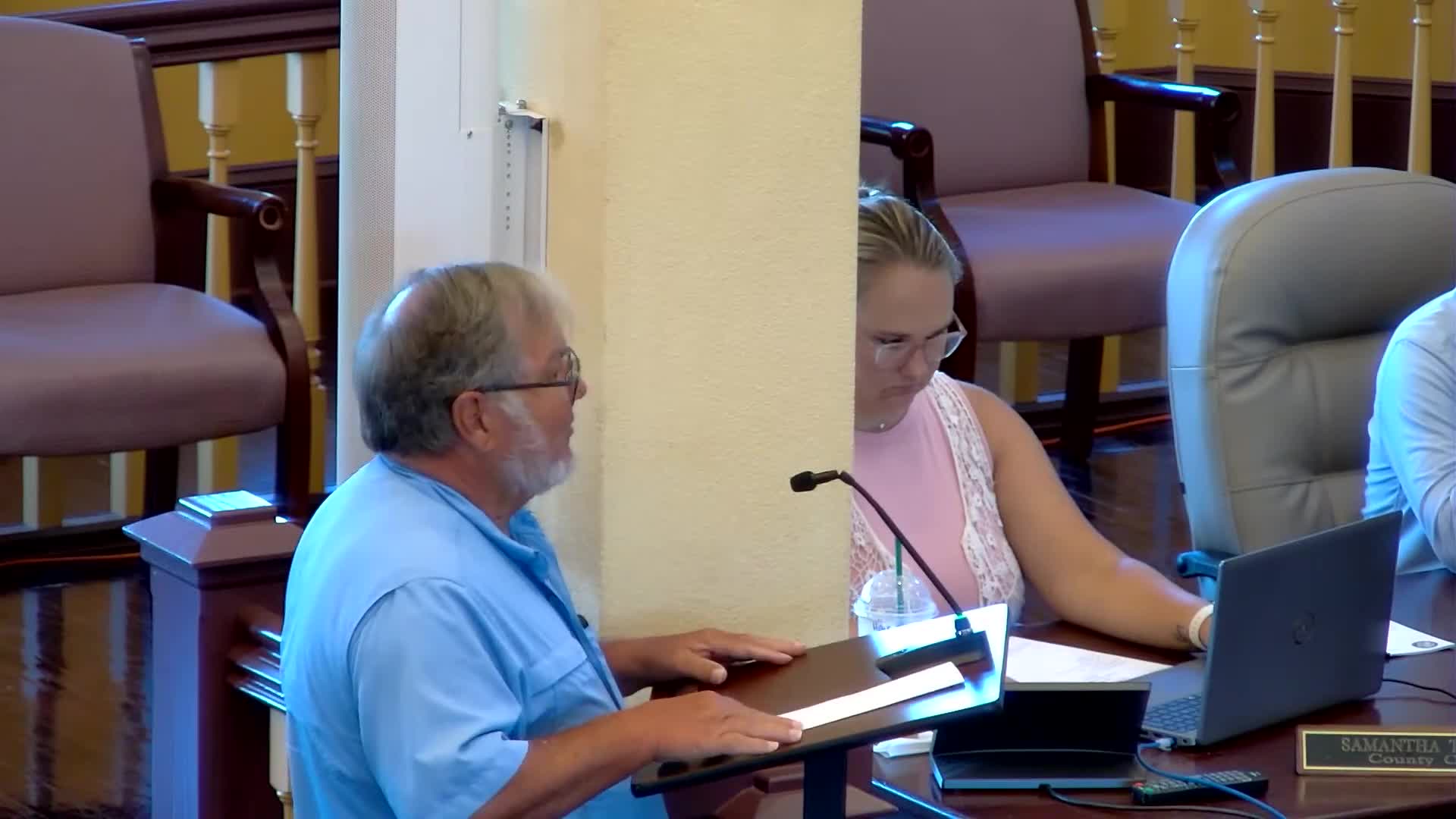
Summary
County commissioners closed a public hearing on the proposed fiscal year 2026 millage rate after residents expressed concern about rising property-tax estimates; county staff said House Bill 581 will limit how much of recent valuation increases can be taxed, and commissioners said they intend to lower the millage rate over time.
County commissioners held a public hearing on the proposed fiscal year 2026 millage rate and heard residents opposed to the rate before closing the hearing and scheduling a final adoption vote.
The county’s staff and commissioners told residents that House Bill 581 complicates the tax picture by limiting how recent valuation increases will be taxed and that the county has already lowered its millage rate. “If you have a homesteaded property, the county will be taxing based off of last year's,” county staff member Christian said during the hearing. A resident who spoke in opposition said, “But they can't I'm cutting services at my house right now on things that I can do without that I've been used to.”
Why it matters: the millage rate determines property-tax bills for homeowners and businesses; changes to state law and different taxing authorities — including the school board and special districts — affect how much of a valuation increase actually shows up on a taxpayer’s bill. County officials reiterated that estimates mailed to homeowners do not necessarily reflect final taxes because House Bill 581 and other factors can change taxable amounts.
County staff explained the central technical point raised in public comment: recent assessment notices show higher market values, but not all of those increases will necessarily be taxable this year because the new state law changes how increases for homesteaded property are treated. Christian told the hearing that the tax digest looks larger but “we're not able to tax on all of that because of House Bill 581.” Another participant added, “It's not a fully accurate understanding of what the actual bill is gonna look like.”
Commissioner Riggman urged a multi-year approach to the county’s tax strategy, saying the county should continue lowering the millage rate as property values stabilize. “I want to be held accountable to us driving the millage rate down over the next couple of years, letting property values stabilize,” Commissioner Riggman said. County officials also reminded residents that other taxing authorities, especially the school board and various special districts, contribute to the overall tax bill; one commissioner noted that the county cannot control those other levies.
Officials outlined next steps: the board announced another meeting and hearing later the same day at 6 p.m., and a third and final hearing next Monday, the fourth, at 6 p.m., after which the board expects to consider adoption of the millage rate. Staff encouraged residents with questions to call or email and said Christian is available to answer inquiries.
At the end of the session a member moved to adjourn; the motion was seconded and the meeting was adjourned after an oral vote in which those present said “aye.”