
Caribou council adopts revised medical cannabis dispensary ordinance after heated public debate
Get AI-powered insights, summaries, and transcripts
Subscribe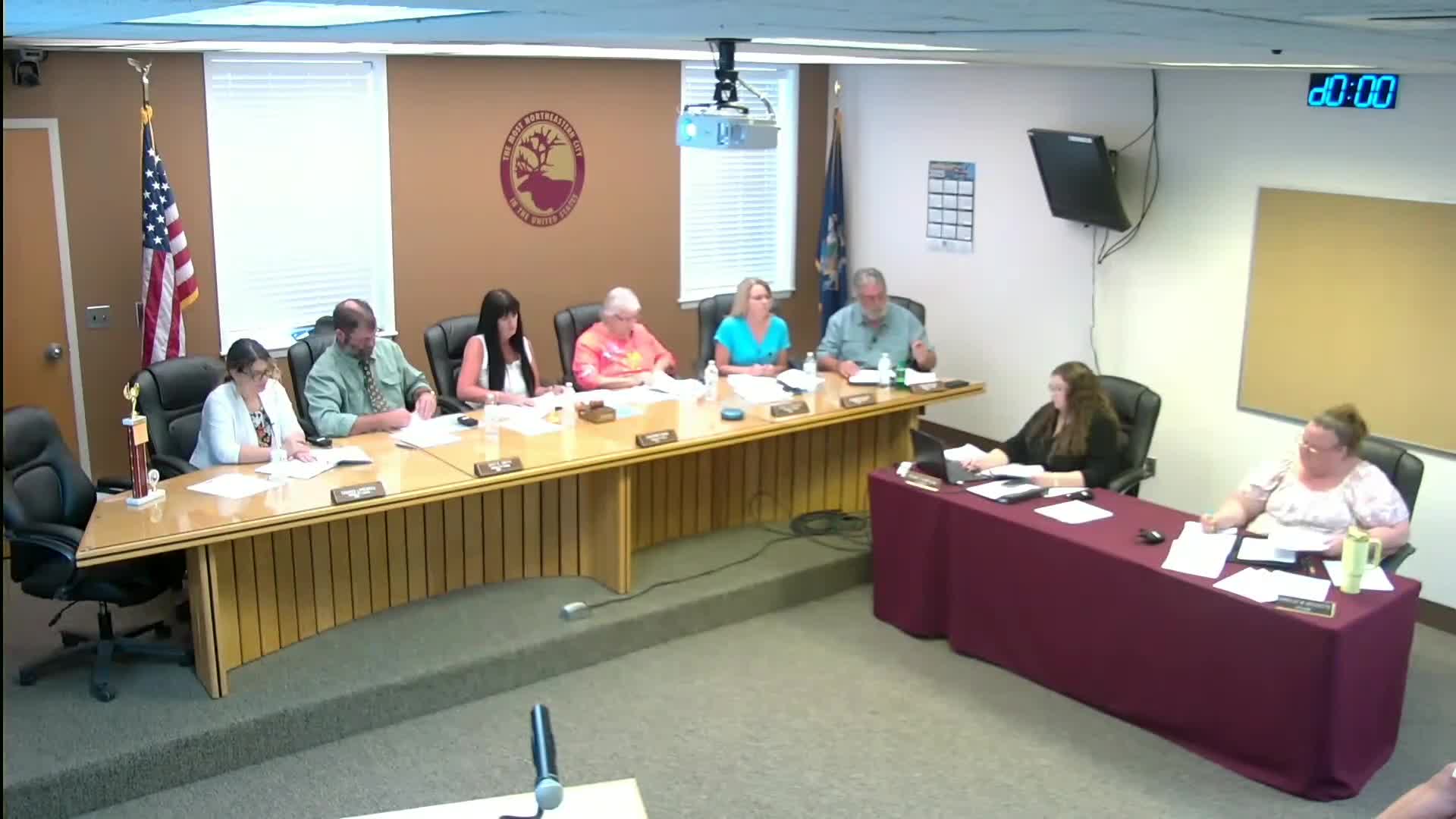
Summary
After hours of public comment and objections from the planning board, the Caribou City Council approved a revised ordinance to allow for-profit medical cannabis dispensaries with limits and zoning changes, while preserving existing caregiver operations.
CARIBOU, Maine — The Caribou City Council voted to adopt a revised ordinance to allow medical cannabis dispensaries in the city, approving a measure that updates local zoning and licensing rules while prompting objections from the planning board and some residents.
The ordinance changes remove nonprofit-only language and creates a structure the council said will allow some for-profit medical dispensaries while preserving separation rules near schools and day cares. Supporters said the change will let existing caregivers pursue dispensary licenses; opponents warned the change bypassed the planning board’s authority and could invite legal challenges.
The planning board chair, Amanda Jondro, sent a July 25 letter saying the council’s draft bypassed the planning board and would render some existing businesses noncompliant. "The proposed changes introduced in June clearly bypass this established process, therefore violating the city's ordinances," she wrote. The planning board also argued the draft’s zoning choices — restricting new dispensaries primarily to R-3 residential zones and classifying the existing RC-2 business on Bog Road as nonconforming — could disadvantage businesses and prompt litigation.
City staff and outside advisors disputed some of those assertions during the hearing. Jill Cohen, an attorney representing the local business owner who sought a dispensary license, said the state altered definitions last year and that the ordinance update was intended to bring the city into alignment with state law. "The new law went into effect on Aug. 9, 2024," Cohen said, and it changed how caregiver retail offices are regulated at the state level, restricting in-person retail under certain caregiver registrations.
Representatives from the Maine Office of Cannabis Policy told the council the city was already effectively "opted in" to medical dispensaries for nonprofit caregivers; a narrow edit — removing the word "nonprofit" — would allow for-profit dispensaries subject to local zoning and licensing rules. Alisa Ellis of the Office of Cannabis Policy said municipalities often remove the nonprofit restriction and then direct the planning board to adjust zoning details.
Several residents and patients testified in support of allowing a local dispensary, saying in-person access matters for people who rely on medical cannabis. Carolie Carlson Harper, 81, said she currently travels to Presque Isle to buy medical cannabis and would prefer to shop locally. "When I'm over there, I shop at stores over there. If this was approved, the people would be able to stay here in Caribou and spend their money at our stores," she said.
Council debate centered on process and zoning. Councilor Paul Watson and others urged a straightforward path that would let the planning board refine zoning details after the initial ordinance change. Councilor Bagley said the council should defer because the planning board had not been given the opportunity to act; Bagley said he would not support immediate approval. Despite that objection, the motion to adopt the revised ordinance passed on a 4-2 vote: yes — Kelly, Lovewell, Smith and Watson; no — Bagley and Terrio.
The ordinance includes grandfathering language for existing lawful operations and certain separation requirements from schools and day cares. The council and staff noted the language can be further revised in future meetings if zoning or licensing details need clarification. Councilors also discussed a cap (two dispensaries was discussed in public comment and drafts) and the possibility of routing specific zoning questions back to the planning board for implementation.
The ordinance’s immediate legal effect is to permit for-profit medical dispensaries under the city’s updated chapter 13 language; the council and city attorney said additional implementation steps — including zoning amendments, licensing procedures and potential limits on cultivation canopy size — will follow as administrative actions or future ordinance tweaks.
The council closed the public hearing and voted to adopt the revised ordinance at the July meeting. Councilors who opposed final passage said they preferred to send the draft back to the planning board; supporters said the change was needed to bring city code into line with state rules and to let an existing local caregiver pursue a dispensary license.
What’s next: the city attorney and planning staff will finalize implementing language and licensing procedures. The Office of Cannabis Policy advised the council on practical steps; staff said they will return with any technical zoning revisions recommended by the planning board or the city attorney.
(For background: testimony in the public hearing referenced the existing caregiver operation on Bog Road, state registration for caregivers, July 2 and July 25 attorney correspondence in the council packet, and the Aug. 9, 2024 state law change.)