Get Full Government Meeting Transcripts, Videos, & Alerts Forever!
Des Moines County supervisors debate wildlife protections, monitoring and buffers in draft wind and solar siting rules
Summary
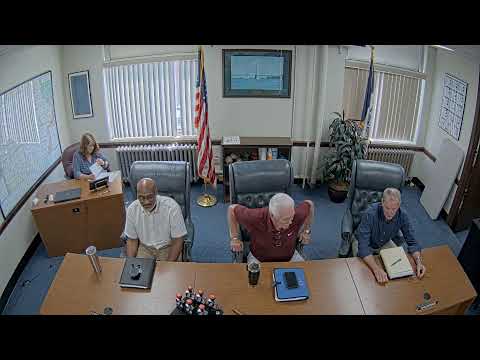
Des Moines County supervisors and staff spent an extended work session reviewing a draft wind/solar siting chapter focused on wildlife monitoring and mitigation, debating required consultations, buffers near conservation land and caves, curtailment (shutting turbines), third‑party post‑construction monitoring and reporting, and battery‑storage runoff and insurance protections.
Des Moines County supervisors and staff spent an extended work session reviewing a draft wind/solar siting chapter focused on wildlife monitoring and mitigation, debating required consultations, buffers near conservation land and caves, curtailment (shutting turbines), third‑party post‑construction monitoring and reporting, and battery‑storage runoff and insurance protections.
The draft would require developers to document preconstruction field studies and formal consultations with the Iowa Department of Natural Resources, the U.S. Fish and Wildlife Service and the Des Moines County Conservation Board; operators would submit annual wildlife monitoring reports and carry third‑party post‑construction monitoring for a minimum period. “We do require documentation of consultation and or correspondence, with the Iowa Department of Natural Resources, US Fish and Wildlife Service, and or Des Moines County Conservation Board,” said Chris Lee, identifying himself as the Des Moines County conservation director during the meeting.
Why it matters: Supervisors and residents said the county lies on a major migratory corridor and hosts locally important sites, including Star Cave and Big Hollow, and described large local declines in some bat species. Speakers argued the ordinance is a chance to protect local habitat and give local agencies a formal role in permitting. Developers and their consultants urged site‑specific mitigation guided by federal and state experts rather than rigid, county‑wide curtailment rules.
Key provisions and debate
- Consultations and monitoring: County staff proposed that applicants demonstrate preconstruction surveys, provide the resulting field data and show “demonstrable evidence that none of the components … will have direct or indirect negative impact” on wildlife. Staff indicated U.S. Fish and Wildlife Service (USFWS) wind‑energy monitoring standards…
Already have an account? Log in
Subscribe to keep reading
Unlock the rest of this article — and every article on Citizen Portal.
- Unlimited articles
- AI-powered breakdowns of topics, speakers, decisions, and budgets
- Instant alerts when your location has a new meeting
- Follow topics and more locations
- 1,000 AI Insights / month, plus AI Chat