State controller presses municipal leaders on broad property tax reform
Loading...
Summary
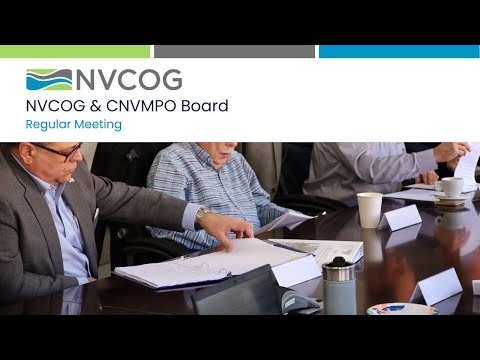
State Controller Sean Scanlon outlined an initiative to rethink Connecticut's municipal revenue system at a Naugatuck Valley Council of Governments meeting, seeking local feedback on options including sales-tax sharing, changes to PILOTs, motor-vehicle tax repeal and regionalization of services.
State Controller Sean Scanlon told the Naugatuck Valley Council of Governments that he has launched a project to examine and propose changes to Connecticut's property tax and municipal finance system and asked municipal leaders for on-the-ground feedback.
Scanlon, introduced his office's team as Anthony Naples, director of policy, and Scott Barnes, director of external affairs, and said he wants the work to go beyond a report that "collects dust." "I don't want to just write another report that collects dust. I want to actually try to solve this problem," Scanlon said, asking local elected officials for specific examples of problems and possible fixes.
The presentation opened a lengthy discussion among mayors, first selectmen and other municipal officials about the burdens on homeowners and small towns, the effects of revaluations, special-education costs, payments in lieu of taxes (PILOT) and options to diversify municipal revenue. Participants repeatedly urged that any statewide change include protections so municipalities retain reliable revenue and that new revenues not be diverted by the legislature.
Local officials raised several concrete ideas and concerns. One official suggested a regional sales-tax tranche that would be collected at the state level and returned to councils of governments for redistribution; another urged legal or constitutional protections so redistributed revenue would not be reclaimed by the state. Small towns warned that a local option sales tax would be competitive and ineffective unless implemented regionally. Several officials said special-education state mandates have produced multi-million-dollar shortfalls; one mayor said Bristol faced about $6,600,000 in special-education underfunding over three years and cited a case where 11 students cost about $2,100,000 to educate.
Speakers pressed Scanlon on motor-vehicle tax reform. Several officials said removing the car tax without a reliable replacement would leave municipalities with a substantial revenue gap; one official said the car tax change this year produced roughly a $1 million revenue loss to his town and shifted the burden to homeowners. Officials described phase-in options for revaluations as politically expedient but not a long-term solution, and debated targeted relief for seniors or low-income residents versus incentives that could shift burdens to other taxpayers.
Regionalization and shared services were discussed as a parallel path to relieve municipal costs. Municipal leaders described successful and unsuccessful local attempts to share services — for example, interlocal agreements for animal-control services saw low participation — and said collective-bargaining rules and labor issues often block consolidation. Several officials urged incentives from the state for towns that voluntarily regionalize services rather than top-down mandates.
Scanlon said he is collecting feedback from councils of governments and municipal leaders and intends to continue discussions locally before producing policy options for the governor and legislature. "I don't want this to be a one-and-done conversation," he said, offering to meet with municipal officials individually to refine ideas.
The meeting record shows no formal vote on policy; the session served as a listening and fact-gathering forum for the controller's office.
Ending
Scanlon told attendees he will continue the outreach and hopes to return with more developed proposals after further consultation with municipal officials and stakeholders.