Lifetime Citizen Portal Access — AI Briefings, Alerts & Unlimited Follows
ASRB forwards 125 Farm Road estate to formal design review after discussion of grading, trees and fault-zone constraints
Loading...
Summary
The Architectural and Site Review Board (ASRB) voted to forward the proposed 4.8-acre 125 Farm Road estate to staff for formal design review after hearing a detailed presentation by staff and the project architect on house siting, grading, tree removals, and geotechnical constraints in Alquist‑Priolo/San Andreas Fault study zones.
The ASRB on July 28 voted to forward the proposed development at 125 Farm Road to staff for formal design review after a presentation on site design, geology and landscape impacts.
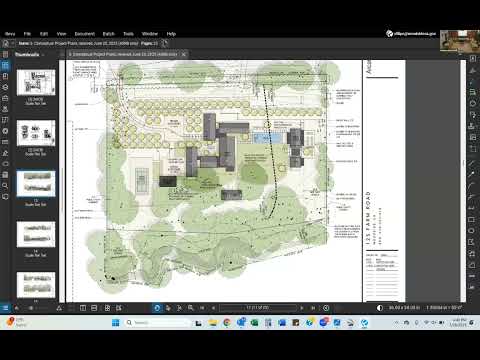
The project manager described the proposal as “the construction of a new single‑family main residence with an attached garage as well as a detached garage, and then a pool house, gym, and detached ADU, and a swimming pool, sport court, and other site improvements.” The parcel is approximately 4.8 acres in the SCP‑5 zoning district in the Hidden Valley Lake subdivision, located off Portola Road.
The board’s nut graf: the ASRB found the compound‑style design and materials palette generally consistent with the residential design guidelines but flagged potential impacts to mature oaks and the amount of grading required; the board asked the applicant to consider minor redesigns to save healthy native trees where feasible.
Staff said the property contains areas within the Alquist‑Priolo and San Andreas Fault study zones and that the applicant provided exploratory geotechnical trenching and a geotechnical report with building‑location recommendations. The project team represented that the house height would be about 29.7 feet at the highest point and that the main residence is largely single‑story with a modest second story. Materials shown included vertical wood siding, stone veneer, wood slat screens, painted metal windows and doors, and slate tile roofing.
Architect Tim Chapelle of Arcane Architecture, who introduced the project, described a “compound” approach intended to break the main mass into smaller roof forms and said the team had coordinated site work, septic testing and civil engineering to balance cut and fill. “We’ve done a lot of work to get to this point, so it’s not like we’re coming in with a concept. We’ve thoroughly analyzed what this property is,” Chapelle said.
Staff and the architect explained driveway siting and grades were driven by fire‑truck access and septic constraints. The architect said the driveway location reduced overall grading versus retaining the existing access and that proposed retaining walls were placed so they would be largely screened from uphill views.
Board members praised the materials, low‑mass approach and limited night‑glazing. One board member noted a concern about the number of trees affected: “I think the only reservation I have is the number of trees that are impacted,” and asked the applicant to consider minor site shifts to preserve additional large, healthy native oaks where possible. The architect said roughly 90 trees are proposed for removal but that only about 18 of those are oak species identified as mature in the report; many removals were smaller trees or regrowth the team said they proposed removing to let larger specimens thrive.
The ASRB also asked about fencing and wildlife passage; staff clarified the town’s design guidelines and general plan policies encourage wildlife passage but do not require a specific wildlife‑corridor fencing standard. The project includes perimeter and interior fencing and two vehicle gates; the applicant stated they had included wildlife passage in the landscape plan.
The board discussed the sport court location and setback compliance; staff noted tennis courts may be sited as close as 15 feet to a side property line under code and that other sports courts must meet standard setbacks. For this project, staff said the sport court meets the 50‑foot setback requirement applicable to the site.
Action: the ASRB moved and approved forwarding the 125 Farm Road project to staff for formal design review. The board recorded affirmative votes from Chair Lindsey, Vice Chair Kamra and Member Mittelman; the board noted story poles had been installed and that formal design review materials will be reviewed by staff and returned to the ASRB unless an entitlement is required that would send the project to the planning commission.
Documents and next steps: staff told the applicant and public that a formal decision letter would be mailed in the next few days with instructions for the formal submittal and next steps.
Ending note: the ASRB’s comments were largely advisory; the board did not approve final design or entitlements at this meeting and required no additional motions beyond forwarding the file to staff for formal review.