Get Full Government Meeting Transcripts, Videos, & Alerts Forever!
Get email alerts on the School Policy topic
No spam. Unsubscribe anytime.
Board debates attendance make‑up time, student representative role and dress‑code language
Summary
Board members discussed clarifying the student representative’s responsibilities, adding specific timelines for makeup work after absences, and tightening or specifying dress‑code language to avoid inconsistent enforcement across schools and potential discrimination.
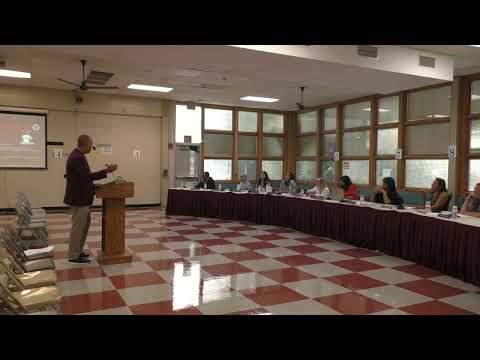
Several policy items generated extended discussion at the July 21 board meeting, centering on three themes: the role of the student representative, the time allowed for students to make up missed work after an absence, and ambiguous dress‑code language.
Board members said the student representative role has become largely ceremonial at times and urged that the position be used to solicit and present student proposals and concerns to the board. “I would very much like to see that message get out to the student representative so that they can play a more powerful role,” one board member said, arguing that students may raise issues at the building level that the board does not see.
On attendance, multiple board members and several public speakers urged more specific guidance on how much time students get to make up missed work. One board member described a local practice used in a building — two school days of makeup time for each day absent — and asked that the board consider codifying a consistent standard to reduce confusion and perceived unfairness between classrooms.
Dress code language also drew scrutiny. Members praised some modernizations in the proposed rule set — for example, allowing comfortable footwear — but cautioned against amorphous phrases such as “appropriate length” for skirts that are difficult to enforce fairly. “When we have language in that talks about appropriate length and we don't know what that appropriate length is, we it can't be enforced,” a board member said, adding that enforcement can lead to disparate outcomes for students with different body types.
Discussion versus decisions: most of these items were a first reading or were presented for board consideration rather than final adoption. The board asked administration and the policy committee to draft clearer language and to consider a uniform timeline for makeup work. The student‑representative role will be discussed with building administrators to define a process for elevating student input to the board.
Clarifying details: the suggested makeup schedule from a board member — used in one building — was two school days allowed per day absent; speakers stressed that flexibility should remain for teachers to extend time when appropriate. On dress code, members discussed possible objective measures (for example, a measurement rule) to replace vague adjectives.
Ending: The policy items will return to the board with proposed edits incorporating more specific, enforceable language on makeup work and dress standards, and with a recommended process to activate the student representative as a conduit for student proposals.