Get Full Government Meeting Transcripts, Videos, & Alerts Forever!
Get email alerts on the Student Safety Tech topic
No spam. Unsubscribe anytime.
Board reviews Lightspeed monitoring and SafeEngine hotline as a 24/7 student‑safety layer; virtual remote instruction plan noted
Summary
Curriculum staff described a Department of Health‑supported grant that pairs the district’s Lightspeed content monitoring with a state hotline (SafeEngine/Second Floor) for 24/7 screening and follow‑up. The board reviewed the district’s required 2526 virtual remote instruction plan; several members abstained from that vote citing policy concerns.
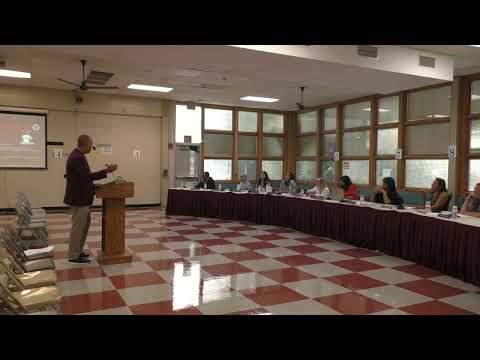
Curriculum staff explained to the Board of Education on July 21 that the district participates in a state grant program that enhances its existing Lightspeed web‑filtering and monitoring with an external screening and response service intended to identify student safety risks outside school hours.
The presentation described how Lightspeed currently runs on district Chromebooks and generates alerts to school counselors and administrators when flagged content appears. Under the grant, the district would add an external screening service (described in the meeting as “SafeEngine” working with the Second Floor hotline) to triage alerts 24/7 and route critical concerns — including potential self‑harm indicators — to local emergency services when warranted.
District staff said Lightspeed flags can come from routine curricular searches as well as queries indicating possible safety risk. The added service, funded through a Department of Health grant, performs a more in‑depth screening to reduce false positives and to provide a continuous response pipeline when administrators are not available to see alerts immediately.
The board reviewed the related curriculum agenda item that included the district’s 2526 virtual remote instruction plan, which state policy requires for declared public‑health emergencies. Several board members said they oppose the provision or objected on principle; during final votes some members abstained specifically on b1 (the virtual remote instruction plan). Those abstentions were recorded in roll‑call comments at the meeting.
District staff emphasized confidentiality and prevention as program goals. They said Lightspeed has access to necessary student identifiers through an existing contract but that the vendor does not collect data for external funding purposes; the stated purpose of the state grant and the vendor arrangement is early identification and prevention.
A board member and a public speaker with personal experience using Lightspeed in another workplace described the system catching curriculum‑adjacent references (for example, student research on Sylvia Plath) and the subsequent staff follow‑up; one commenter said the system can err on the side of caution and generate principal calls when flagged material appears in instruction.
Discussion versus decisions: the curriculum agenda — including travel, organizational chart and the 2526 virtual remote instruction plan — was presented for action. The meeting record shows votes and several abstentions on b1; the district accepted the grant description and staff said they will finalize contact lists and a local chain of responsibility for receiving triaged alerts.
Clarifying details: staff said Lightspeed runs 24/7 on district Chromebooks, that the state grant links to a Second Floor hotline that operates 24/7, and that the vendor conducts screening to differentiate curriculum‑related queries from safety risks. A board member asked whether the service will apply across all seven schools; staff said the system is already deployed on student devices districtwide.
Ending: Board members asked staff to finalize implementation details (points of contact and confidentiality rules). The conversation underscored tradeoffs between continuous monitoring for student safety and the risk of false positives affecting instruction time or generating extra emergency responses.