Get Full Government Meeting Transcripts, Videos, & Alerts Forever!
Get email alerts on the Land Use Auto Service topic
No spam. Unsubscribe anytime.
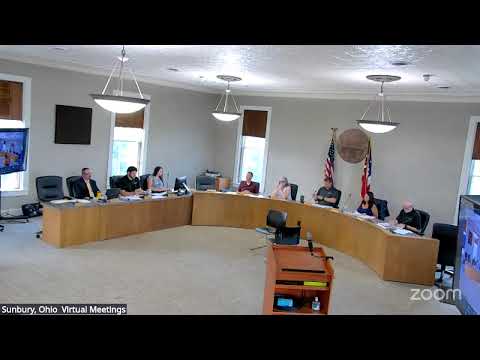
Sunbury approves conditional use for auto service station at 157 South Vernon Street
Summary
The Planning and Zoning Commission on July 28 approved a conditional use for an auto service station at 157 South Vernon Street with operating-hour, parking, landscaping and site-improvement conditions, and set a timetable for phased improvements.
The Sunbury Planning and Zoning Commission voted 5-0 July 28 to approve a conditional use allowing an auto service station at 157 South Vernon Street, subject to operating-hour, parking and site-improvement conditions. Mayor Saint John moved to approve the application and Missus Crawford seconded; the vote was unanimous.
The commission required that the business operate between 7 a.m. and 6 p.m.; limit the number of vehicles parked outside on the property to no more than 12 at any time; install 6-foot evergreen screening on the west property line; screen the dumpster; grade the parking area; clear debris; and complete additional site improvements on a phased schedule. Staff and the commission recorded that raised planting beds, dumpster screening, evergreen plantings and grading must be completed by the end of 2025, and that paving with pavers will be completed by July 31, 2026. The commission directed staff to verify ADA parking requirements and work with the applicant on striping if required.
Applicant Conan Cameron, who identified himself at the lectern as a mechanic and the property owner, described his plan as a phased effort to improve an existing long-standing auto site and said he preferred brick-style pavers for the parking surface. "I've already asked, but... cobble setting pavers," Cameron said when discussing surfacing options. Cameron said cost and availability influenced the schedule and that some work would be phased to match his finances.
Alex Blankenship, planning staff, reviewed the staff report and told the commission he believed the applicant had addressed prior staff concerns, including parking layout, screening and lighting. "I do believe the applicant has answered everything we asked of him from the last meeting," Blankenship said during the staff presentation. Blankenship recommended evergreen shrubs (for example, arborvitae) for year-round screening, and clarified that the commission's limit on exterior vehicles would be enforced under the city's condition-of-premises code if complaints arise.
Commission discussion focused on enforceability of a vehicle-count cap, the choice of evergreen screening instead of seasonal flowering trees, and whether an ADA-compliant stall must be established before or when the parking is striped. The commission tied any required ADA stall marking to the striping that will accompany the final paving work if code determines an exterior ADA stall is required; staff said they would work with the applicant to ensure compliance.
The conditional use approval replaces any prior conditional use for the site; legal counsel Vic Whitney confirmed on the record that a new approval would supersede earlier conditions. The commission added that certain operations explicitly forbidden by zoning — including major body or paint work, tire recapping and other listed services — would remain prohibited as part of the conditional use and that any excess odors or fumes would be enforceable under zoning code. The applicant must sign the conditional-use paperwork and obtain the zoning certificate, and staff will monitor compliance and the phased schedule.