Get Full Government Meeting Transcripts, Videos, & Alerts Forever!
Get email alerts on the Capital Projects topic
No spam. Unsubscribe anytime.
Staff details riverfront capital projects, FEMA flood mitigation plan and six‑year CIP priorities
Summary
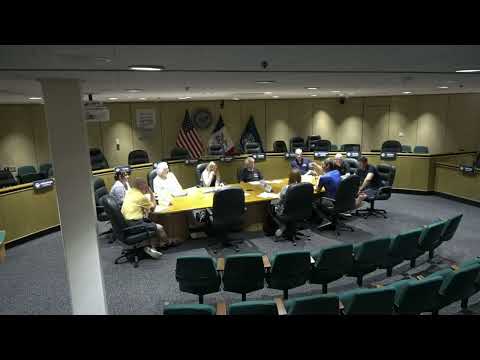
Clay, a city capital‑projects staff member, told the Improvement Commission at its July meeting that the city has completed several repairs to the freight house and outlined planned work across the riverfront and downtown.
Clay, a city capital‑projects staff member, told the Improvement Commission at its July meeting that the city has completed several repairs to the freight house and outlined planned work across the riverfront and downtown. He said the freight house roof project is complete, the building’s fire alarm was replaced in the spring and a large window/steel/storefront repair will come before city council in August. "We have $330,000 set aside for masonry repairs to the freight house," Clay said, and he described a pending roughly $750,000 project to replace windows and repair the riverside storefront beam.
Why it matters: the work affects public facilities, tenant spaces and downtown access and ties into the city’s six‑year CIP and multiple external grants. Clay said one major mitigation effort — to reduce future flood damage at Union Station — could be funded in part by a FEMA mitigation grant of about $1,000,000, but the project has additional steps before construction can start.
Most urgent facts: Clay said bids and environmental reviews added time to the flood‑mitigation work. He described earlier subsurface testing that raised the possibility of contamination and costly remediation; follow‑up testing this spring showed the contamination was not present, allowing the city to proceed with its planned approach. "We did some additional environmental testing to figure out because if there was that present, it'd probably be more cost effective for us to sheet pile near the railroad," Clay said. He cautioned that public bidding, council cycles and contract processing typically add several weeks to months before a contractor can begin work.
Other projects and budgets Clay listed in the CIP and current fiscal year include a completed roofing project (roughly $460,000), a fire alarm replacement (about $30,000), an electrical line item of about $100,000, and $150,000 in the current year for work at Bridal Island with $350,000 planned over six years for reprogramming that space. He said the Main Street project is making underground and railing progress, a multi‑use rink/surface foundation is being installed, and Sky Bridge lighting upgrades tied to the Destination Iowa project will be installed after the upcoming alternate‑current event.
Rail crossings and quiet zones: Clay said the city is in final negotiations with CPKC (Canadian Pacific Kansas City) over quiet‑zone agreements and that federal grants are helping cover installation. He described a range of costs depending on the crossing: some crossings with room for medians cost far less than four‑quadrant gate systems. "I mean, that's probably a 4‑point total. It's probably a $4,300,000 project," Clay said about installing four‑quadrant gates for multiple crossings; for a single crossing he estimated roughly $650,000 in one example, while other crossings with existing infrastructure could be as low as about $50,000. He said the railroad would perform maintenance in its right of way but that the city is negotiating clarity on billing, frequency of maintenance and documentation of work. Clay said an estimated average inspection/maintenance cost could be about $5,000 per crossing, but that exact obligations will be defined in the agreement with CPKC.
Budget process and CIP context: Clay reviewed the CIP calendar: departments submit project requests in August–September; the CFO provides fiscal constraints in October; leadership iterates on prioritization; and the recommended budget reaches the council for feedback in February. He emphasized that year‑one of the six‑year CIP is the only year that is funded and said staff will ask the commission for priorities during August and September budgeting conversations.
Construction sequencing and downtown impacts: Clay warned that multiple concurrent projects (flood mitigation raising grades at Le Claire and associated work at Third and Fourth streets) could require lane reductions and extended construction windows that would affect downtown traffic and businesses. He said staff prefers to preserve access where possible and will coordinate schedules to limit simultaneous disruptions.
Next steps: Clay said some work could begin this winter or next spring depending on bidding and approvals and that staff will return with visuals and more detailed project lists for commission review. He said certain items will require Design Review Board approval and that the flood mitigation grant and FHWA review remain dependencies before acquisition or construction could begin.
Ending: Clay invited commission members to send priorities for the freight house and riverfront projects ahead of the August–September intake and said staff will provide the detailed year‑one project list to help the commission steer budget requests and public‑facing priorities.