Dubuque council rescinds flawed ordinance and restores gender-identity protections after public outcry
Loading...
Summary
City Council unanimously rescinded the July 7 ordinance that omitted gender identity from the human-rights code, heard more than a dozen public comments, and adopted a corrected ordinance restoring gender identity as a protected characteristic; councilmembers and the city manager apologized and pledged process changes.
The Dubuque City Council on July 14 unanimously rescinded an ordinance the council had passed on July 7 after public commenters and commissioners pointed out the ordinance removed gender identity from the city’s human-rights code, then adopted a corrected Title 8 ordinance that restores gender identity as a protected class.
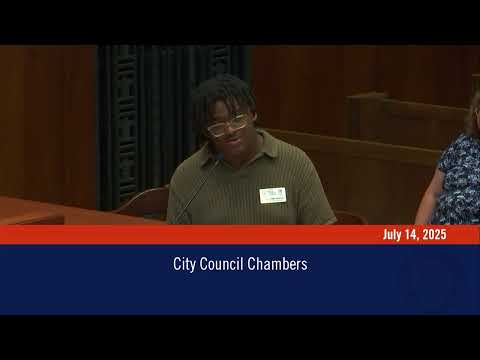
The vote followed about 30 minutes of public comment in which current and former members of the Equity and Human Rights Commission, residents and students described the potential harms of removing gender identity protections and urged the council to correct the error. City Manager Mike Van Milligen and Mayor Brad Cavanaugh apologized repeatedly during the meeting, and the assistant city attorney advised the council that federal case law still protects gender identity under existing ordinance language.
Why it matters: the July 7 ordinance language change removing “gender identity” was not yet in effect because the city had not published the ordinance. Still, commissioners and residents said the omission signaled a failure of review and consultation with the Human Rights Commission and risked undermining trust in city government. Council members said they will adopt process changes — including requiring redlines and commission review — to avoid similar mistakes.
Public comment focused on personal and community risk. Delaine O’Kane Watson, a current commissioner and Ward 1 resident, said the deletion “didn’t just happen by accident” and called it “a painful reminder that unless we are in the room, our rights can be removed without notice.” Alexander Viner, who identified as gender-queer, described how losing protected status could have affected his safety and access to services: “Losing the status of being a protected individual affects a lot about my life,” he said.
City Manager Mike Van Milligen told the council, “I failed in that obligation. I should have done better,” explaining staff had been concerned about recent federal and state guidance about grant conditions and language referring to gender identity but that those concerns did not require deletion of the term from city code. Assistant City Attorney Jason Lehman told the council that, “even without the explicit inclusion of gender identity as a protected class, gender identity would still be protected under our ordinance pursuant to the Supreme Court’s decision in Bostock v. Clayton County.”
Council discussion centered on process fixes. Mayor Cavanaugh and multiple council members said they had not compared the revised ordinance to the existing code line-by-line before voting on July 7 and that staff memos and a redline version should have been provided. Several council members and the city manager agreed the Human Rights Commission should have been consulted before the item reached the council.
Actions taken: the council first moved — Council Member Rick Jones, mover; seconded by Council Member Weffel — to receive and file the documents and rescind Ordinance No. 29-25. That motion passed on a 7–0 roll call (Jones, Weffel, Cavanaugh, Farber, Sprank, Resnick, Roussell — all “Aye”). The council then voted 7–0 to waive the typical three-reading requirement so a corrected Title 8 ordinance could be considered immediately, and on a final roll-call vote (7–0) the corrected ordinance was adopted, restoring references to gender identity wherever the term had been omitted.
Councilmembers said they will bring a formal resolution at a future meeting to codify a revised ordinance-review process that will include redlined drafts and commission input when changes affect protected classes. Several speakers urged the council to go further, with one councilmember suggesting that the city consider a combined “Human Rights and Civil Rights Commission” to clarify roles and protections.
The council adjourned after the final vote; the corrected ordinance now must be published to take formal effect. The city clerk noted written public comments had also been submitted and entered into the official record.