Get Full Government Meeting Transcripts, Videos, & Alerts Forever!
Get email alerts on the Water Quality Nitrate Ban topic
No spam. Unsubscribe anytime.
West Des Moines urges water conservation after Central Iowa Water Works bans lawn watering amid high nitrates
Summary
City officials announced a temporary ban on residential and commercial lawn watering imposed by Central Iowa Water Works, closed the RecPlex sprayground and turned off irrigation systems in city facilities while urging residents to comply as the metro and city explore longer-term infrastructure responses.
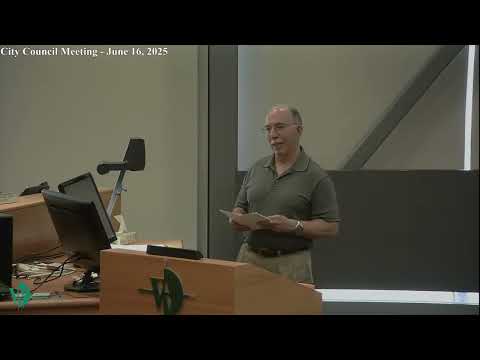
Mayor Trimble and City Manager Tom Hatton told the City Council on June 16 that Central Iowa Water Works has banned all residential and commercial lawn watering until further notice because of high nitrate levels in the Des Moines and Raccoon Rivers. Tom Hatton, city manager, said the city has turned off nonrecirculated irrigation, closed the American Legion Park sprayground and asked residents to comply with the ban "to keep our drinking water safe."
Council members and staff stressed the limits of the city's authority over regional water treatment. Councilman Chris McKinney and the mayor clarified that West Des Moines Water Works and Central Iowa Water Works are separate entities with separate governing bodies; the city can make local investments in water-quality projects but does not control treatment decisions by the water utilities. Hatton noted that the city's irrigation turnoffs are partly symbolic for reused/recirculated systems but necessary where new water is used.
Councilman McKinney and other councilmembers described ongoing and planned local water-quality work: ICON Water Trails will fund continued Metro water monitoring through an agreement with Polk County Conservation, and the city received a $250,000 Department of Agriculture grant for a Legacy Woods project to treat runoff before it reaches rivers and creeks. McKinney said the council and area mayors intend to press regional water providers for information on how long the ban might last and what capital investments are planned to remove nitrates.
No formal ordinance or council vote was taken on the ban itself; the ban was imposed by Central Iowa Water Works and the city implemented operational steps (sprayground closure, irrigation shutoffs) and public outreach. City staff said they will continue making strategic local investments to reduce pollution entering waterways while coordinating with regional water authorities.