Get Full Government Meeting Transcripts, Videos, & Alerts Forever!
Get email alerts on the Stormwater Drainage topic
No spam. Unsubscribe anytime.
Tuscaloosa officials outline short‑term drainage projects and propose $45.7M 'Noah's Ark 2' bond package
Summary
At a City Council work session, Tuscaloosa leaders presented a two‑track plan: near‑term neighborhood drainage repairs funded from the neighborhood drainage fund and a larger 'Noah's Ark 2' proposal that would pool bond financing, contingency funds and buyout money to address long‑running flood risks across the city.
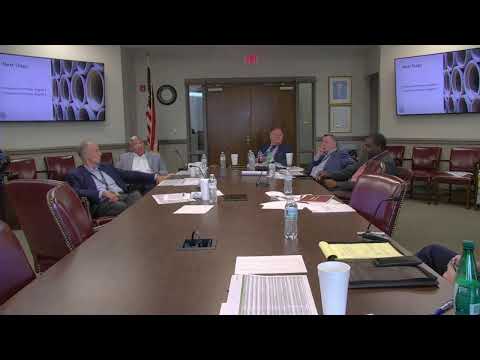
Tuscaloosa Mayor and city staff presented a multi‑year stormwater plan at a council work session, proposing near‑term neighborhood drainage repairs and a larger bond‑funded program dubbed “Noah's Ark 2.” Mike Gardner, the city engineer, walked council members through project concepts and condition assessments while the mayor framed the effort around rising rainfall totals and more intense storms.
The proposal would pair immediate, smaller‑scale projects drawn from the city's neighborhood drainage fund with a recommended $45,700,000 bond issue to fund a broader set of long‑term improvements. Staff recommended creating a $15,000,000 reserve inside that bond total to cover contingency, targeted property buyouts and grant‑match opportunities, and a separate $15,000,000 line of credit to begin engineering and right‑of‑way work before a bond sale.
Why it matters: city staff said heavier, more intense storms have increased local flooding and strained systems built for smaller events. The mayor summarized the problem bluntly: "it feels like every week we're having a 500 year flood," and urged council members to weigh short‑ and long‑term options. Gardner said aging corrugated metal pipe — a product the city stopped installing around 2007 — is failing in multiple neighborhoods and requires repair, lining or replacement. "CMP stands for corrugated metal pipe," Gardner reminded the council as he described common failure modes.
Short‑term neighborhood drainage recommendations
Staff said the city currently shows a neighborhood drainage fund balance of $3,500,000 and noted the council had previously approved adding $3,000,000 to that fund. At the work session staff proposed reallocating $382,000 from the Juanita Drive project closeout and $500,000 from public safety and logistics savings to increase available neighborhood drainage money; staff said that reallocation would leave $4,380,000 available for near‑term projects if the council approves it.
Staff listed several near‑term projects and engineering estimates (as presented at the work session): Northampton drainage ($800,000); Bellevue Drive rehabilitation ($500,000); Academy Drive protected buyouts (three voluntary buyouts, budgeted at $1,200,000); a culvert replacement at 30th Sixth Avenue East / Rainbow Drive ($3,500,000); 30th Sixth Avenue East drainage work ($300,000); Waterfall Parkway drainage improvements ($250,000); hotel drainage repairs ($80,000); and Beverly Heights drainage work ($450,000). Gardner described project concepts for each site — including adding alternate storm routes behind homes in Northampton, lining or replacing failing corrugated metal pipe in Bellevue, and targeted buyouts and channel work in Academy Drive — and said some of these designs are roughly 80% complete or ready to bid.
Staff cautioned that the neighborhood list reflects recommended priorities but that council may re‑order or remove items. Several councilmembers asked staff to confirm neighborhood or district projects that did not appear on the $1,000 to $5,000,000 estimate list but remain on the broader problem list (for example, residents had asked about Johnson Road and Taylor Circle issues). Staff said those locations remain on the city's inventory even if not in the initial recommended funding tranche.
Noah's Ark 2: scope, cost and financing plan
Staff asked the council to consider a larger, citywide bond program modeled after a mid‑2000s effort known locally as Noah's Ark. The administration described Noah's Ark 2 as a package to address larger corridors and stream bank stabilization work that require permits, design and larger capital outlays.
Key items and estimates presented for the larger bond program included: - Academy Drive (Stone River, Manassas, Fredericksburg corridor): $3,750,000 (channel improvements, a likely replacement of the culvert under Stone River Road and other work); staff also recommended three voluntary property buyouts in Academy Drive as a complementary measure. - Eastover neighborhood: $2,500,000 (pipe replacements and inlet improvements at 6th/8th intersections). - Tenth Avenue / Nineteenth Street corridor: $6,800,000 (pipe replacements, channel stabilization and regrading). - Heritage Hills Phase 1: $1,100,000 (with a caveat that buyouts could be a better solution for a segment). - Cypress Creek phases 2 and 3 (stream bank stabilization, riprap and box culvert additions where needed): phase‑3 estimate $9,600,000 and other phase estimates described in staff materials. - Other projects across the city, including Rosewood/Linwood, Riggs Road, and Lincoln Park drainage upgrades.
Staff proposed a $45.7 million bond package and said it would reserve $15 million inside that total for three specific uses: a $5 million contingency above project contingencies, $5 million set aside for property buyouts where buyouts are judged preferable to capital work, and $5 million held for grant matches to leverage outside funding. City staff recommended waiting until 2027–2028 to issue bonds, to align project readiness with market conditions and to preserve borrowing capacity until more projects are out to bid. In the meantime staff proposed a $15 million line of credit to begin engineering, right‑of‑way acquisition and voluntary buyouts so work can move forward faster once bond financing is available.
Staff gave a preliminary financing estimate that a full $45.7 million issuance would produce roughly $2.8–$2.9 million in annual debt service over a 30‑year term at current market conditions; staff also cited a recent comparable bond sale with an average interest rate near 4.9%.
Permits, easements and timing
Gardner and other staff noted several projects will require easements from private landowners and, for larger stream work, regulatory permits such as U.S. Army Corps of Engineers authorizations for in‑stream work. Staff said they are already working on designs for many projects; some are nearing the bid stage, while others will take years to advance. The mayor and council members emphasized that council has full discretion to reorder priorities and that the work session was a recommendation, not a final decision.
Next steps and council action
No formal votes were taken at the work session. Staff asked the council to refer the neighborhood drainage allocations and the Noah's Ark 2 financing plan to the Public Projects and Finance committees for further review. Staff recommended council consider short‑term neighborhood projects first to deliver quicker relief while using the larger bond program to fund systemic, multi‑year improvements.
Quotes from the meeting are drawn from staff presentations and council discussion; no formal ordinance or bond authorization was adopted at this session.