Get Full Government Meeting Transcripts, Videos, & Alerts Forever!
Get email alerts on the Rates topic
No spam. Unsubscribe anytime.
PURA process, RPB authority and OCA role highlighted as key checks on rates
Summary
Witnesses described how the Representative Policy Board reviews rate applications (approve/deny), the OCA's role in influencing budgets throughout the year, and how rate stabilization and debt-coverage rules affect timing and scope of future rate requests.
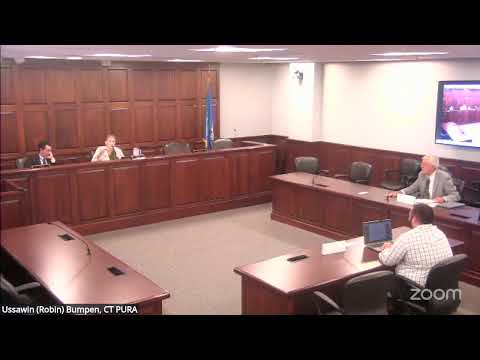
Officials and counsel spent extensive time explaining how rates are set under the regional-authority model and how approval or denial works under the Representative Policy Board process. The Representative Policy Board (RPB) was described as the body that approves or rejects rate applications on a yes/no basis, with statutory authority to find rates either excessive or insufficient.
Why it matters: The practical effect of the governance change depends on whether AWA customers will face different rate-setting procedures and outcomes compared with the current PURA-regulated regime. Questions focused on who can approve rates, what standards apply, and how the Office of Consumer Affairs (OCA) participates.
Key testimony and findings: - RPB approval standard: Counsel and witnesses confirmed that under RRU 13 the RPB can approve or not approve an application; the statutory bases for denial are if rates are excessive or insufficient. There is no statutory authority for the board to partially grant a request at a reduced percentage. - Rate frequency and history: RWA has historically filed rate adjustments approximately every 18 months (with exceptions for COVID-related pauses). Recent years saw six adjustments over 10 years, all increases. RWA provided percentages for past adjustments and said applications often are adjusted based on final financing costs. - OCA and consumer protections: The OCA participates year-round through budgeting and finance committees. The OCA can issue interrogatories and submit testimony on rate applications and can request public hearings. Witnesses said OCA input occurs before applications are finalized and can influence the scope and content of applications. - Funds and covenants: Testimony clarified the role of rate stabilization funds and the waterfall of required funds (operating reserve, debt-service fund, debt-reserve fund) that must be funded before discretionary funding occurs. Debt-service coverage for senior debt was stated as 1.5x (cash-based) in the general bond resolution.
What regulators asked for: Board members and intervenors asked for documentation of RPB procedures, historical rate application metrics, and examples where the RPB declined an application; the transcript shows read-ins and late-file exhibit requests for historical budgets and records.
Ending: The record shows regulators will need documentary support (read-ins, late files) on RPB practices and the proposed AWA treatment of rate covenants before resolving how the governance change would change rate outcomes.