Get Full Government Meeting Transcripts, Videos, & Alerts Forever!
Get email alerts on the Governance topic
No spam. Unsubscribe anytime.
Dispute over who will run Aquarion if sale approved centers on 11-member authority, temporary RWA power
Summary
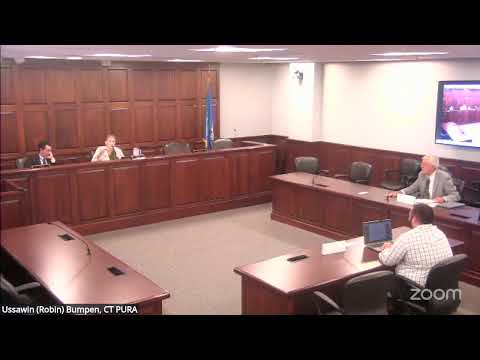
Hearings focused on governance of a proposed Aquarion sale to a regional authority: who appoints members, when temporary powers shift, and what checks bind a board acting for the new authority.
The hearing on the proposed sale of Aquarion Water to a regional authority focused heavily on governance: who will appoint the 11-member Aquarion Water Authority board, how temporary powers exercised by the South Central Connecticut Regional Water Authority would transition, and what limits — if any — bind the representative policy board when it acts on behalf of the new authority.
Why it matters: The governance design determines who makes decisions about rates, long-term contracts and land use after the transaction closes, and witnesses and municipal representatives repeatedly pressed counsel and company witnesses for precise limits on the temporary authority and the mechanism that ends it.
Counsel for the joint applicants said the existing RWA representative policy board would exercise limited, pre-closing powers on behalf of the AWA and that the transition of authority ends when a quorum of the new AWA is appointed. Witnesses and counsel debated whether the quorum is measured by number of individual members or by a majority of weighted votes under the enabling special act; transcript answers pointed to weighted votes but counsel requested a formal read-in of the statute for confirmation.
Municipal officials and regional planning bodies repeatedly pressed for clear, binding limits on temporary authority. They flagged that statements of “intention” (for example that RWA does not intend to undertake restructuring or divestitures pre-closing) are not the same as enforceable, recorded restraints, and asked how the public or regulators would prevent a future change of intent. Counsel responded that some commitments are recorded in interrogatory responses and the docket, but those are not absolute legal restraints unless memorialized in operative documents.
The hearing record shows several places where statutory language, the purchase and sale agreement and the general bond resolution intersect: (1) the PSA contains deliverables and governance exhibits that list current and post-closing directors; (2) the enabling legislation and special act define the process for appointing authority members, quorum rules and removal-for-cause mechanisms; and (3) transitional powers are framed as pre-closing authorization authority by RWA acting on behalf of AWA, subject to the enabling statute and the general bond resolution.
What comes next: Participants requested late-filed exhibits and statutory read-ins to confirm precise quorum and removal rules, the text of seller disclosure schedules and whether debt-financing letters and intercompany termination agreements are in the record. Regulators signaled they will require those documentary clarifications before resolving whether the governance approach satisfies the public interest test required for approval.
Ending note: Municipal witnesses and regional bodies stressed they are not seeking to block a deal categorically but want legally binding, recorded protections and transparent lines of authority to prevent surprises between signing and closing.