
Grundy County zoning board recommends denial of Brisbane Solar LLC 2 MW community array at Brisbane Road interchange area
Get AI-powered insights, summaries, and transcripts
Subscribe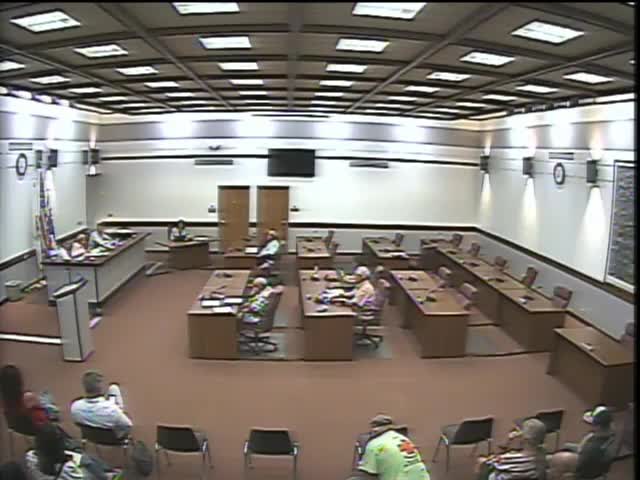
Summary
The Grundy County Zoning Board of Appeals voted to recommend denial of a special-use permit for Brisbane Solar LLC’s proposed ground-mounted community solar array, citing incompatibility with long-term planning around the Brisbane Road/Interstate 80 interchange.
The Grundy County Zoning Board of Appeals voted to recommend denial of a special-use permit for Brisbane Solar LLC’s proposed ground-mounted community solar array, citing incompatibility with long-term planning around the Brisbane Road/Interstate 80 interchange.
The project before the board, identified in county materials as case 25ZBA007, would place a roughly 13.9-acre, 2-megawatt generating array on a 28.3-acre parcel in Saratoga Township (parcel ID 021340004). Developer materials submitted to the board describe a project with maximum panel array height of 13 feet, an 8-foot perimeter security fence, underground cabling to a pole connection with ComEd, pollinator-friendly revegetation, a decommissioning plan and a 20-year lease with a five-year extension option.
Why it matters: municipal officials, economic-development groups and nearby landowners told the board the parcel lies inside an area the city of Morris and surrounding jurisdictions have targeted for highway-oriented commercial and industrial growth. They argued placing a solar array at that precise interchange would undercut years of coordinated public investment intended to attract higher-impact industry and jobs to the corridor.
Developers’ presentation and approvals Jim Griffin, attorney for the applicant, told the board the project “meets all of Grundy County’s requirements for a solar energy project” and is permitted in agricultural zoning as a special use. Hannah Uditis (business development manager, Nexamp) and Kelsey Sidris (civil engineer, Manhart Consulting) described environmental and technical work completed for the site: an NRI (natural-resources inventory) that rated the lease area as prime (the packet lists an NRI score of 99), an executed interconnection acknowledgement (packet receipt dated 07/15/2025 is included in the developer materials), a state agricultural impact-mitigation agreement (AIMA) and SHPO cultural-exemption documentation. The developer said an IEMA/environmental compliance package and plans for pollinator-friendly vegetation and remote monitoring are in the file; the packet also includes a draft decommissioning plan and a commitment to secure a decommissioning bond prior to construction.
Opposition from municipalities and business groups Nancy Norton, president and CEO of the Grundy Economic Development Council, told the board the interchange was the result of more than a decade of collaborative investment and called the site “a prime spot for development, for manufacturing, commercial, industrial, other businesses.” Norton said the interchange had been built with roughly $25 million in targeted public investment and urged denial. The city of Morris (represented at the hearing by Chris Dirth and city planner Mike Hoffman) submitted a written objection and spoke in person; the city’s written materials and testimony emphasized that the city’s comprehensive plan and economic-development strategy designate the parcels in the interchange area for commercial or industrial business-park uses, not solar. The Grundy County Chamber of Commerce and the Grundy Economic Development Council also submitted letters of opposition; the packet included a letter from a state senator’s office raising similar planning and investment concerns.
Local residents and adjacent landowners raised site-specific concerns, including visibility from I-80, potential impacts to drainage tile and wildlife movement, the effect on property values and the claim that construction and long-term maintenance would bring little permanent employment or local spending. One nearby landowner, Mike Kinsella, identified himself in public comment as the property owner and said the lease is an economic decision for the owners.
Board discussion and outcome Board members considered the eight LaSalle factors (capacity and compatibility with nearby zoning and land uses; diminution of property value by zoning restrictions; impacts on public health, safety and welfare; relative public gain versus hardship to the applicant; suitability of the subject property for current zoning; length of vacancy; consistency with the comprehensive plan; and benefits to community needs). Several trustees said the project satisfies many technical and environmental standards, but a majority told the record that the site’s designation and long-term public investment in the Brisbane Road interchange made this parcel an inappropriate location for a solar development.
A trustee moved to recommend denial; the motion was seconded and carried. The board’s formal action, as announced at the hearing, was to deny the application under the LaSalle factors and to forward the recommendation to the county Land Use Committee. The packet referenced a Land Use Committee meeting date of July 25 for further consideration.
Context and next steps Developer materials in the record show the project team has completed multiple technical reviews (environmental, cultural, NRI), an interconnection filing and an AIMA; the developer maintained that the use is temporary and reversible, with decommissioning and recycling commitments. Opponents countered that the location’s long-standing designation for highway-oriented industrial uses and the public dollars already invested at the interchange outweigh those factors.
The Zoning Board of Appeals’ recommendation of denial will be forwarded to the county Land Use Committee for its review and any further recommendation to the full county board.