
Pinole-Hercules plant reports compliant effluent levels as state tightens nutrient rules
Get AI-powered insights, summaries, and transcripts
Subscribe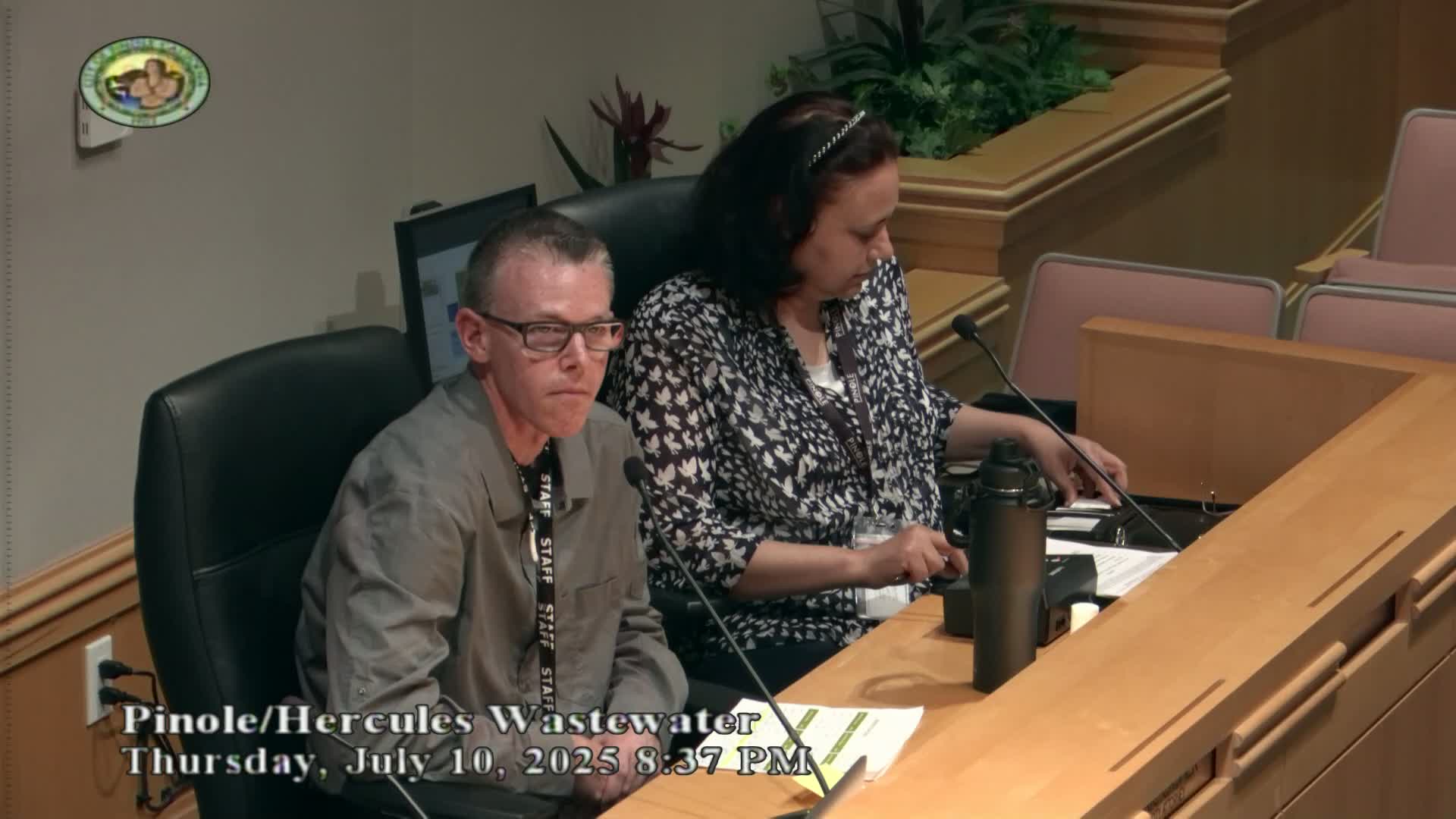
Summary
Plant staff reported April–June flow and effluent performance, saying current effluent averages are below permit limits but that new state nutrient rules will require multi‑year planning and likely plant upgrades.
On July 10, 2025, staff at the Pinole‑Hercules Wastewater Treatment Plant presented monthly flow and performance data covering April through June and told the Pinole‑Hercules Wastewater Subcommittee that current effluent averages are within permit limits while the State Water Resources Control Board’s new nutrient requirements will require planning over the next decade.
The operations report, delivered by Josh Binder, wastewater treatment plant manager, showed the two cities each accounted for roughly half of plant flow in the reporting months and listed key effluent figures: a CBOD (carbonaceous biochemical oxygen demand) effluent average near 11.5 milligrams per liter with roughly 95–96% removal, total suspended solids (TSS) effluent averages in the 20–25 mg/L range and percent removal commonly in the mid‑90s, and ammonia effluent results in the mid‑30s mg/L for several months. Binder noted the monthly TSS effluent limit the plant must meet is 25 mg/L.
The subcommittee sought context for those numbers. “It would be more contextual, help us to make an informed decision if there is anything...the industry benchmark numbers,” said Council Member Batory, asking staff to add benchmark and year‑over‑year comparisons to future reports. Binder responded that permit “monthly effluent limit” columns are included in the report as the regulatory requirement and that staff can supply year‑over‑year data and discuss potential benchmark comparisons at future meetings.
Members also asked whether lower reported effluent averages are always preferable. Binder said lower effluent averages and higher percent removals are generally better but noted there are tradeoffs: reaching substantially lower values can require capital upgrades or higher operating costs. “There’s a cost to bring any number down, whether it be providing more air to the aeration basin or chemical costs,” he said.
On new statewide regulations, Binder told the subcommittee the State Water Resources Control Board adopted stricter nutrient regulations that municipalities will need to phase in over time. “The hard limit right now is 10 years,” Binder said, describing the regulatory timeline that includes design and construction windows. He added the first years after adoption focus on planning and establishing a strategic path, not immediate new numeric limits.
Staff committed to adding context to future reports: industry benchmarks where available, year‑over‑year comparisons, and a clearer explanation of monthly effluent limits versus desired performance. The operations presentation and follow‑up questions took up the bulk of the meeting’s first hour.
The meeting also included a procedural vote: the subcommittee approved minutes from the April 16, 2025 meeting by a 3–0 vote (see “Votes at a glance” below).