Get Full Government Meeting Transcripts, Videos, & Alerts Forever!
Get email alerts on the Boat Canopies Ordinance topic
No spam. Unsubscribe anytime.
Punta Gorda advisory committee urged to keep Chapter 6 ban on dock canopies
Summary
Residents and committee members at the Punta Gorda Isles Canal Advisory Committee meeting on July 21 urged keeping a long‑standing Chapter 6 prohibition on dock canopies; staff said any change would require a city ordinance and public hearings and the clerk's office will search minutes and video for historical record.
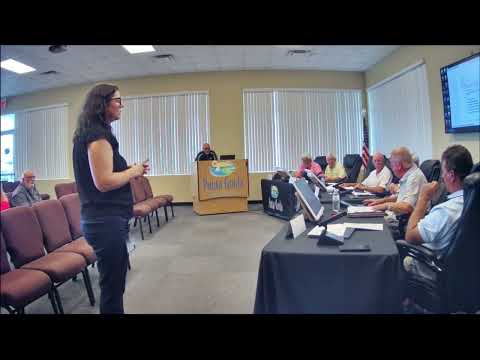
Punta Gorda Isles Canal Advisory Committee members heard sustained public comment on July 21 urging the committee to retain the existing Chapter 6 prohibition on canopies and similar dock structures.
Rich Bevac, a Punta Gorda resident, told the committee he researched council minutes and code history and urged keeping the rule intact, saying, "I'm recommending that you people, keep the ordinance as intact." Bevac cited a February 2019 council discussion that he said approved automatic boat covers while keeping canopy covers prohibited, and a February 2020 update that preserved the prohibition for safety and neighborhood‑appearance reasons.
The issue traces to a longstanding local rule in Chapter 6 that several speakers said has been enforced in Punta Gorda Isles and Burnt Store Isles; Bevac said his informal survey found "probably, 93% were against changing the ruling." The committee discussed whether the prohibition was originally adopted by the city council, carried forward from earlier deed restrictions, or embedded in the improvement district rules when Punta Gorda was formed.
Deputy City Clerk Jennifer Faulkner told the committee the clerk's office had already been asked to research council minutes and related materials and cautioned that council minutes are summaries and may not capture the full rationale for a long‑standing rule. Faulkner said staff would search the available minutes and any older video recordings to find fuller records of past discussions; she noted that changing the rule would require an ordinance and the statutory ordinance process. As Faulkner put it on the record, the ordinance route "would need 2 public hearings," plus required notice.
Committee members debated how far back to search. Some members said they wanted the most recent documented council discussions (2019–2020) rather than decades‑old background; others asked that staff try to locate any older audio or video records and any association records that might explain the original rationale.
No formal recommendation to city council was adopted at the July 21 meeting. Several members suggested further steps the committee can take if council requests the advisory group's input, including surveying waterfront property owners, consulting homeowners associations, and compiling the clerk's historical findings before issuing a recommendation.
The committee left the item open for further research and possible future discussion; the clerk's office and canal staff will provide the committee with materials they locate and will place the matter on a future agenda if council requests action.