Get Full Government Meeting Transcripts, Videos, & Alerts Forever!
Get email alerts on the Education Legislation topic
No spam. Unsubscribe anytime.
Rep. Josh Carlson urges students to research before changing rules; outlines education, mental‑health, teacher pay and telehealth steps
Summary
Representative Josh Carlson spoke to LIAC about public service and detailed legislative work on teacher pay, telehealth for emergency certificates, a withdrawn library obscenity bill and broader workforce and technology issues. He urged students to gather facts before seeking policy changes.
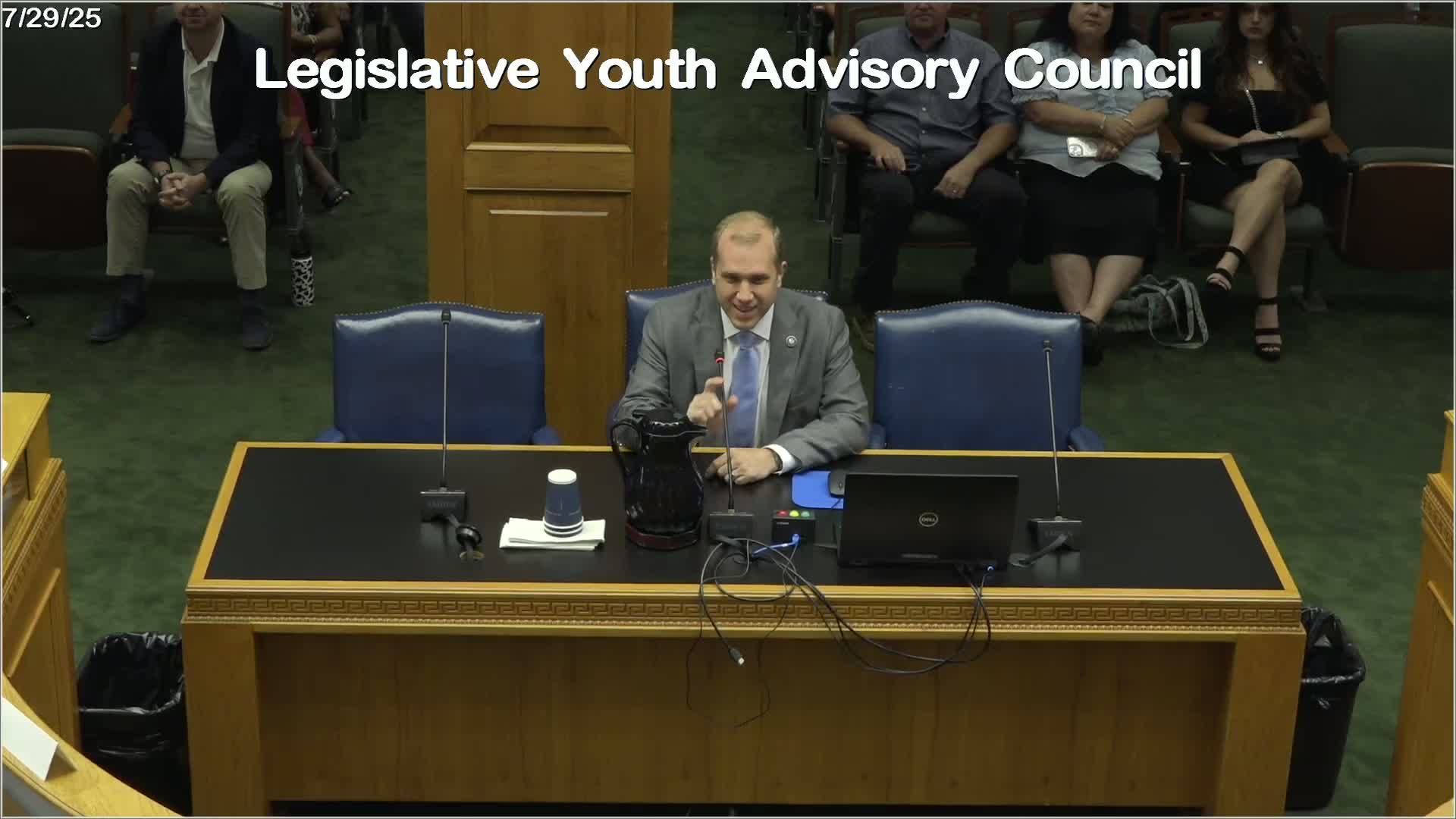
State Representative Josh Carlson met with the Legislative Youth Advisory Council to discuss why he sought public office, his legislative priorities and several recent bills and policy topics.
Carlson described his path from parish council to the legislature and urged students to become involved early. He said the experience of observing education governance motivated him to run and told the council: “I would rather hear directly from you” about classroom realities. He urged students to contact legislators with specific, well‑researched proposals.
On specific legislation: - Teacher pay: Carlson described House Bill 466, a measure to require salary increases for teachers and other school employees, as among the session’s important education steps and told students that higher pay is a key part of strengthening schools. - Telehealth and emergency certificates: Carlson said he supported a change allowing clinical psychologists to perform physician emergency certificates (PECs) by telehealth, extending the telehealth option that had already been available to doctors and psychiatrists after COVID‑era changes. He framed the change as expanding access to care. - Library materials: Carlson said he introduced and later withdrew a bill aimed at requiring libraries to follow obscenity standards in children’s sections after concluding that other measures were already addressing the concern; he said he did not want duplicative laws. - Criminal justice and the death penalty: A student asked about Carlson’s votes on limiting some post‑conviction delays. Carlson defended restrictions on repeated litigation that delay final sentences, saying prolonged appeals can cause lengthy delays for victims’ families. He also expressed personal support for capital punishment in the most serious cases and cited faith and historical legal traditions in explaining his position; he also said prolonged litigation raises costs and complicates policy.
On workforce and technology: Carlson encouraged students to develop marketable skills, not just degrees, and described technology and AI as transformative. He warned that some routine jobs will change but said technology should be mastered rather than feared: “do the hard work first. Think, organize, debate, analyze. And then if you need AI to polish it… use it to help, don't use it to replace what you do.”
Why it matters: Carlson combined practical advice to students—research policy debates and cultivate marketable skills—with summaries of enacted or proposed measures affecting teachers, mental‑health access and libraries. His answers reflected both policy tradeoffs and the need for detailed evidence when proposing changes.
Ending: Carlson encouraged LIAC members to reach out to legislators, to gather facts before advocating changes and to remain engaged in public service.