Get Full Government Meeting Transcripts, Videos, & Alerts Forever!
Get email alerts on the Premium Tax Structure topic
No spam. Unsubscribe anytime.
Louisiana study group reviews complex premium tax system, aims for reform
Summary
A legislative study group met to review Louisiana's premium tax structure, hearing a high-level accounting of tax collections and credits and agreeing to pursue further analysis and rulemaking aimed at greater transparency and possible legislative changes for 2027.
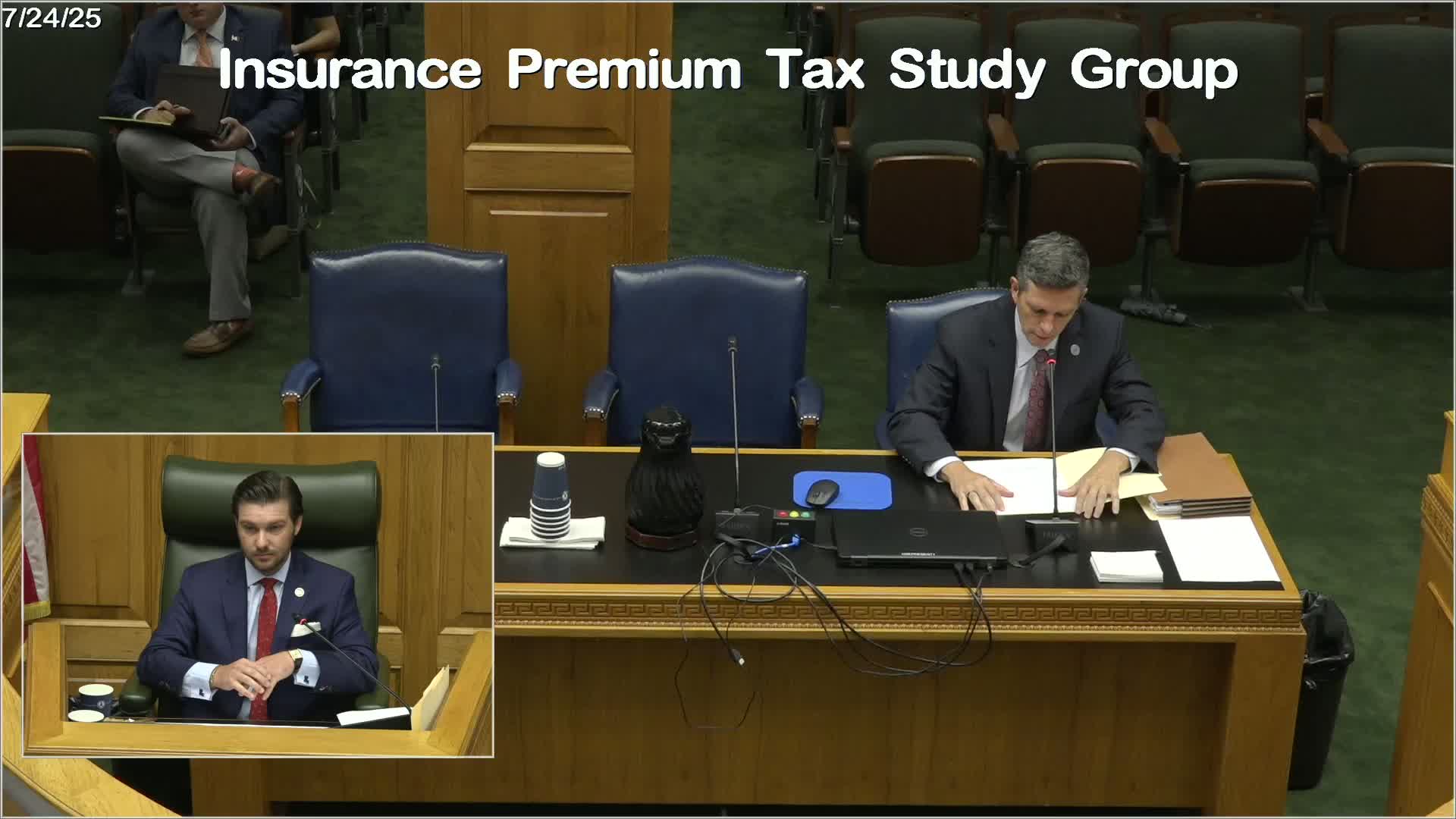
The Louisiana Premium Tax Study Group met to review the state's insurance premium tax framework and agreed to pursue further analysis and possible reforms ahead of the 2027 legislative session. Representative Chance Henry, who was nominated to chair the group, led a session that included presentations from the Department of Insurance and the Department of Revenue.
The discussion centered on how premium taxes have grown and how credits and dedications complicate the effective rate paid by insurers and, ultimately, policyholders. Lance Heron, deputy undersecretary at the Louisiana Department of Insurance, told members, "The Department of Insurance is the third largest revenue collector for the state, bringing in 1,600,000,000.0 with 1,400,000,000.0 of that being premium taxes." He said premium-tax collections rose from roughly $914 million in fiscal 2019 to $1.4 billion in 2024.
The session mattered because those premium taxes are a major revenue source: Heron said managed-care organizations tied to Medicaid generated about $787 million dedicated to the Louisiana Department of Health, while roughly $568 million flows to the general fund. The group’s chair, Representative Chance Henry, said the panel’s goal is to produce proposed legislation for the 2027 session to “clean up, create a flat tax, reduce credits while, you know, not hurting the insurers, as much as we could.”
Members asked for more granular data. Representative Richard Nelson, secretary of revenue, and staff said company-level credit usage is confidential but that aggregate figures and line-item breakdowns can be provided. Drew Murray, staff to the House Ways and Means Committee, reviewed study-group procedures and emphasized that a quorum and formal motions would be required for any business. The group agreed to request additional analysis; a motion passed to invite University of Louisiana at Monroe researcher Christine Berry to present on retaliatory tax impacts.
Panelists and insurers raised practical concerns about administration and fairness. Mark Carter, founder and CEO of Coast States Insurance Company, and Corey Harvey, chairman of the Life and Health Insurance Guaranty Association board, described how credits and dedicated fees shape company behavior and solvency backstops. Members discussed municipal premium taxes and other dedicated fees that require insurers to remit to hundreds of local jurisdictions, which participants said complicates compliance and rate setting.
The study group also discussed consumer transparency. Representative Henry said he spoke with the insurance commissioner and was told the department will pursue rulemaking to place premium-tax information on the insurer’s policy declaration page. Representative Adam Patrick noted an existing law taking effect in 2027 will require broader rate-transparency reports at renewal.
Before adjourning, the group agreed to meet again to refine topics, gather requested data on effective tax rates and credits, and to schedule a presentation from ULM. The chair said the committee hopes to complete the study portion in the coming months and use the latter half of next year to draft legislation for 2027.