
Senate codifies voluntary ‘blue envelope’ program to improve police interactions with people on the autism spectrum
Get AI-powered insights, summaries, and transcripts
Subscribe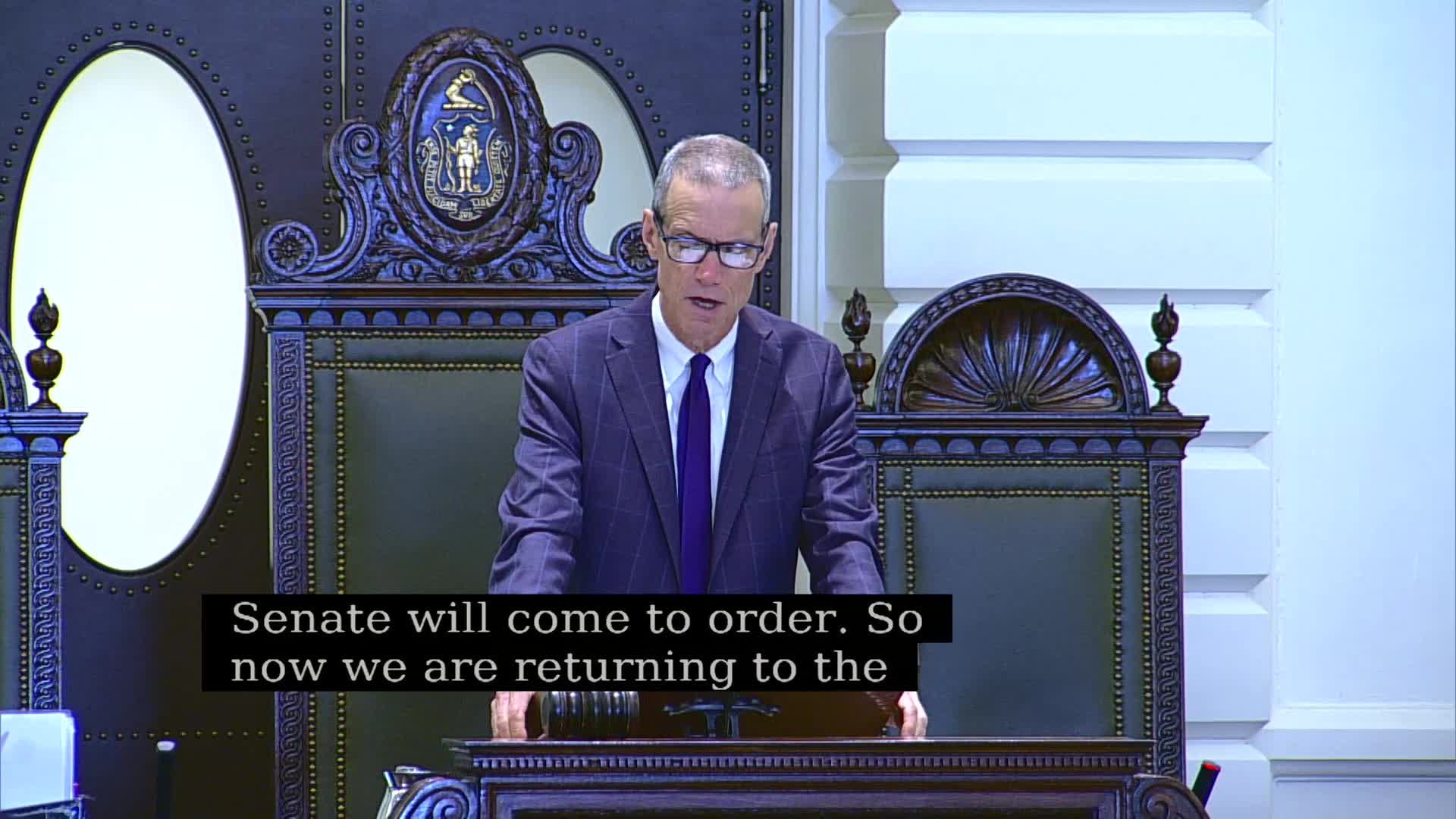
Summary
The Massachusetts Senate passed S.2558 to codify a voluntary blue envelope program for drivers and passengers with autism spectrum disorder and to require recurring law enforcement training aimed at improving interactions with neurodiverse people.
The Massachusetts Senate on the floor advanced an act to facilitate better interactions between police officers and persons with autism spectrum disorder by codifying a voluntary “blue envelope” program and requiring training for law enforcement.
Senator Jo Ann Commerford (sponsor) described the program — modeled on a Connecticut law and on a program already implemented by the Massachusetts State Police — as a simple, voluntary tool to reduce misunderstandings in traffic stops and other encounters. “The blue envelope…serves to improve these interactions and increase public safety,” Commerford said, describing an envelope that holds a driver’s license, registration and insurance cards while providing front‑of‑envelope guidance for officers and back‑of‑envelope reminders for the driver.
Senators said the Massachusetts State Police began distributing envelopes in April 2024 and that more than 8,500 blue envelopes have already been distributed by police barracks and by mail. Supporters asked the Senate to codify the program to make distribution and awareness more permanent and accessible statewide, and Ways and Means included a substitute draft (S.2558) as the vehicle.
The chamber adopted an amendment by Senator Michael G. Moore requiring the Massachusetts Police Training Council to provide in‑service training on the program, with training required every five years. Senator Moore said recurring training will help thousands of officers recognize characteristics of neurodiverse persons and improve interactions on the street.
A separate amendment to expand the concept to a “yellow dot” decal and envelope for drivers age 62 and older with chronic medical conditions failed on a roll call after senators said the proposal should proceed through normal committee review rather than floor amendment at this time.
The Senate ordered the bill as amended to a third reading and passed it to be engrossed; the final roll call recorded 39 yeas, 0 nays. Supporters emphasized the voluntary nature of the program and urged agencies to implement training and distribution plans to maximize access.
Discussion versus action: supporters described the program’s origins, existing State Police implementation and distribution numbers (discussion). The Senate adopted a training amendment requiring MPTC in‑service training (direction) and rejected a broader medical decal amendment after roll‑call (formal action). The bill was ordered to a third reading and passed to be engrossed by roll call (formal action).
Key clarifying points recorded on the floor: the program is voluntary; distribution has already occurred (over 8,500 envelopes distributed as of remarks on the floor); the amendment requires MPTC to provide training once every five years; the Registry of Motor Vehicles is directed to coordinate with advocacy groups and the State Police on envelope distribution.