
Officials told to forward city texts, voicemails and documents to clerk to meet public‑records rules
Get AI-powered insights, summaries, and transcripts
Subscribe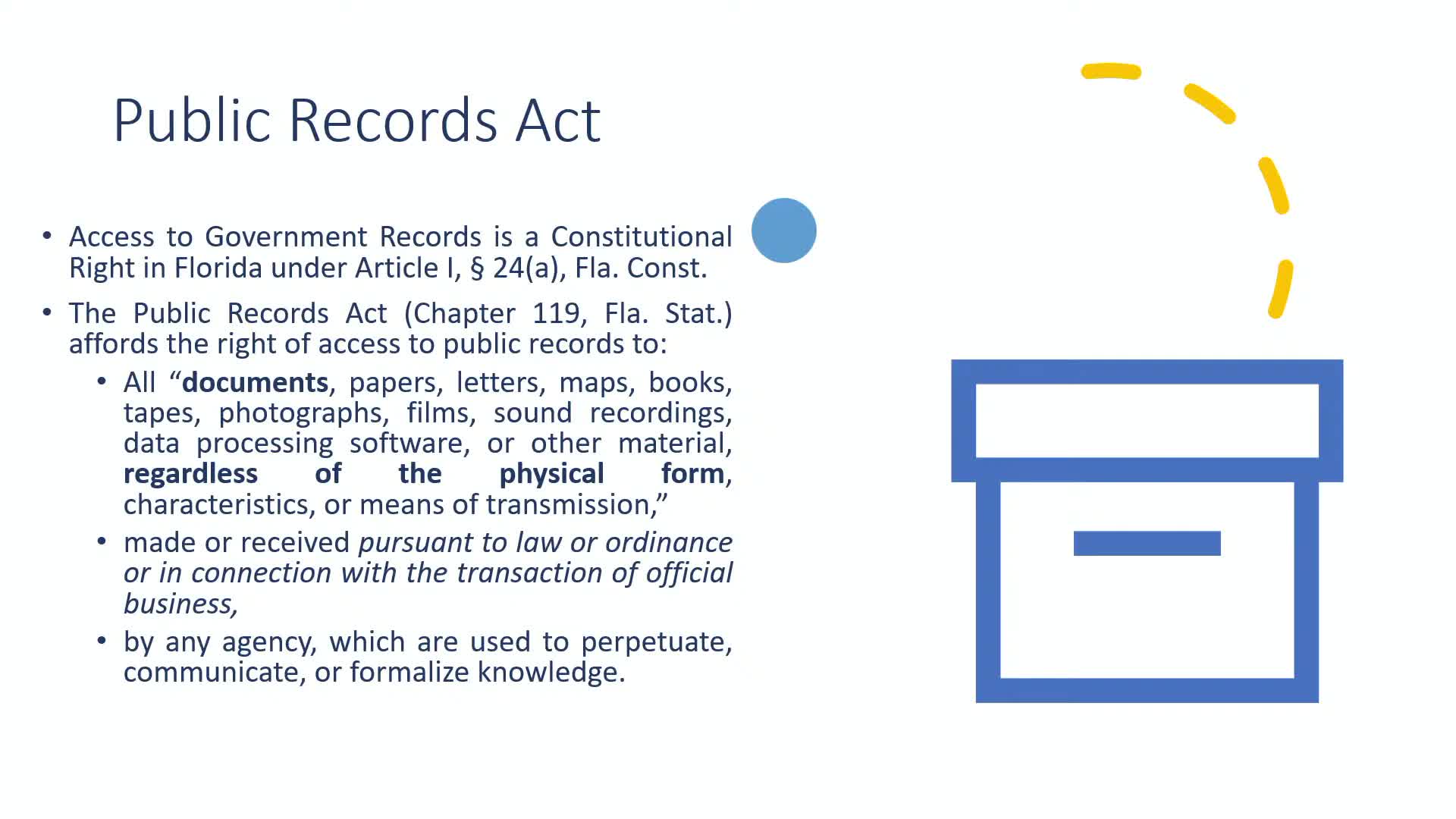
Summary
Legal counsel instructed commissioners that emails, texts, voicemails and draft documents related to city business are public records even if on personal devices and recommended forwarding such materials to the city clerk to ensure retention and compliance with retention schedules.
At the workshop, the city attorney advised commissioners that nearly all communications made or received in connection with city business—emails, texts, voicemails, photographs or drafts—are public records and must be retained.
Lehi said ‘‘public records’’ includes ‘‘documents, papers, letters, maps, books, tapes, photos, videos’’ and warned that voice mails and messages on personal devices can be subject to public‑records requests. ‘‘You can’t delete public records,’’ she said, and explained courts have required agencies to make reasonable efforts to produce messages from personal devices when those messages concern agency business.
She recommended that commissioners forward city‑related messages and materials to the city clerk or staff so the records are archived according to state retention schedules and to avoid accidental deletion on personal devices. Lehi noted a practical risk: some officials’ phones automatically delete messages after a set period; forwarding the items to staff removes that risk.
Commissioners asked whether receiving threats or other sensitive messages required notification to the chief of police; Lehi said such items are public records if received in an official capacity and should be handled by staff, and that staff should be alerted if a message has public‑safety implications.
Direction to staff: the city clerk and counsel should be available to accept any city‑business records from commissioners and keep them on file; commissioners were advised to forward any voice mails or texts related to city business to the clerk to ensure compliance with retention rules. No formal action was taken.