
Eustis commissioners review draft downtown master plan, agree to adopt process and next steps
Get AI-powered insights, summaries, and transcripts
Subscribe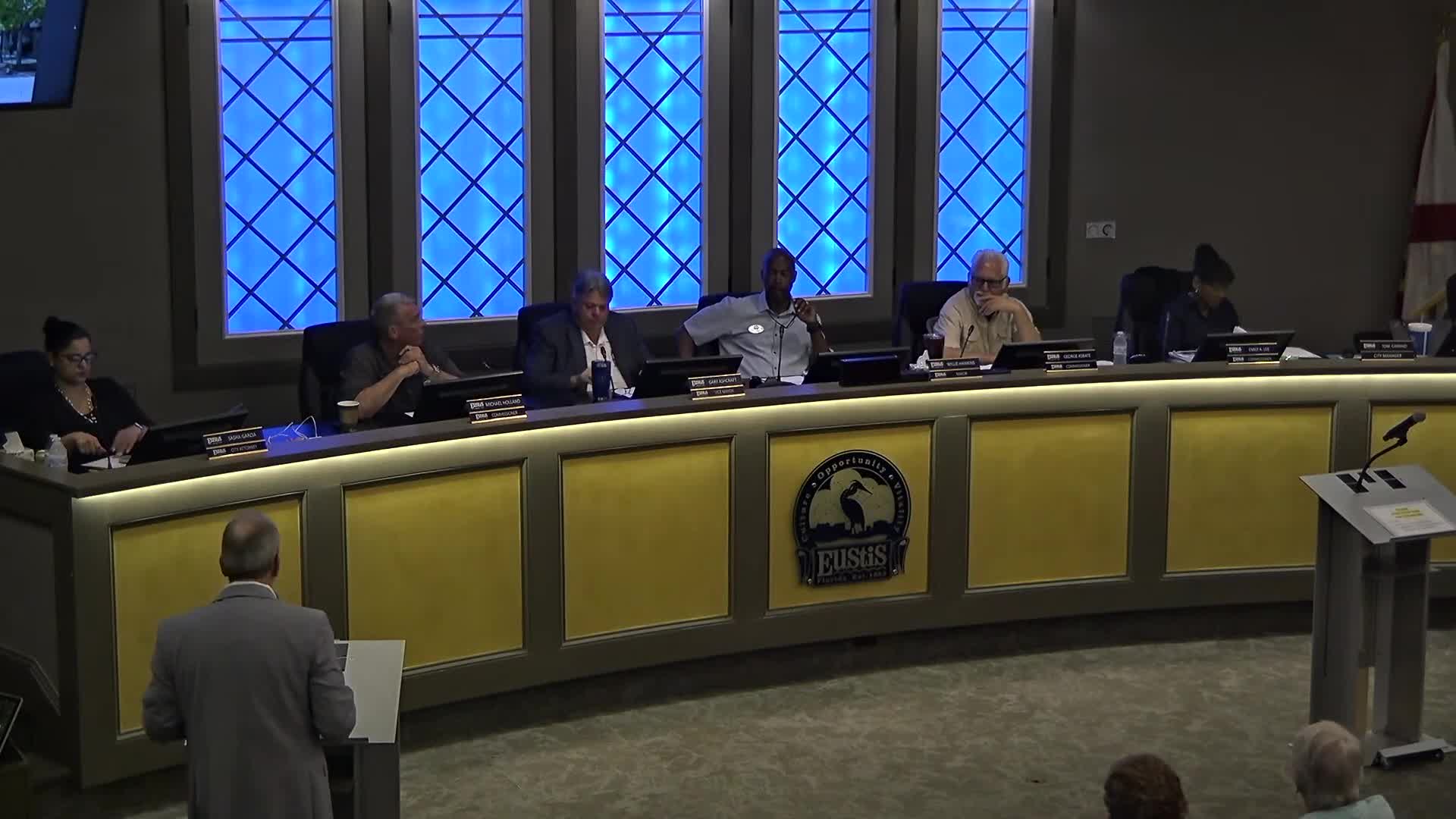
Summary
City commissioners spent a workshop reviewing the draft downtown master plan and gave staff direction to return the plan for formal adoption; commissioners emphasized early focus on parking, waterfront activation and staged implementation.
EUSTIS, Fla. — City of Eustis commissioners spent a workshop on April 5 reviewing a draft downtown/master-plan update and gave staff direction to return the plan for formal adoption after limited follow‑up work. The commission emphasized parking, waterfront activation and staged implementation as immediate priorities.
The plan presentation was led by Mike Gohman of Gohman New York Advisory, the consultant advising the city. "We are working on behalf of the City of Eustis as your economic development advisor," Gohman told commissioners, and reviewed the document’s purpose as a visionary guide rather than a prescriptive zoning code.
Commissioners and staff discussed how the plan is intended to be used: as a guide for land development regulations (LDRs), a basis for grant applications and a tool to prioritize municipal investments. Gohman noted the plan contains an extensive appendix of data and a set of near‑term priority projects; he and commissioners also cautioned the plan is a living document that will require implementation steps and funding decisions.
Commissioners broadly signaled support for adopting the master plan as a policy umbrella while directing staff and consultants to return with more detail on implementation items the commission identified as critical. Mayor (unnamed) and several commissioners said they wanted the city to adopt the plan so it could be used immediately in grant and redevelopment discussions.
Commissioners asked staff to return the draft for formal acceptance at an upcoming regular meeting and to schedule follow‑up workshops on specific topics. Staff confirmed the master plan adoption will be placed on a future commission agenda for formal consideration.
The workshop included detailed breakouts on issues the plan raises — notably how to sequence and finance infrastructure and downtown activation projects — and concluded with commission direction to staff to prepare the implementation materials the body requested.
Commissioners repeatedly stressed the document should be actionable: a roadmap tied to funding options and a timeline rather than a document that “sits on a shelf.” Gohman recommended a combination of continued community engagement, targeted grant pursuit and consideration of financing tools such as tax increment financing to implement priority projects.