Get Full Government Meeting Transcripts, Videos, & Alerts Forever!
Get email alerts on the School Finance Voucher Decoupling topic
No spam. Unsubscribe anytime.
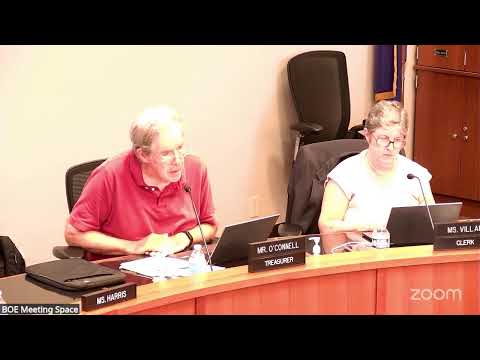
Racine committee weighs state bill to decouple voucher funding from local school tax base
Summary
At a July 28 legislative committee meeting, Racine Unified School District members discussed proposed state legislation to move voucher funding off the local tax levy and into state general revenue, asked staff for fiscal and legal research, and raised concerns about equalization and accountability.
At its July 28 meeting, the Racine Unified School District Board Legislative Committee discussed proposed state legislation to decouple public school and private voucher funding, asked district staff to research fiscal and legal impacts and instructed staff to report back to the committee. Committee members raised concerns about how the change could affect local tax levies, state aid equalization and oversight of voucher schools.
The committee chair summarized background materials prepared by Anne Chapman, research director for the Wisconsin Association of School Business Officials, and said the current statutory mechanism routes roughly $11,000 per voucher student to families and reduces the district's reported enrollment while the district can raise its levy to offset that loss. "This, I'll I'll be blunt, is a form of money laundering on the part of the state," the committee chair said, arguing the present arrangement obscures the tax impact of vouchers.
Members discussed multiple practical questions. One member said she has received a city tax-bill insert that breaks out the voucher levy from the overall school levy. Another asked whether decoupling would reduce district state aid under the equalization formula and cited a previously described example in which a drop in the counted number of students could lower aid by "$30,000,000 or whatever it is," increasing the local levy. The committee noted that the voucher program amount has grown over the past decade and that equalization — the state aid component intended to reduce disparities among districts — may not apply to voucher funds in the same way it applies to public-school aid.
Committee members also flagged nonfiscal issues: accountability and public oversight. The committee chair observed that voucher schools do not have the same public-board accountability and said decoupling could "further distance the voucher program from scrutiny." Members discussed whether decoupling would materially change family choice under the voucher program — it would not, they said — but would change where the funds are drawn from (state general revenue rather than local property tax).
The committee did not take a formal position or vote on the legislation. Instead, members asked district finance staff to clarify several items for a future meeting: whether the district or the Wisconsin Association of School Boards previously adopted a position on decoupling, a precise estimate of the fiscal impact on the district and levy under current state-aid rules, legal questions about equalization and potential litigation, and whether any changes would alter accountability or reporting for voucher schools. The committee chair said he would follow up with district finance staff to prepare that material for the committee's next discussion.
The committee's discussion was exploratory: no motion on the substance of decoupling was filed. The committee asked staff to bring factual information back to inform any later recommendation or formal action by the full board.