
Board agrees to research green‑energy options; staff flags funding and timing constraints
Get AI-powered insights, summaries, and transcripts
Sign Up Free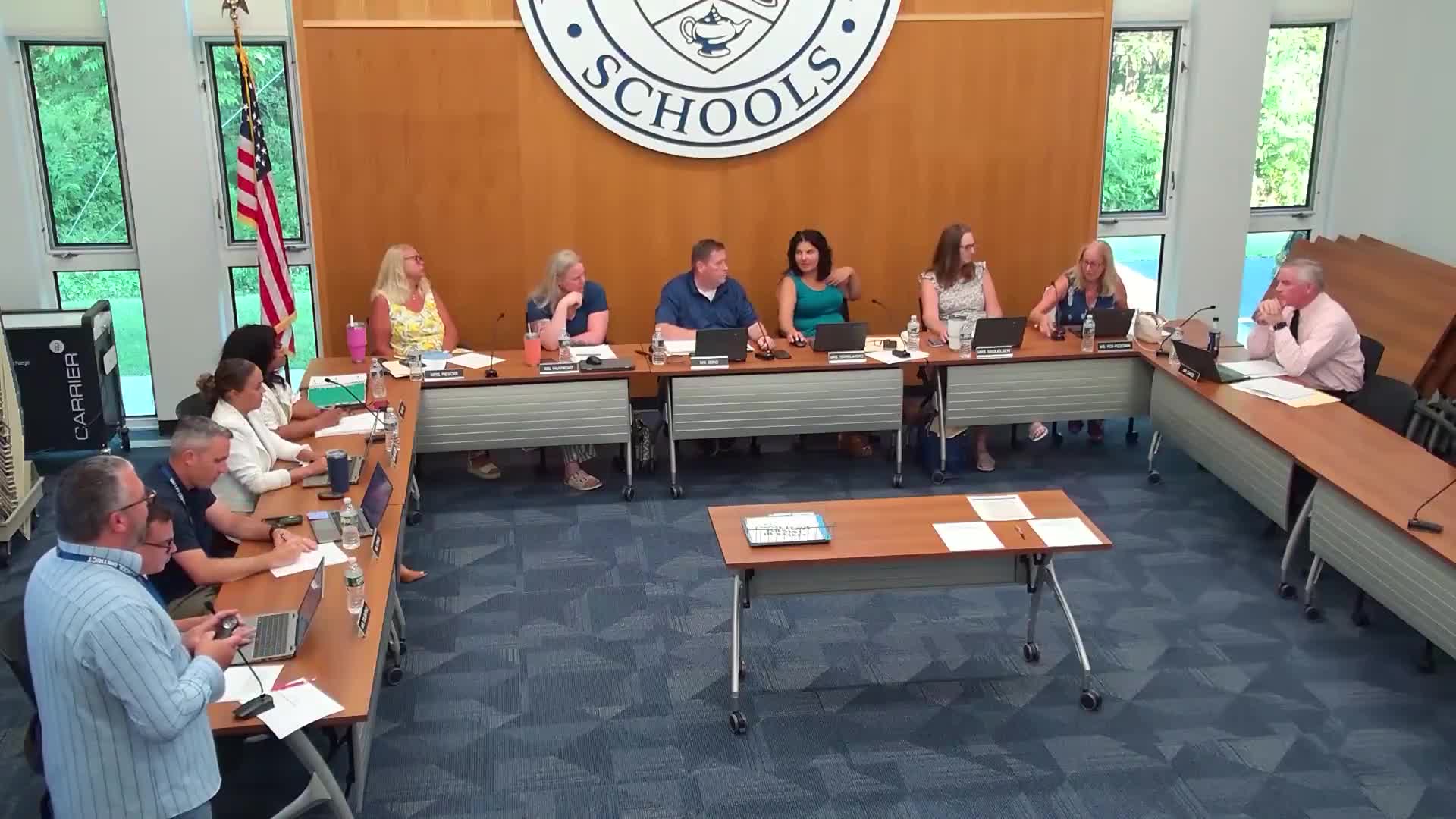
Summary
Board members agreed to authorize a study group of board members and staff to research solar, geothermal and electrification options for district buildings, while staff warned that incentives are changing and that roof replacements and procurement timing affect feasibility.
Board members agreed at the July 28 meeting to pursue a staff‑led study of green‑energy options for district facilities, including solar, geothermal and building electrification, with staff advising the board to narrow the scope and focus on grant‑eligible projects.
The chair asked whether four board members would be willing to form an exploratory group; after four members indicated interest, the board asked staff to define a research scope and return with a timeline and cost estimates. A staff presenter advised the board that many incentives for solar have shifted and that the practical moment to consider solar is when roofs are replaced, because removing and reinstalling solar during roof projects is expensive.
The staff presenter said districts sometimes fund energy projects through energy performance contracts (EPCs) and that the district is already installing high‑efficiency boilers and upgraded controls as part of current capital work. He also mentioned that two other New York districts were pursuing geothermal projects with NYSERDA support.
Why it matters: pursuing renewable or electrification projects could lower long‑term utility costs and alter capital planning, but feasibility depends on available grants, roof and mechanical project timing, and procurement economics.
Staff recommended returning with an inventory of candidate projects (for example, which roofs or parking areas are suitable for solar), potential funding sources and a prioritized list of grant‑eligible measures. Board members asked staff to include existing efficiency measures already in place, such as daylight‑harvesting lighting and upgraded control systems.
No formal vote to adopt a project was taken; the board approved only that research proceed and that staff return with findings and recommendations for potential next steps.