
Superintendent: summer school running, district adopts state cell‑phone policy and will submit procedures
Get AI-powered insights, summaries, and transcripts
Sign Up Free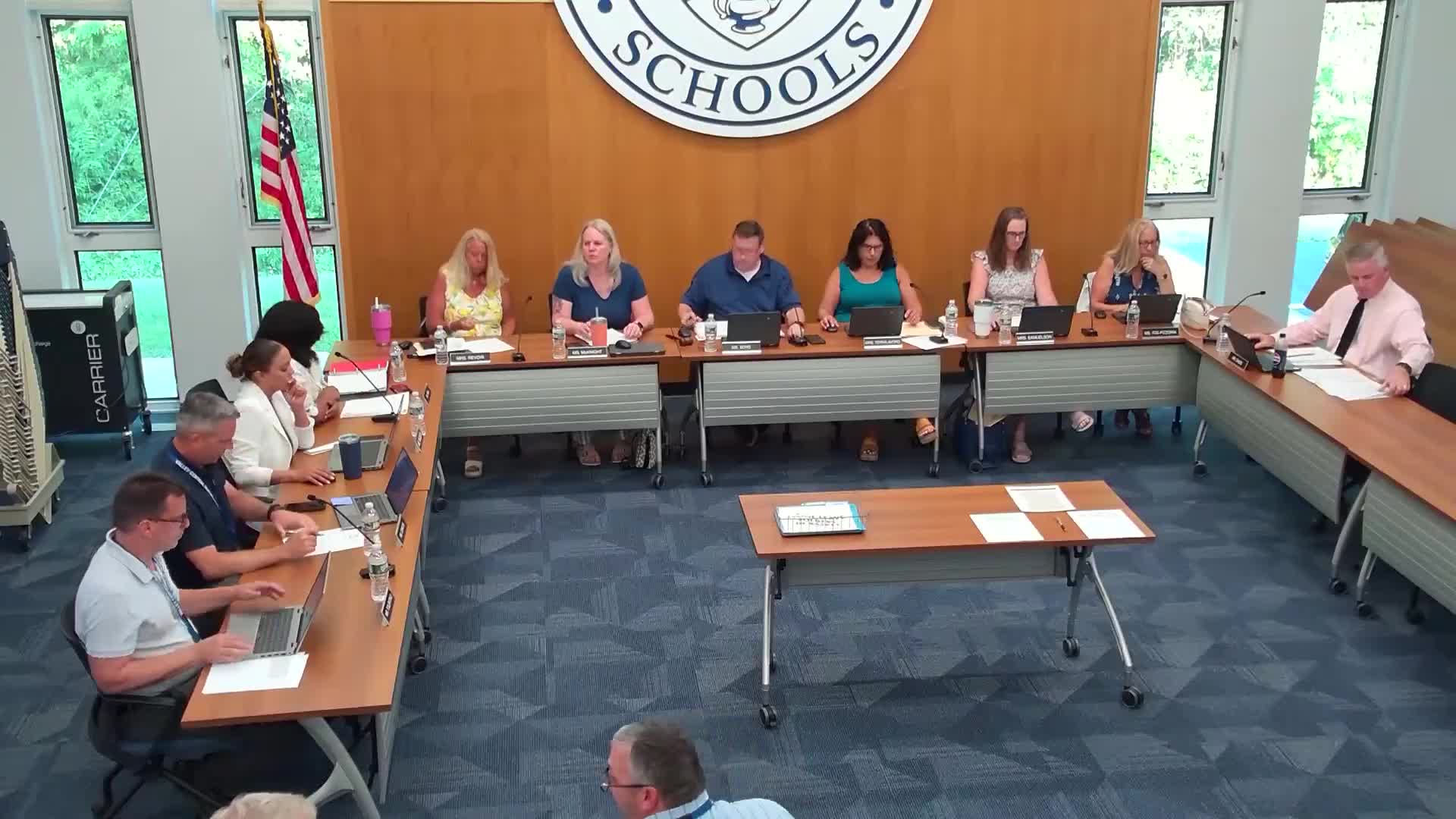
Summary
The superintendent reported summer school began in early July and is running smoothly with a no‑cell‑phone practice; staff said the district finalized a cell‑phone policy in June to comply with a new state education law and will submit procedures to the state this week.
The district—s superintendent told the Board of Education on July 28 that summer school began in early July for middle‑ and high‑school students, that classes are running smoothly with a no‑cell‑phone practice in place, and that the district has finalized procedures required under a new state education law restricting student cell‑phone use during instructional time.
"The governor has passed a law... that schools will be distraction free and that cell phones are not allowed at all during the instructional day," the superintendent said, explaining that the district circulated a survey to staff, students and community members and convened a community‑staff committee to draft procedures. She said the committee had a good turnout and that the district—s procedures are "in a very good position" to be submitted to the state by Friday; she also said the district was among the first in the county to pass a cell‑phone policy in June.
On summer school, the superintendent said she and another staff member greeted students on the first day and that staff had implemented a no‑cell‑phone rule for the summer program; "Students have responded well, and they seem to be really focused on what they—re learning," she said.
Why it matters: the new state law constrains classroom cell‑phone use during instructional hours and requires districts to adopt and submit policies and procedures. The district—s stated compliance steps — community survey, committee work and formal submission — determine how the policy will be implemented locally and communicated to families.
The assistant superintendent for curriculum and instruction reported work this summer on a literacy accreditation submission and on an application for an arts 4+1 graduation pathway that would allow a locally determined three‑unit arts sequence and a portfolio of creative work to count as a fourth‑plus‑one graduation option; the assistant superintendent said the state requires districts to apply before implementation. The same assistant said a Multi‑Tiered System of Supports (MTSS) plan will be brought to the board for approval once finalized.
No formal vote was required for the informational reports. The superintendent and curriculum staff said they would return with formal procedures and any required board approvals for policies that must be adopted or submitted to the state.