Get Full Government Meeting Transcripts, Videos, & Alerts Forever!
Get email alerts on the Alcohol Regulation topic
No spam. Unsubscribe anytime.
Council weighs tougher liquor‑license enforcement, training and renewal changes after rise in compliance failures
Summary
Council reviewed rising compliance‑check failures, heard public‑health warnings about youth alcohol access, and discussed options including earlier automatic suspensions, mandatory server training, late fees and aligning license renewal dates; staff will return with formal options
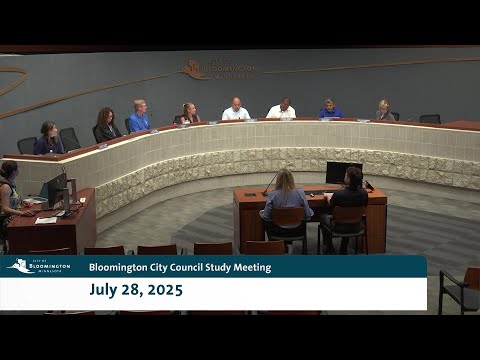
City staff told the Bloomington City Council on July 28 that compliance check failures by licensed alcohol retailers have increased in recent years and that enforcement tools could be strengthened. Jamie Hanson, city clerk, and public health specialist Britney Wen briefed the council on the compliance‑check process, recent trends and public‑health implications. Hanson said police conduct annual compliance checks using an underage operative; failed checks generate police reports and administrative packets that give licensees 30 days to respond before a hearing may be scheduled.
Public health staff framed compliance as a prevention tool. Britney Wen said binge drinking and early access create long‑term health harms and pointed to Hennepin County data showing more than 48,000 alcohol‑related hospitalizations in 2024 and the 2022 Minnesota Student Survey result that 12 percent of 11th graders reported drinking in the past 30 days. Wen told council that, “every missed opportunity to check IDs or intervene in underage access contributes to this ongoing cycle,” and she urged regular compliance checks and stronger age‑verification practices.
Staff described the city’s current penalty structure and compared Bloomington to peer cities. Hanson reported the city holds about 130 liquor licenses and has seen both more businesses failing a single compliance check and more businesses failing repeatedly. She noted that Minnesota state statute permits up to a $2,000 fine and 60 days’ suspension per violation; Bloomington’s current local practice applies escalating fines and suspends sales only after repeated violations. Benchmarks from other metro cities show a range of approaches: about 24 percent of surveyed cities apply an automatic suspension on first offense, 52 percent on second, and 65 percent on third, with suspension lengths commonly ranging from 1 to 10 days and up to 30 days in some places.
Council discussion covered a menu of options staff posed: require mandatory server alcohol‑service training (for all servers or a defined proportion), increase civil penalties, institute automatic short suspensions earlier in the offense sequence, target re‑checks for repeat offenders, require earlier renewal compliance with late fees for late packets, eliminate partial payment scheduling for license fees, and move semiannual license renewals to a single uniform renewal date to reduce staff workload. Council member D'Alessandro noted the low cost of standard TIPS training and argued mandatory training is reasonable; others suggested pairing requirements with fee discounts or other incentives. Several members recommended earlier automatic suspensions for repeat offenses and targeted follow‑up checks for places that fail.
Operational proposals and next steps: staff proposed aligning renewals to a single June 30 date (currently some licenses expire December 31), exploring late fees and eliminating partial payment options, and returning to council with draft ordinance language and implementation details. No formal council vote or ordinance changes were made at the study session; council asked staff to develop concrete policy options and to return with recommended language and implementation steps.