Get Full Government Meeting Transcripts, Videos, & Alerts Forever!
Get email alerts on the Redevelopment And Economic Incentives topic
No spam. Unsubscribe anytime.
Merriam council approves redevelopment deal, TIF and CID for Grand Station Marketplace
Summary
The Merriam City Council voted unanimously on a package of approvals that clear the way for the Merriam Grand Station Marketplace, a mixed‑use redevelopment that includes a 12,500‑square‑foot grocery, 4,000 square feet of restaurant/retail and a mid‑rise residential building.
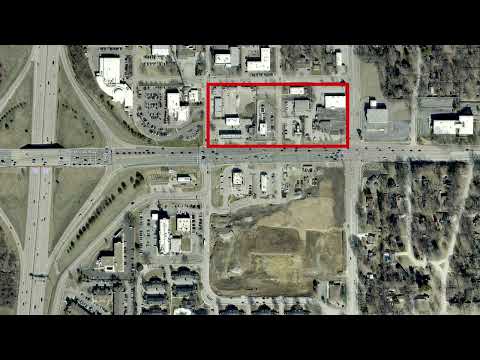
MERRIAM, Kan. — The Merriam City Council voted unanimously on a package of approvals Monday that clear the way for the Merriam Grand Station Marketplace, a mixed-use redevelopment on about 6.25 acres north of the existing Merriam Grand Station complex.
The council adopted a project plan for the I‑35 Redevelopment District Project Plan Area O, approved a redevelopment agreement with Slater Investors LLC (Drake Development), established a 1% community improvement district (CID) covering the project area, and authorized two series of general‑obligation bonds the city will issue to bridge near‑term construction costs with long‑term CID and tax‑increment (TIF) receipts.
Why it matters: The package combines land conveyances, city site work and debt with developer commitments and guarantees to deliver a 12,500‑square‑foot grocery, a 4,000‑square‑foot restaurant/retail building, a multi‑story residential building and public infrastructure. City staff and the developer said the structure protects taxing entities by preserving current PILOT (payment in lieu of taxes) receipts while using new sales‑tax and TIF streams to retire bond debt over time.
City and developer presentations at the special meeting laid out the project and the business terms. City staff described the site — bounded by Shawnee Mission Parkway, Antioch Road, IKEA Way and West 60 Second Terrace — and said the redevelopment will reduce curb cuts on public streets from 14 to seven, add sidewalks and a new crosswalk, and improve stormwater controls. Brian Dyer, community development director, told the council the project plan and development plan cover an East Block the city will own and a West Block Drake will develop.
Drake Development’s president, Matt Pennington, said the private partner has an executed lease with a grocery tenant. “We have a grocery store lease signed,” Pennington said, and added the team intends to start site work immediately if the council approves the full package. He described the residential component as a high‑quality, market product and said the developer will include an affordability component: “We’re planning 18 of the units to be subject to those affordability or requirements,” he said.
Key terms, as stated in the meeting: - Project size and uses: roughly 6.25 acres; East Block: 12,500‑square‑foot grocery plus 4,000‑square‑foot restaurant/retail; West Block: mid‑rise multifamily with structured parking and retail/restaurant frontage near Shawnee Mission Parkway. The Chipotle on site will remain. - Parking and facilities: the West Block parking provision was described as about 330 spaces (Dyer) and roughly 1.3 parking spaces per unit (the Institute of Transportation Engineers ratio). Dyer said the East Block has 188 parking spaces that meet code. Pennington and Dyer said the project will include 18 EV charging stations. - Budget and investments: the presenters described a project budget of about $102 million with approximately $69.4 million in private investment and $32.6 million in public investment. Drake’s minimum private investment was stated as $66 million. The city’s maximum site‑preparation contribution for the East Block (demolition, remediation, public improvements) was capped at $5,500,000 in the redevelopment agreement; a sanitary‑sewer relocation cap of $275,000 was also listed. - Incentives and revenue: the redevelopment agreement includes (a) TIF reimbursement of up to $13.7 million tied to the parking structure (paid over time), (b) industrial revenue bonds (sales‑tax exemption on construction materials), and (c) a 10‑year property‑tax abatement on the residential portion with annual PILOTs at approximately the 2024 property‑tax level (cited as about $49,500 per year) to keep taxing jurisdictions “whole.” The CID proposed is a 1% additional sales tax (not applied to grocery sales) for up to 22 years; Drake guaranteed a true‑up of $2.5 million at year 11 and $5.0 million at year 22 if CID receipts fall short.
Council members and staff described taxpayer protections and contract remedies. City staff emphasized hard caps in the redevelopment agreement (for example the city site‑prep maximum) and developer obligations such as the minimum private investment. The agreement contains reversionary rights on the West Block (the city would retake specified parcels if key milestones are not met) and financial penalties/reductions to the TIF cap if the developer’s required investments are not met.
Affordable units and reporting: the agreement requires an affordability component for a limited number of units and annual reporting. The council recorded that 18 units would be subject to affordability controls for five years; the affordability standard as stated in the meeting was “rents capped at 30% of 60% of the Johnson County median household income” for the specified units, with annual certification and city audit rights.
Financing and bonds: Jeff White, the city’s financial adviser with Columbia Capital, described the plan to issue two series of general‑obligation bonds (tax‑exempt and taxable series) to bridge construction cash needs until TIF/CID and lease revenues are available. White said the city intends to use project revenues to repay the debt and plans prepayment options to retire bonds early if receipts permit. The council voted to authorize the bonds and the associated parameters resolutions.
Public comment: one resident spoke at the CID hearing. Billy Kron said he opposed the package and characterized public incentives as “corporate welfare,” warning of higher rents and earlier store closures based on prior experience. Kron asked for a public vote before the city incurs the debt. His remarks were the only public comment during the two hearings.
Council action and next steps: the council adopted the Project Plan O and the redevelopment agreement, established the CID, approved the rezoning and preliminary development plan, accepted the final plat and dedicated right‑of‑way/easements, and authorized the bond ordinances and parameters necessary to sell bonds. Vote tallies were recorded on each item (project plan and CID measures were adopted by the votes shown in the minutes, generally unanimously). Council and staff stated that, if the approved package remains in place, Drake will start demolition and site work on the East Block within one week of closing and begin construction; the West Block closing and site work were scheduled shortly after.
Remaining issues and safeguards: staff repeatedly emphasized statutory sequencing, environmental remediation steps (including KDHE clearances for the former gas station), and the contract “gateway” or reversion clauses that allow the city to retake parcels if milestones are not met. The redevelopment agreement also contains civic commitments from Drake (annual community contributions, event sponsorship and a one‑time $50,000 public art contribution) and requires executed, substantially complete construction, leasing and property‑management exhibits as part of closing.
Looking ahead: Pennington and staff described an aggressive schedule and said the grocery tenant aims to open in late 2026 if the approvals hold and construction proceeds on schedule. The council closed both public hearings and moved the package forward with the votes taken at the meeting.
(Quotes in this article are taken from remarks on the public record at the special meeting.)