
Arts organizations urge a dedicated arts fund and affordable creative spaces in 1 LIC
Get AI-powered insights, summaries, and transcripts
Subscribe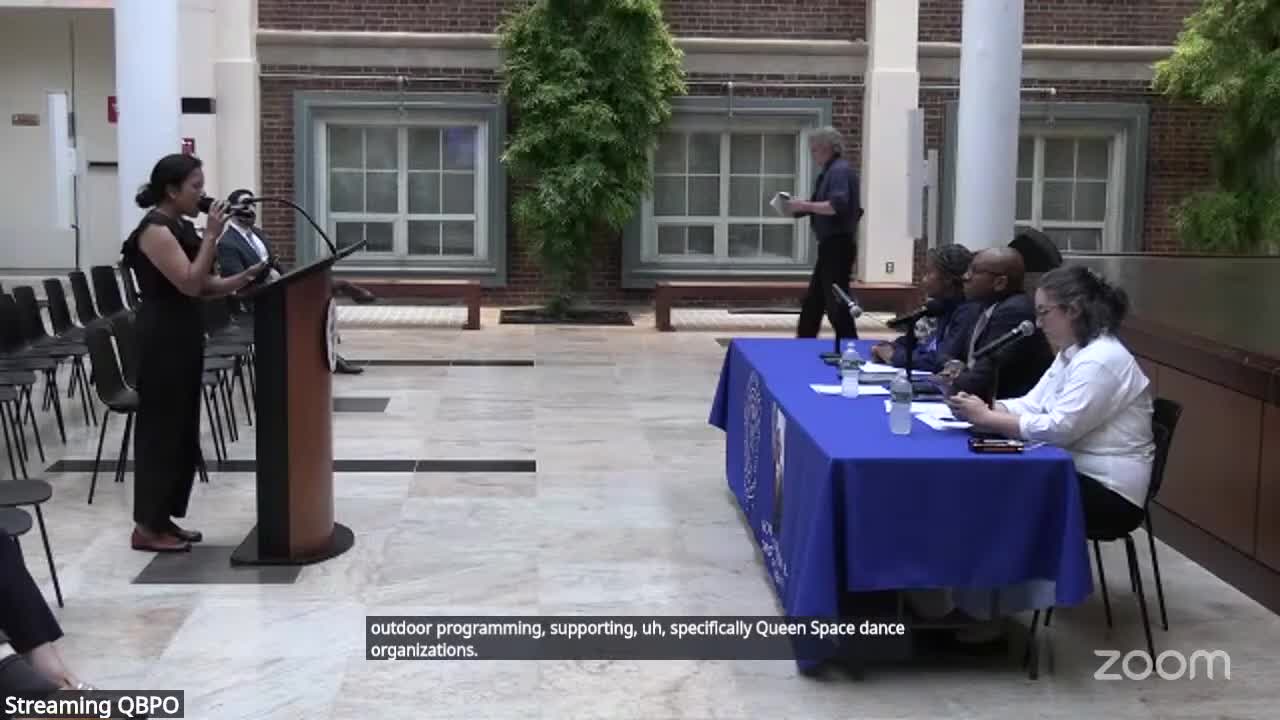
Summary
Arts and culture groups, producers and cultural institutions told the hearing the CIty’s plan lacks binding commitments to preserve and expand arts space; speakers asked for zoning incentives for below‑market cultural space, a developer‑funded LIC arts fund managed by a third party, and capital support for small arts organizations.
Artists, cultural organizations and cultural institutions pressed city leaders at the Queensborough land‑use hearing to include concrete and enforceable arts commitments in the Long Island City Neighborhood Plan.
"The DEIS and the 1 LIC plan failed to address a comprehensive plan for arts and culture," said Carisha Bhatan, founding executive director of the Queensborough Dance Festival, testifying as both an arts leader and a community board member. She and other speakers urged zoning incentives for developers to provide long‑term below‑market arts spaces and a developer‑funded LIC arts fund "operated by a third party local nonprofit to streamline funding equitably, especially among small budget arts organizations within the zoning area."
MoMA PS1's director Connie Butler told the hearing her institution wants to expand community programming, open its courtyard, and pursue ADA improvements as city investments arrive: "This rezoning has inspired us to be more ambitious and consider new ways to provide more open, clean, accessible, and safe public spaces within LIC."
CultureLab, Chocolate Factory Theater and other groups also described the ecosystem of smaller arts nonprofits that they say rely on affordable rehearsal, studio and performance space. CultureLab's founder Edra Wheeler asked for capital and operating support dedicated to organizations inside the rezoning footprint and said "There are already a 111 small budget arts and culture organizations and artist groups in the zoning area" whose space and operations are vulnerable.
Why it matters: Long Island City has a dense cluster of arts producers and live‑work spaces that have been central to the neighborhood's identity and local economy. Arts advocates said failure to require developer support and to fund small organizations risks displacing the very cultural assets that make the neighborhood attractive.
What advocates asked for: Zoning incentives to produce long‑term affordable cultural space; a developer‑funded LIC arts fund managed by a third party nonprofit with priority for small organizations in the rezoning area; capital support for arts infrastructure and a permanent outdoor performance venue; and arts programming tied to schools and public spaces.
Ending: DCP and city agencies acknowledged arts concerns and schedule follow‑up workshops; arts leaders said the final plan must include enforceable mechanisms — not voluntary measures — to preserve and expand cultural space as housing and commercial development moves forward.