City planners propose '1 LIC' rezoning to add nearly 14,700 homes and new waterfront access in Long Island City
Loading...
Summary
The Department of City Planning presented the Long Island City Neighborhood Plan — "1 LIC" — proposing zoning changes across about 54 blocks to allow roughly 14,700 new homes, including about 4,300 permanently income‑restricted units, new jobs, and a continuous waterfront access strategy.
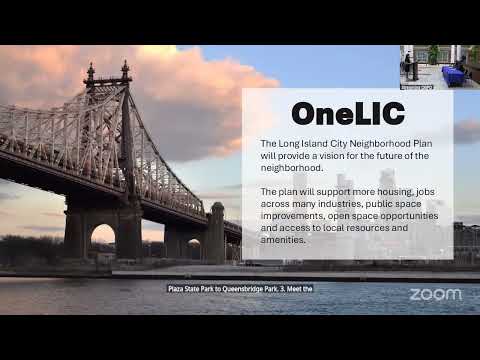
Queens Borough President Donovan Richards opened a public land‑use hearing where the New York City Department of City Planning detailed the Long Island City Neighborhood Plan, a 10‑year vision to rezone parts of western Queens to encourage housing, jobs and a connected waterfront.
"I'm excited to share the Long Island City Neighborhood Plan, a vision for the next 10 years of growth, opportunity, and transformation of the neighborhood," said Hae Kyung Yang, project lead for DCP. Yang told the hearing the plan is projected to "create close to 14,700 new homes, of which approximately 4,300 would be permanently income restricted and rent regulated," and to "create nearly 3,500,000 square feet of new floor area for commercial and community facility uses" and support roughly 14,400 new jobs.
Why it matters: The plan would rezone about 54 blocks in western Queens—primarily in Community District 2 with six blocks in District 1—applying Mandatory Inclusionary Housing (MIH) in mapped areas, modifying existing special Long Island City zoning and proposing city map changes to improve waterfront circulation. DCP said actions include zoning map and text changes, site‑specific approvals for city‑owned parcels and incentives such as open‑space and recreational bonuses.
Key land use elements described by DCP: - Mandatory Inclusionary Housing mapped across shaded areas, producing the agency's estimate of roughly 4,300 permanently income‑restricted units. - Four subareas (waterfront, corridors, LIC core & Queens Plaza, industrial) with tailored zoning: mixed‑use districts along the waterfront and corridors; M1‑type manufacturing districts retained and modified in IBZ areas; and M16/R9 and R10 pairings by transit nodes to shape inland density. - Waterfront access plan updates requiring a minimum 40‑foot open‑space strip along parts of the shore and raising short public walkways to address coastal resiliency. - A floor‑area bonus and a new public realm bonus (up to 20% additional FAR via CPC authorization) for public‑facing amenities, plus a 150,000‑square‑foot exemption incentive for school siting on large private sites in Appendix F text changes.
Site actions and city ownership: DCP identified three city‑owned sites along 40‑44th Drive and two under the Queensboro (Ed Koch) Bridge ramps; HPD is pursuing approvals aimed at a 100% affordable project on one waterfront site and EDC has issued a request for information (RFI) for the Vernon Building. DCP said it is also seeking acquisition and site‑selection authority for a waterfront portion of a Con Edison property to align the shoreline mapping.
Environmental review and next steps: DCP is the lead agency for environmental review and issued a draft environmental impact statement (DEIS) notice of completion in April 2025. DCP said mitigation measures identified in the DEIS will be refined for the final EIS and that some technical areas did not show significant adverse impacts while others did.
What was not decided: The hearing was a presentation and public comment session; no formal legislative votes occurred. DCP and co‑applicants said many program details—such as the exact affordability program on the city‑owned site and specific design details—remain to be defined in subsequent approvals and procurement processes.
For residents: DCP and partner agencies said they will continue community engagement and that agencies are coordinating capital commitments, school siting discussions and infrastructure planning as the land‑use review proceeds.
Ending: City planners framed the rezoning as an opportunity to produce housing, jobs and open space while pursuing waterfront resiliency; the public and community boards used the hearing to press for stronger commitments on infrastructure, open space, deeply affordable units and protections for small businesses and arts organizations.